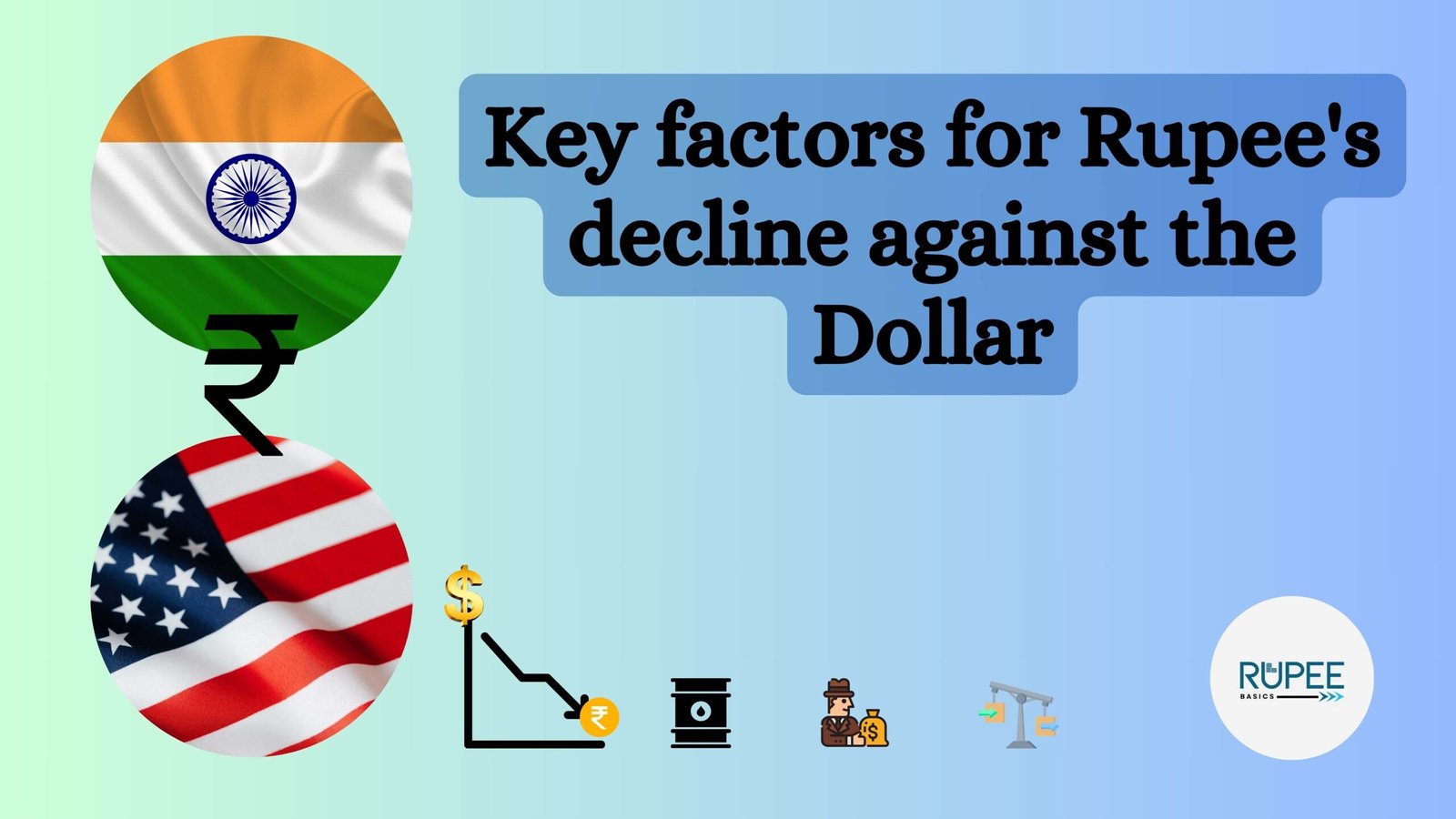
The Indian rupee just crossed the 95-mark against the US dollar for the first time in history. If you've been checking the exchange rates lately, the numbers look grim. Since early March 2026, the currency has shed over 4% of its value, sliding from 91 to a record low of 95.12. It’s easy to look at these headlines and think the economy is cratering, but the reality is more of a global storm hitting a relatively sturdy house.
You’re seeing a classic "risk-off" environment. When global tensions flare up—this time centered on the West Asia conflict and disruptions in the Strait of Hormuz—investors don't want to hold emerging market currencies. They want the safety of the US dollar. Honestly, the rupee isn't falling because India's economy suddenly broke; it's falling because the world is currently terrified and buying up greenbacks like they're going out of style.
The Oil Trap and the $100 Barrel
India's biggest vulnerability remains its thirst for oil. We import roughly 85% of our crude requirements. When Brent crude prices surged past $113 per barrel this month, it didn't just hurt at the petrol pump; it dealt a direct blow to the rupee.
Think of it this way: Every time oil prices jump by $10, India’s annual import bill swells by $12 billion to $15 billion. That’s a massive amount of extra dollars that Indian oil companies have to buy from the market to pay their suppliers. This surge in demand for dollars naturally weakens the rupee.
The Current Account Deficit (CAD) is also feeling the heat. Before this crisis, analysts were comfortably projecting a CAD of around 1% of GDP. Now, firms like Nomura and Standard Chartered are bracing for it to widen to 2.5% or even 2.8% as we head deeper into 2026. This isn't just about oil; it’s about a wider trade gap where we're spending way more on imports than we're earning through exports, especially with the "reciprocal" tariffs still settling in after the recent US-India trade deal.
The Fed Factor and the Exit of Foreign Money
While oil is the immediate catalyst, the US Federal Reserve is the one pulling the strings from a distance. On March 18, 2026, the Fed decided to keep interest rates steady at 3.5%–3.75%. Markets were hoping for a cut. Instead, they got a "hawkish pause."
When US rates stay high, the "carry trade" becomes less attractive. Why would a foreign investor keep money in Indian stocks when they can get a guaranteed, high-interest return in safe US Treasury bonds?
- FII Exodus: Foreign Institutional Investors (FIIs) have pulled out over ₹1.04 lakh crore from Indian equity markets since the start of 2026.
- March Madness: More than half of that outflow happened in just the first two weeks of March.
- The Result: As these investors sell Indian stocks, they convert their rupees back to dollars to take their money home. This mass exit puts incredible pressure on the exchange rate.
How the RBI is Fighting Back
The Reserve Bank of India (RBI) isn't just sitting on its hands. It has been dipping into its massive war chest—the foreign exchange reserves—to prevent a total freefall. In mid-February 2026, our reserves hit an all-time high of $725.7 billion. By late March, that number dropped to around $709.7 billion.
That $16 billion drop represents the RBI selling dollars into the market to soak up excess rupees. It’s a "leaning against the wind" strategy. They aren't trying to fix the rupee at a specific number; they're just trying to make sure the slide is gradual and doesn't cause a panic.
The central bank even tightened the screws on banks, capping their "net open positions" at $100 million to stop currency speculation. Basically, they're telling the markets: "Don't bet against the rupee, or we'll make it very expensive for you."
What This Means for Your Wallet
If you’re a student heading to the US or a traveler planning a summer trip, this sucks. There’s no other way to put it. Your costs just went up by 5% in a single month. However, for the average person living and working in India, the impact is a bit more nuanced.
- Imported Inflation: Everything we import—from electronics to cooking oil—gets more expensive. This keeps inflation "sticky," which means the RBI is unlikely to cut interest rates on your home or car loans anytime soon.
- The IT Silver Lining: If you work for a company like TCS or Infosys that earns in dollars, a weaker rupee is actually a boost to the bottom line. They earn more rupees for every dollar of revenue.
- Manufacturing Edge: In theory, a weaker rupee makes Indian-made goods cheaper for foreigners to buy. This could help our textile and chemical exports, provided the global demand doesn't dry up first.
Stop Overthinking the Record Low
It’s important to remember that the rupee isn't the only one struggling. Finance Minister Nirmala Sitharaman recently pointed out that the rupee is "going fine" compared to other emerging market currencies. When the dollar is on a rampage, everyone else gets bruised.
The Indian economy is still expected to grow at 6.9% this year—the highest among major economies. Our fundamentals haven't changed overnight. We have enough reserves to cover nearly a year’s worth of imports. This isn't 1991; we aren't running out of cash.
If you're an investor, don't panic-sell your mutual funds. The Nifty 50 has taken a hit because of the FII exit, but domestic money is still flowing in. If you have dollar-denominated expenses coming up, like tuition fees, don't wait for the rupee to "recover" to 85. It probably won't get there anytime soon. Analysts expect the 88.50 to 91.00 range to be the new normal once the West Asia tensions cool down.
Instead of watching the daily ticker, focus on your long-term plan. Hedge your risks if you must, but don't bet against the long-term resilience of the Indian market. The current volatility is a price we pay for being integrated into the global financial system. It’s messy, it’s loud, but it’s not a collapse.
Monitor the oil prices and the Fed’s next move in June. Those are the real signals. Everything else is just noise.