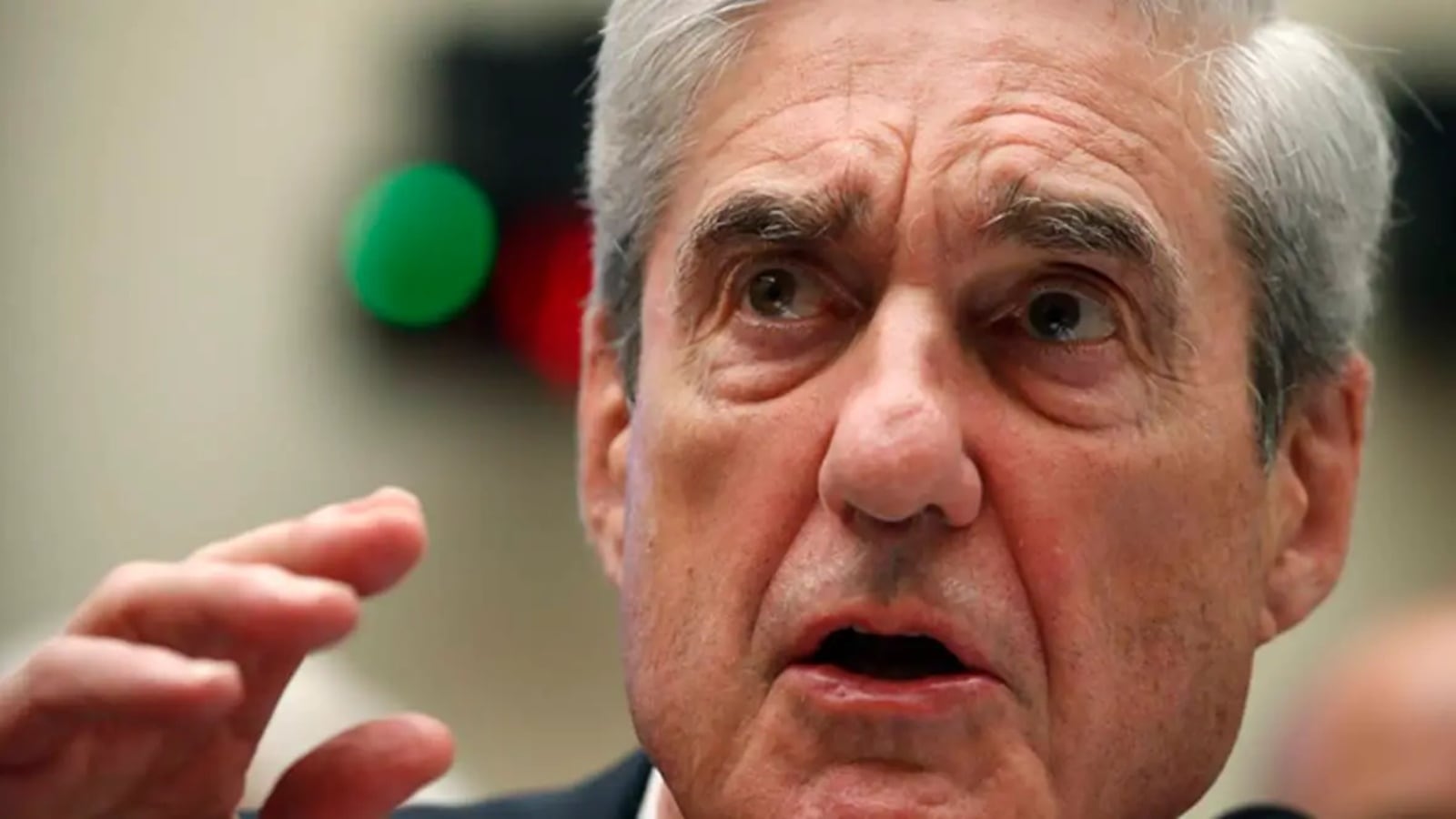
Robert Mueller died on Friday at the age of 81, and the world is already busy reducing a five-decade career into a single two-year window. If you've been following the news cycles since 2017, you likely think of Mueller solely as the stone-faced Special Counsel who became the Rorschach test of the Trump era. To some, he was the white knight of the rule of law; to others, the architect of a "witch hunt."
The truth is far more complex. Mueller was a man of the "Old Guard," a Marine who survived the jungles of Vietnam and a prosecutor who took down mob bosses long before he ever heard the name "Russian interference." His family confirmed he passed away after a quiet battle with Parkinson's disease, leaving behind a legacy that arguably reshaped the American security state more than any other figure since J. Edgar Hoover. Also making headlines in this space: Finland Is Not Keeping Calm And The West Is Misreading The Silence.
A Career Defined by Duty Not Politics
It's easy to forget that Robert Mueller was once the most bipartisan figure in Washington. When George W. Bush nominated him to lead the FBI in 2001, the Senate confirmed him 98-0. He was sworn in exactly one week before the September 11 attacks.
That timing wasn't just a coincidence; it was a pivot point for the entire country. Mueller took over an agency that was primarily focused on "law and order"—bank robberies, kidnappings, and organized crime. Within days, he had to tear the floorboards out of the Bureau and turn it into a domestic intelligence agency. He moved thousands of agents off traditional beats and into counterterrorism units. You don't get the modern FBI without Mueller’s surgical, often ruthless, restructuring during those first few years. Additional insights into this topic are covered by USA Today.
He didn't just stay for the standard ten-year term, either. Barack Obama liked his steady hand so much that he asked Congress for a special extension. Mueller ended up serving 12 years, making him the longest-tenured director since Hoover himself. He was the "straight arrow" in a city of curves.
The Vietnam Years and the Bronze Star
To understand why Mueller was so tight-lipped during the Russia investigation, you have to look at his time in the 3rd Marine Division. He wasn't some Ivy League "chicken hawk" who avoided service. After Princeton, he headed straight to Vietnam.
In 1968, during a fierce fire-fight in the Mutter's Ridge area, Mueller led his rifle platoon through an ambush. He was shot in the thigh, but he kept commanding his men until they were safe. He earned a Bronze Star for valor and a Purple Heart. That "Marine-first" mentality never left him. When he walked into a room, he wasn't looking for friends or political allies. He was looking for the mission.
This background explains why the theatrical nature of the Special Counsel's office seemed to bother him so much. He wasn't interested in being a television star. He was a grunt who happened to wear a $2,000 suit.
Taking on John Gotti and Manuel Noriega
Before he was "The Special Counsel," Mueller was the guy you called when you wanted to put someone very dangerous behind bars. As the head of the Department of Justice's Criminal Division in the early 90s, he oversaw some of the most high-stakes trials in American history:
- The "Teflon Don": He played a massive role in the conviction of mob boss John Gotti.
- Panamanian Dictator: He handled the prosecution of Manuel Noriega.
- Pan Am Flight 103: He led the investigation into the Lockerbie bombing.
Mueller lived for the "big case." He had a reputation for being a "prosecutor’s prosecutor," someone who obsessed over the chain of evidence and cared very little for the political fallout of a conviction. He believed the system worked if you followed the rules exactly as written.
The Special Counsel Era and the Polarized Ending
Then came May 2017. The country was on fire, and Mueller was pulled out of private practice to investigate whether the Trump campaign had conspired with Russia. For two years, he was the most talked-about man in the world, yet he didn't give a single interview.
The report he eventually released was 448 pages of dense, legalistic prose. It didn't provide the "smoking gun" the Democrats wanted, and it didn't provide the "total exoneration" the Republicans claimed. He lived in the gray area. He stayed true to his DOJ training: if you can't prove a crime beyond a reasonable doubt, you don't charge it.
Naturally, this nuanced approach didn't sit well in a 280-character world. Donald Trump’s reaction to his death—calling it "Good" and saying he was "glad he's dead"—is a stark reminder of how much the Russia probe fractured Mueller’s public standing. But to Mueller, the criticism was likely white noise. He’d been shot at in the jungle; a mean tweet probably didn't register.
Why Mueller Still Matters in 2026
We are living in an era where trust in institutions is at an all-time low. Robert Mueller represented the last of a certain breed of public servant—the "Institutionalist." He believed the FBI and the DOJ were more important than the people currently occupying the offices.
Whether you think he saved democracy or overreached his authority, you can't deny his impact. He saw the FBI through 9/11, modernized how we track terrorists, and forced the country to look at the reality of foreign election interference.
If you want to understand the modern American justice system, don't just read the Mueller Report. Look at his 50 years of service. Read about his time in the Homicide Section of the D.C. U.S. Attorney's office, where he chose to work as a senior litigator because he missed being in the courtroom. That tells you more about the man than any headline from 2019 ever could.
He was a man of rules in a world that started breaking them.
Take a moment today to look past the political noise. Read the executive summaries of the 2019 report if you haven't, but also look into the history of the FBI's post-9/11 transformation. It's the only way to get a full picture of the man who just left the stage.


