The human voice is a fragile, biological miracle. It is essentially two small folds of muscle and mucosa vibrating against one another, a delicate percussion that can launch a thousand ships or, in the case of Celine Dion, move the tectonic plates of the global music industry. When that voice goes silent, it isn't just a career pause. It is a haunting. For years, the silence emanating from the Dion camp wasn't just about canceled tour dates or "medical complications." It was the sound of a powerhouse confronting the betrayal of her own nerves and sinews.
Stiff Person Syndrome is a name that feels cruelly literal. It sounds like something from a dark fairy tale, a curse that turns a living, breathing virtuoso into a statue. The spasms are not merely cramps; they are violent, involuntary contractions that can break ribs. They can lock a throat mid-note. For a woman whose entire identity is built on the fluid, Olympic-level control of her diaphragm and larynx, this diagnosis was a death sentence for her art.
Then came the rumors. Then the sightings. Finally, the defiance.
The Ghost in the Machine
To understand why the announcement of ten shows at the Paris La Défense Arena matters, you have to look past the ticket prices and the logistics. You have to look at the sheer, terrifying stakes of a comeback when the world has already mourned you.
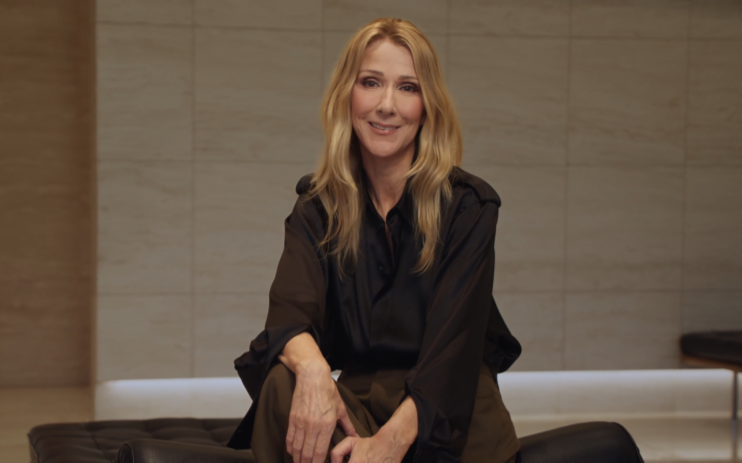
Paris has always been the emotional heartbeat of Celine’s journey. It is where she transitioned from a French-Canadian phenomenon into a global icon. It is where the language of her soul meets the ears of a public that treats her with a reverence usually reserved for cathedral architecture. When she stood on the balcony of the Royal Monceau hotel recently, waving to fans, she wasn't just a celebrity promoting a residency. She was a survivor surveying the land she intended to reclaim.
"I’m so ready," she said.
Three words. They carry the weight of a thousand hours of grueling physical therapy. They represent the quiet, agonizing sessions with vocal coaches where she had to relearn how to breathe without triggering a neurological collapse. Imagine, for a moment, a high-wire artist who has spent three years unable to walk a straight line on solid ground. Now, imagine her looking at the wire, stretched thin across the Parisian skyline, and telling the crowd she is ready to dance.
The Anatomy of a Ten Night Stand
Ten nights.
In the world of modern touring, ten nights in a single city is a marathon. For an artist grappling with a chronic, unpredictable neurological disorder, it is a staggering gamble. The La Défense Arena is not a theater; it is a cavern. It holds 40,000 people. By committing to ten dates, Celine is effectively promising to move 400,000 souls through a gauntlet of emotion.
The industry experts whispered that she might start small. A television special, perhaps. An acoustic set. A residency in a controlled, clinical environment where the air is filtered and the exits are close. Instead, she chose the roar of the arena. She chose the height of the stakes.
This isn't just about music. It’s about the refusal to be diminished. There is a specific kind of bravery required to fail publicly, and by stepping back into the light, Celine is acknowledging that her body might not always obey. She is telling her audience that the struggle is part of the show. The imperfection is the point.
Consider the mechanics of the "Celine sound." It requires a massive amount of subglottal pressure—the air pushing up from the lungs—to create those crystalline power notes. Stiff Person Syndrome attacks the very trunk of the body, the core muscles that regulate that air. To sing My Heart Will Go On or It’s All Coming Back to Me Now, she isn't just using her throat. She is using her entire torso as an instrument. Every note is a victory over a nervous system that wants to shut down.
The Invisible Support System
Behind the "I'm so ready" is a small army of people who have kept the flame flickering. This includes her children, who have watched their mother transform from a superhero into a patient and back again. It includes a medical team that has had to innovate in real-time to manage a condition that is as rare as it is misunderstood.
There is a hypothetical fan—let’s call her Marcella—who bought a ticket for the 2020 tour that never happened. Marcella kept that digital receipt in her inbox like a holy relic. For fans like her, these ten nights in Paris are a communal healing. The audience knows. They aren't going to La Défense just to hear the hits; they are going to witness a resurrection. They are going to provide the energy that her nerves might lack.
There is a profound, almost spiritual contract between an artist of this caliber and her public. Celine has never been "cool" in the cynical, detached sense of the word. She is earnest. She is theatrical. She is deeply, unashamedly emotional. In an era of AI-generated vocals and lip-synced stadium tours, the vulnerability of a woman fighting her own body to deliver a line of melody is the most authentic thing in pop culture.
The Physics of the Comeback
The logistics of these ten shows are a nightmare of precision. The lighting must be perfect, the sound must be calibrated to ensure she doesn't have to strain, and the schedule must allow for the recovery that her condition demands. But the physics of the heart don't care about logistics.
When the lights go down in Paris, the silence will be different than the silence of the last four years. It won't be the silence of an empty room or a shuttered house in Las Vegas. It will be the silence of 40,000 people holding their breath, waiting to see if the miracle still works.
Some have questioned the wisdom of such a grueling schedule. Why ten? Why not one? Why not wait longer?
The answer lies in the nature of the artist. For someone like Celine Dion, "waiting" is a form of erosion. You don't recover so that you can sit in a garden; you recover so that you can stand in the center of the storm. The ten shows are a statement of surplus. They are a declaration that she is not just "back," but that she is abundant.
The Resonance of the Final Note
We live in a culture that obsesses over the "flawless" peak of a performer’s life. We want the 1996 Celine, the one who could hit a high F while beating her chest without a hint of effort. But there is something far more compelling about the 2026 Celine.
This version of the artist carries the scars of a battle we can only imagine. Her voice might have new textures. There might be a slight tremor where there was once a steel beam of sound. But those imperfections are the maps of where she has been. They are the evidence of a woman who refused to let a "stiff" body dictate the fluidity of her spirit.
As the city of light prepares for her arrival, the posters are going up, the hotels are filling, and the rehearsals are happening in secret locations. In those rehearsals, she is likely pushing against the boundaries of what her doctors said was possible. She is testing the air. She is feeling for the resonance in her chest.
When she finally walks onto that stage in Paris, she won't just be Celine Dion, the multi-platinum superstar. She will be a human being who looked at a debilitating, invisible wall and decided to sing until it cracked.
The first note she strikes will not just be music. It will be the sound of a woman reclaiming her life, one vibration at a time. The lights will hit the sequins, the baton will drop, and for ten nights, the most famous voice in the world will prove that while the body can be a cage, the song has always been the key.