Low-rent arson is not a geopolitical statement. It is a failure of urban intelligence.
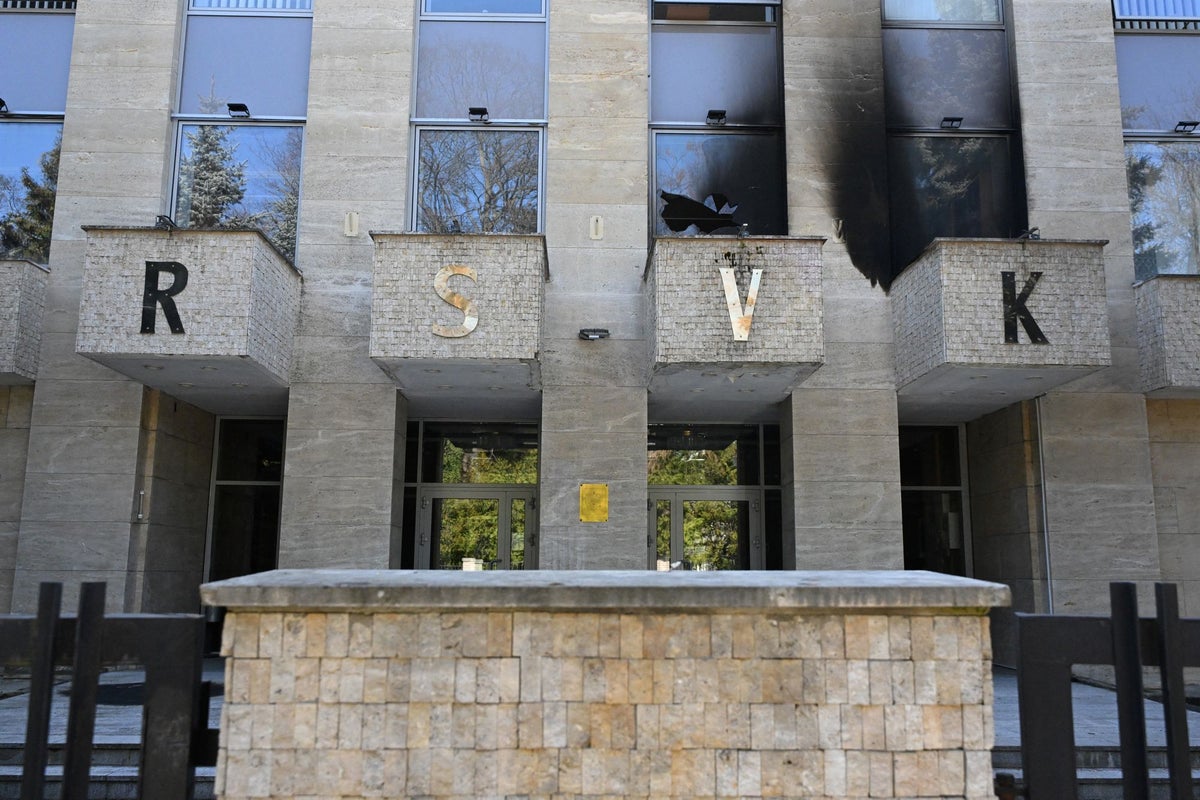
When news broke that improvised incendiaries were tossed at a Russian cultural site in Prague, the collective media apparatus pivoted to the same tired script. We saw the usual cycle of "rising tensions," "symbolic strikes," and "diplomatic fallout." This narrative is lazy. It treats a crude, failed act of vandalism as a high-stakes chess move. It isn't.
If you are looking at this through the lens of international relations, you are asking the wrong question. The real issue is the fetishization of symbolic targets and the catastrophic gap in proactive perimeter defense that allows a bottle of petrol to become a front-page headline.
The Myth of the Symbolic Strike
The "lazy consensus" suggests these acts are meaningful because of what they represent. That is a fundamental misunderstanding of security. In the world of high-value protection, symbols are liabilities, not assets.
When a "cultural center" becomes a lightning rod, the failure isn't the act of the protestor; it’s the institutional refusal to harden soft targets. We treat these sites as static museums of ideology. In reality, they are friction points in an increasingly volatile urban geography. To be surprised that a flashpoint site gets targeted is like being surprised that water is wet.
The industry term for this is "Target Attractiveness." Most analysts focus on the who and the why. They should be looking at the how. How does an individual with a glass bottle and a rag get within throwing distance of a sensitive international site in a major European capital?
The Intelligence Gap in Prague
Prague has long been a playground for intelligence services and political theater. I have tracked security protocols in Eastern and Central Europe for two decades. The "battle scars" from watching these incidents unfold tell a consistent story: local law enforcement is consistently three steps behind the digital radicalization curve.
We are still using 20th-century policing for 21st-century outbursts.
The perpetrator in these scenarios is rarely a mastermind. They are usually someone influenced by a specific information silo. If your security apparatus isn't monitoring the sentiment shifts in local digital enclaves, you aren't doing security; you’re doing cleanup.
- Reactive vs. Proactive: Most "expert" commentary focuses on the arrests made after the fact. An arrest is a consolation prize.
- The Buffer Zone Fallacy: We rely on "visible presence" (police cars with lights on) which actually signals to a motivated actor exactly where the blind spots are.
- Hardware Over Intel: We see calls for more cameras. Cameras don't stop fire. They just give us a high-definition view of the failure.
Stop Asking if This Escalates the Conflict
"Does this bring us closer to a wider war?" No. That is a clickbait premise.
State actors don't change grand strategy because of a scorched wall in a residential district. However, the perception of instability is a currency. When we overreact to small-scale vandalism, we provide the ROI (Return on Investment) the perpetrator wanted.
If a Molotov cocktail fails to ignite or causes minimal damage, but generates 48 hours of international news coverage, the attack was a massive success. The media is the oxidizer that turns a small flame into a bonfire. By treating this as a "pivotal moment" in Czech-Russian relations, we are subsidizing future attempts.
The Unconventional Truth of Urban Friction
Here is the part nobody admits: these incidents are often the result of "Security Theater" meeting "Performative Activism."
The site in Prague, like many others, exists in a grey zone. It’s not quite an embassy, but it carries the weight of one. This ambiguity is a nightmare for local police. Do they treat it like a library or a fortress?
If you treat it like a library, it gets burned. If you treat it like a fortress, you validate the narrative that the site is a hostile outpost. It is a classic "wicked problem" where every solution creates a new vulnerability.
What You Should Be Watching Instead
Forget the diplomatic cables. Look at the logistics of the event:
- The Ignition Point: Where was the device assembled? This speaks to the local supply chain of radicalization.
- The Response Time: How long did it take for the perimeter to be sealed?
- The Digital Footprint: Was the act livestreamed or immediately posted? If yes, it wasn't an attack; it was content creation.
I have seen organizations waste millions on "vulnerability assessments" that ignore the simplest variable: the physical proximity of public transit to the front door. If a person can hop off a tram and be at your gate in ten seconds, your high-tech sensors are useless.
The Cost of the Wrong Perspective
The downside to my approach? It’s cold. It strips away the emotional satisfaction of "standing for a cause" or "condemning violence."
But looking at this through a purely mechanical and tactical lens is the only way to prevent it. When we stop treating arson as a "message" and start treating it as a "logistical breach," we take the power away from the actor.
We need to stop asking "What does this mean for the war?" and start asking "Why was the perimeter porous enough for a low-tech threat to reach the target?"
If you can't secure a cultural center against a bottle of gasoline, you have no business talking about high-level geopolitics. The failure in Prague wasn't a political one; it was a basic failure of urban tactical management.
Stop looking at the fire. Look at the fence.