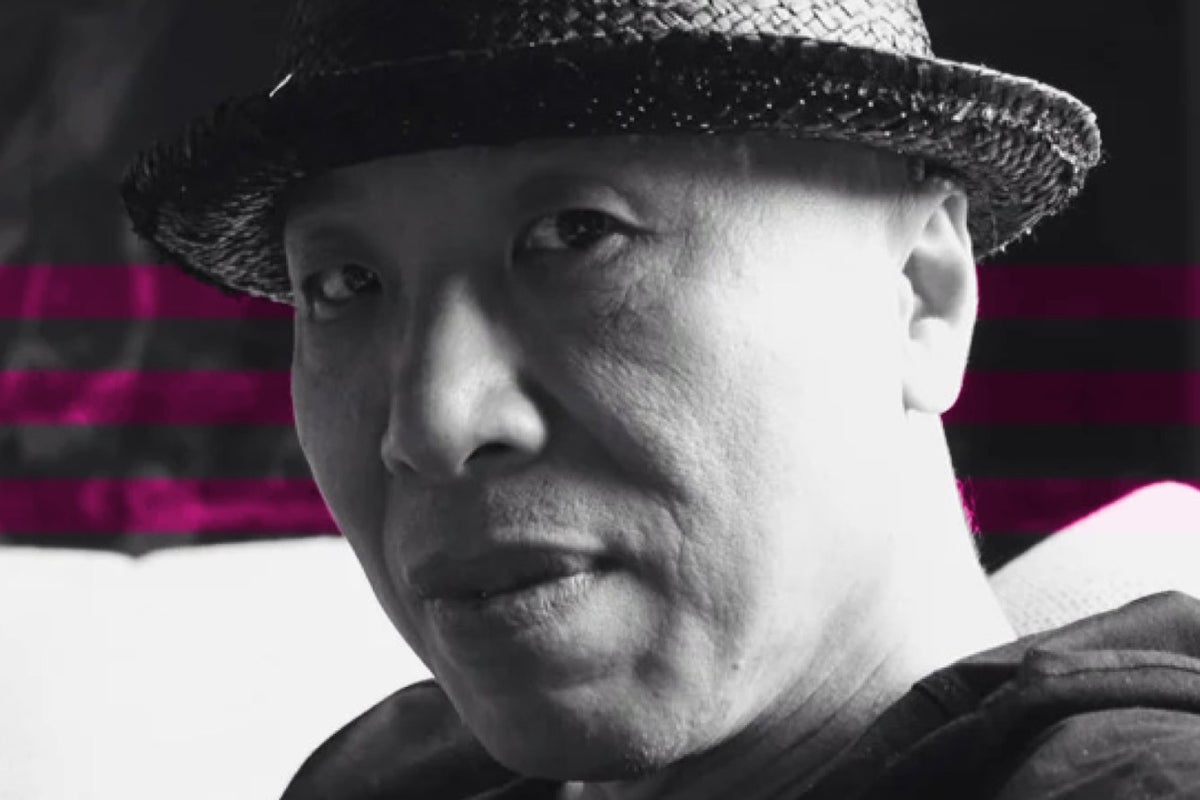
The recent detention and closed-door trial of Gao Zhen, one half of the world-renowned Gao Brothers artistic duo, signals a chilling shift in how modern China handles its historical ghosts. Gao, a 68-year-old artist with a permanent residency in the United States, was apprehended by Chinese authorities during a family visit, reportedly over "insulting heroes and martyrs." This legal maneuver targets bronze sculptures created over a decade ago—satirical depictions of Mao Zedong that had long been tolerated as edgy artifacts of a more permissive era.
The state is no longer looking forward; it is scouring the past for heresy.
Gao Zhen’s situation is not an isolated case of a misunderstood artist. It is a calculated application of the 2018 Law on the Protection of Heroes and Martyrs, a piece of legislation that effectively turns historical interpretation into a criminal minefield. By holding an artist criminally liable for works produced years before the law even existed, the Chinese judicial system is signaling that the statute of limitations on political expression has effectively been abolished. This isn't just about art. It’s about the total state control of memory.
The Bronze Offense and the Shift in Red Lines
For decades, the Gao Brothers operated in a gray zone that defined the Chinese art world. Their studio in Beijing’s 798 Art District was a landmark of the "Contemporary China" brand that the government once leveraged to show a face of openness to the West. Their most famous—and now most dangerous—works included "The Execution of Christ," where the executioners resemble Mao, and "Miss Mao," a caricature featuring a Pinocchio-like nose and breasts.
These pieces were provocative, yes, but they were part of a broader "Mao-Pop" movement that included artists like Ai Weiwei and Yu Youhan. In the early 2000s, the state viewed this as a manageable vent for intellectual frustration. The sculptures were occasionally seized or covered during high-profile visits, but the artists themselves remained free to travel and exhibit internationally.
The change occurred not in the art, but in the political climate. Under the current leadership, the "Great Helmsman" has been restored to a status of untouchable sanctity. To mock Mao is no longer seen as a critique of a historical figure; it is treated as a direct assault on the legitimacy of the Communist Party itself. The law now dictates that any person who "defames, slanders, or encroaches upon the name, image, reputation, and honor of heroes and martyrs" faces up to three years in prison.
Retrospective Justice as a Tool of Control
The most alarming aspect of the Gao Zhen case is the retroactivity of the charges. The sculptures in question were cast in the mid-2000s. At the time of their creation, they violated no specific criminal statute regarding "martyrs." By arresting Gao now, the authorities are asserting that the state can re-categorize past actions as present crimes.
This creates an environment of "perpetual risk" for the Chinese diaspora. Gao Zhen had lived in the U.S. for years, likely feeling that his distance from the mainland and the age of his work provided a layer of safety. His arrest proves that the "Long Arm" of Chinese law doesn't just reach across borders through digital surveillance; it waits patiently at the border for a family visit or a business trip.
The Investigative Reality of Secret Trials
The "secretive" nature of the trial mentioned by observers isn't a bug in the system; it is a feature. When a case involves "national security" or "sensitive political matters," the Chinese legal system frequently restricts access to defense lawyers and bars family members from the courtroom.
From an investigative standpoint, the lack of transparency serves two purposes:
- Prevention of Martyrdom: By keeping the proceedings quiet, the state prevents the artist from using the trial as a platform for further protest.
- Legal Ambiguity: Without a public record of the defense or the specific evidence, other artists are left guessing where the new "red lines" are drawn. This uncertainty breeds self-censorship, which is far more efficient than individual arrests.
The Economic Irony of State Censorship
There is a profound irony in the state's crackdown on the Gao Brothers. For years, the Chinese government promoted the 798 Art District as a premier tourist destination, profiting from the very "rebellious" image that Gao helped create. The commercialization of political dissent was a lucrative business.
Now, the state is effectively devaluing its own cultural exports. By criminalizing its most famous contemporary artists, China is signaling to the global art market that Chinese contemporary art is no longer a safe investment. If a piece of art can lead to its creator’s imprisonment twenty years after it was made, the provenance of all Chinese political art becomes a liability rather than an asset. Collectors are already moving away from "sensitive" Chinese works, fearing they may become "contraband" that cannot be legally shipped or insured.
The Silencing of the 798 Era
The arrest of Gao Zhen marks the definitive end of the "798 Era." This was a period roughly between 2000 and 2012 when Beijing felt like a global capital of avant-garde thought. Today, the district is dominated by state-sanctioned "safe" art, high-end boutiques, and sanitized galleries.
The investigators who monitor these spaces are no longer just looking for overt protest; they are looking for irony. Irony implies a double meaning, and in the current political landscape, double meanings are a threat to the singular narrative required by the state. The Gao Brothers’ work was built entirely on irony. Their "Miss Mao" was a commentary on the commercialization of the Maoist legacy. The state, it seems, has lost its sense of humor—and replaced it with a pair of handcuffs.
The Message to the Global Chinese Diaspora
Gao Zhen’s detention is a warning shot fired across the bow of the global Chinese intellectual community. It suggests that no amount of time spent abroad or international prestige provides immunity.
If you are a filmmaker, a writer, or an artist who has critiqued the Party from the safety of New York or London, the message is clear: the Motherland has a long memory. The "Hero and Martyr" law is a flexible tool, capable of being stretched to cover almost any historical critique. It isn't just about Mao. It's about the 1989 protests, the Great Leap Forward, and even the handling of the recent pandemic.
Why Art Still Scares the State
One might ask why a superpower would bother with a 68-year-old artist and some dusty bronze sculptures. The answer lies in the power of the image. A 5,000-word essay critiquing the Cultural Revolution can be censored or buried by algorithms. A sculpture of a pregnant, Pinocchio-nosed Mao is an image that sticks in the mind. It is visceral. It is immediate.
The state fears art because art provides an alternative visual vocabulary for history. When the government spends billions of dollars on "Red Tourism" and historical dramas to paint a specific picture of the past, a single discordant image can shatter the illusion. Gao Zhen isn't being punished for what he did; he is being punished for what he made people see.
No Room for Ambiguity
The defense of Gao Zhen has been hampered by the very system that detained him. His brother, Gao Qiang, has been vocal in his calls for justice, but his reach within the mainland is limited. International human rights organizations have condemned the move, yet these condemnations rarely carry weight in a court governed by political necessity rather than judicial precedent.
The legal reality is that Gao is trapped in a system that views historical narrative as a matter of national security. In this framework, there is no such thing as "artistic license." There is only compliance or defiance. The Gao Brothers chose a middle path of "tolerated defiance" for decades, but that path has been paved over by a new, more rigid authoritarianism.
The End of the Gray Zone
We are witnessing the total elimination of the "gray zone" in Chinese civil society. This was the space where artists, journalists, and lawyers could operate with a degree of autonomy as long as they didn't directly challenge the Party's hold on power. That space has been shrinking for a decade, and with the arrest of figures like Gao Zhen, it has effectively vanished.
The implications for the future of Chinese culture are grim. When history is protected by criminal law, creativity becomes a high-stakes gamble. The next generation of Chinese artists will not be making satirical bronzes; they will be making landscapes, or they will be making art in exile.
The state has decided that its heroes are more important than its thinkers. By imprisoning the man who dared to mold Mao in bronze, they are attempting to freeze history itself. But history, like bronze, has a way of outlasting the people who try to shape it by force. The sculptures may be seized, and the artist may be silenced, but the questions they raised about power, memory, and the cost of silence remain more relevant than ever.
Anyone holding a Chinese passport or traveling back to the mainland with a history of creative dissent needs to recognize that the rules of engagement have fundamentally changed. The past is no longer a different country; it is a crime scene.