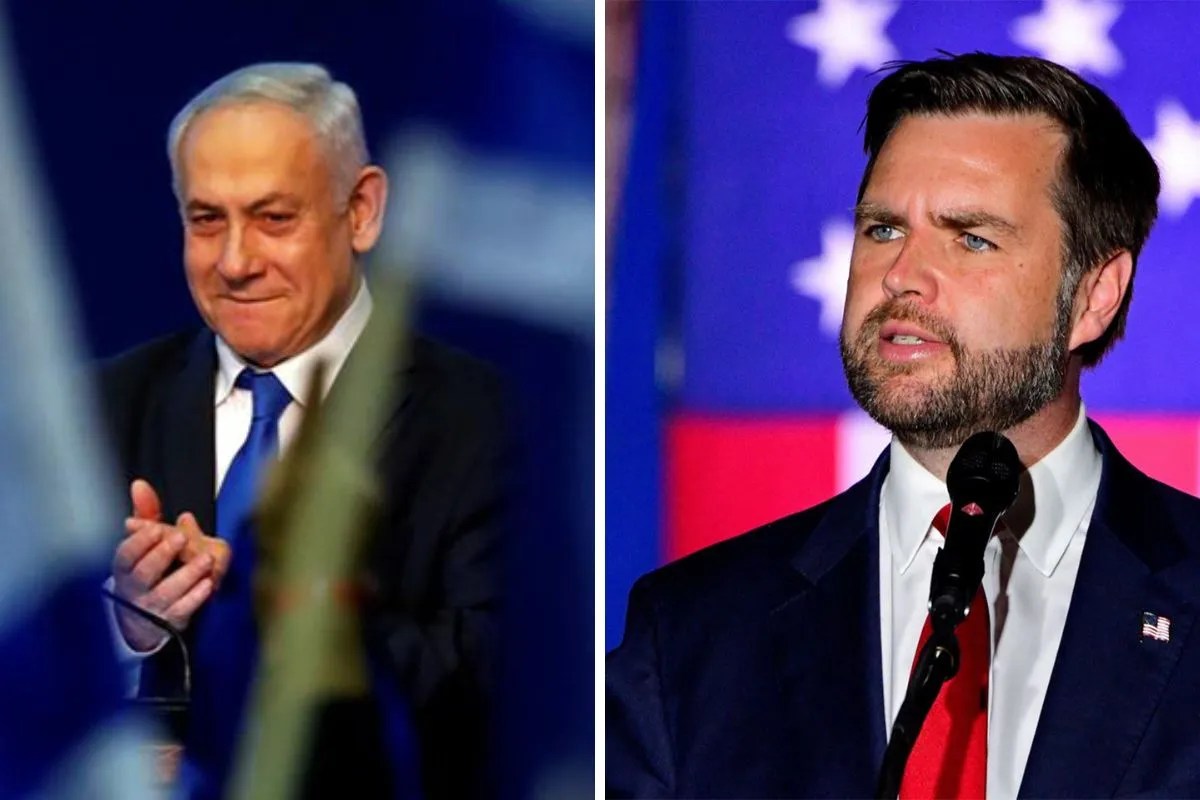
A high-stakes diplomatic letter has bypassed traditional state channels to reach Israeli Prime Minister Benjamin Netanyahu, branding Pakistan as a global hub of terrorism rather than a mediator for peace. This document arrived just as United States Vice President Kamala Harris prepared for a pivotal diplomatic engagement, signaling a coordinated effort by international advocacy groups to harden the Western stance against Islamabad. The communication argues that Pakistan’s intelligence apparatus continues to provide a sanctuary for extremist groups that threaten both Indian and Israeli security interests.
For decades, the geopolitical narrative surrounding Pakistan has been a delicate balancing act of necessity and suspicion. However, the timing of this letter suggests that the era of strategic ambiguity is closing. As the Middle East remains a tinderbox and South Asian tensions simmer, various monitoring groups are pushing for a formal recognition of the logistical and financial trails connecting Rawalpindi to global insurgencies.
The Letter that Disrupted the Diplomatic Script
The document delivered to Netanyahu’s desk was not a routine intelligence briefing. It was an explicit indictment. It detailed how the infrastructure of terror in South Asia mirrors the threats faced by Israel in the Levant. By linking the security concerns of the two nations, the authors of the letter aimed to create a unified front against state-sponsored militancy.
The core of the argument rests on the double game played by the Pakistani establishment. On one hand, Islamabad seeks financial relief from international bodies; on the other, it maintains a permissive environment for designated terror organizations. This letter serves as a reminder that while the world focuses on Gaza or Ukraine, the old engines of radicalization in South Asia are still humming.
Why the Harris Connection Matters
The arrival of this letter right before Vice President Harris engaged with regional leaders was a calculated move. The Biden-Harris administration has attempted to stabilize relations with Pakistan, primarily to maintain a window into Afghanistan. By injecting this harsh critique into the discourse, advocacy groups are forcing the White House to address the contradictions in its foreign policy.
Washington often views Pakistan through the lens of regional stability. But for Jerusalem and New Delhi, the perspective is different. They see a direct threat to their citizens. The letter highlights a growing impatience with the "frontline ally" status that Pakistan has enjoyed despite evidence of its deep-state involvement with the Taliban and Lashkar-e-Taiba.
The Shadow of the 2008 Mumbai Attacks
One cannot discuss the Israeli-Indian security alignment without mentioning the 2008 Mumbai attacks. The Chabad House in Mumbai was a specific target, creating a blood bond between the two nations in the fight against a common enemy. The recent letter sent to Netanyahu leverages this history, suggesting that the same ideological and logistical support structures that enabled those attacks remain intact today.
Evidence of these links is often buried in classified files, but the public manifestations are hard to ignore. When top leaders of banned organizations walk free in Lahore or address public rallies, it sends a clear signal to the international community. The letter argues that ignoring these signals is no longer a viable strategy for any nation serious about counter-terrorism.
Financial Realities and the FATF Factor
Pakistan has spent years on and off the "grey list" of the Financial Action Task Force (FATF). While it has made superficial changes to its banking laws to avoid total economic isolation, the letter to Netanyahu claims these are merely cosmetic. Real change would require dismantling the training camps and the ideological factories that produce the foot soldiers of terror.
The economic crisis currently gripping Pakistan adds another layer of complexity. Some argue that pushing too hard could lead to a state collapse, which would be a nightmare for a nuclear-armed country. Others, including the authors of the grievance sent to Israel, argue that the current policy of "appeasement through aid" only buys time for extremists to reorganize.
The Weaponization of Proxy Warfare
Pakistan's reliance on "non-state actors" as a tool of foreign policy is a well-documented phenomenon. This strategy allows the central government to maintain plausible deniability while its proxies execute operations across borders. The letter sent to Netanyahu points out that this model has been exported, influencing how other regional players engage in asymmetrical warfare.
- Lashkar-e-Taiba (LeT): Primarily focused on India but maintains a global recruitment network.
- Jaish-e-Mohammed (JeM): Known for high-profile attacks and close ties to local intelligence.
- The Haqqani Network: Acting as a bridge between the Pakistani state and the Afghan Taliban.
Each of these groups operates within a ecosystem that the letter describes as an "orchard of terror." By bringing this to Netanyahu’s attention, the goal is to shift the Israeli perspective from a local focus to a broader, global understanding of how these networks overlap.
The Israeli Response and Strategic Realignment
Benjamin Netanyahu is a leader who prides himself on a "security first" doctrine. While Israel has historically maintained a quiet, functional relationship with many Muslim-majority nations, the tide is turning. The Abraham Accords showed that Israel can build new alliances, but those are based on shared enemies—primarily Iran.
The letter suggests that Pakistan belongs in that same category of adversaries. If Israel begins to treat Islamabad with the same skepticism it reserves for Tehran, the diplomatic fallout would be massive. It would fundamentally change how intelligence is shared between Israel, India, and the United States.
Behind the Scenes of the Pressure Campaign
The groups behind this letter are not just random activists. They are often composed of former intelligence officers, victims of terror, and geopolitical analysts who feel the current international order is too soft on state sponsors of violence. They use these public and private communications to "smoke out" politicians, forcing them to take a side.
By timing the delivery to coincide with the Vice President’s travel, they ensured maximum media visibility. It turns a private security concern into a public debate. This is the new face of investigative advocacy—using the machinery of high-level diplomacy to air the dirty laundry of rogue states.
The Myth of the Peace-Maker
Pakistan often portrays itself as a victim of the very terror it is accused of fostering. The "peace-maker" narrative is frequently used in forums like the United Nations to solicit sympathy and funding. However, the letter to Netanyahu shreds this narrative, pointing to the disparity between Islamabad’s words and its actions on the ground.
The claim is simple: a true peace-maker does not harbor the world's most wanted men. A true peace-maker does not allow its territory to be used as a staging ground for cross-border raids. The letter demands that Israel and the U.S. stop accepting the victimhood narrative and start demanding accountability.
The Role of Technology in Modern Terror
Beyond the ideological battle, there is a technological one. Intelligence reports suggest that the same drone technology and encrypted communication tools being used by militants in the Middle East are being shared with groups based in Pakistan. This technological synergy makes the threat more lethal and harder to track.
Israel, as a global leader in cyber-security and surveillance, is uniquely positioned to counter these advancements. The letter encourages a deeper collaboration between Israeli tech firms and regional allies to shut down the digital infrastructure that keeps these terror groups operational. This isn't just about soldiers on the ground; it’s about the servers and satellite links that coordinate the chaos.
Navigating the Washington-Jerusalem-Islamabad Triangle
The United States finds itself in a difficult position. It needs Pakistan for logistics in Central Asia, but it cannot ignore the legitimate grievances of its closest allies like Israel and India. The Harris visit was supposed to be about cooperation and future-looking policies, but the "Pakistan terror" letter has anchored the conversation in the grim realities of the present.
Netanyahu’s office has not officially released a rebuttal or a confirmation of the letter’s impact, but the silence speaks volumes. In the world of high-stakes intelligence, a letter like this acts as a catalyst. It moves the needle just enough to trigger a review of current policies.
The Global Implications of a Policy Shift
If Israel and the U.S. were to officially designate Pakistan as a state sponsor of terrorism, the global financial system would effectively be closed to them. This is the "nuclear option" of diplomacy. The letter pushes for a step-by-step escalation, starting with increased sanctions on specific individuals within the Pakistani military-intelligence complex.
This approach targets the decision-makers rather than the general population. It aims to make the cost of supporting terror higher than the benefits of using it as a strategic tool. The effectiveness of this strategy remains a subject of intense debate among career diplomats who fear that a cornered Pakistan might become even more dangerous.
Breaking the Cycle of Silence
For years, the international community has chosen the path of least resistance regarding South Asian militancy. There was a sense that as long as the violence was contained within the region, it could be managed. The 2008 attacks and the subsequent discovery of high-value targets in Pakistani garrison towns proved that containment is a fantasy.
The letter to Netanyahu is a demand for a global perspective. It argues that a threat to a synagogue in Jerusalem or a hotel in Mumbai is a threat to the entire civilized world. By forcing this realization upon world leaders during a major diplomatic tour, the advocates have ensured that the issue can no longer be pushed to the back burner.
The reality on the ground is that the infrastructure of extremism is not a glitch in the Pakistani state; for many in power, it is a feature. Addressing this requires more than just letters and diplomatic protests. It requires a fundamental shift in how the West values its alliances.
The era of giving a pass to "useful" allies who harbor dangerous enemies is coming to a close. As Netanyahu reviews the evidence provided and Harris conducts her meetings, the pressure will only continue to mount. The world is watching to see if these leaders will prioritize short-term stability or long-term security. The trail of terror is long, and it leads directly back to the very place that claims to be fighting it.
Governments must now decide if they will continue to fund the fire or finally start the work of putting it out.



