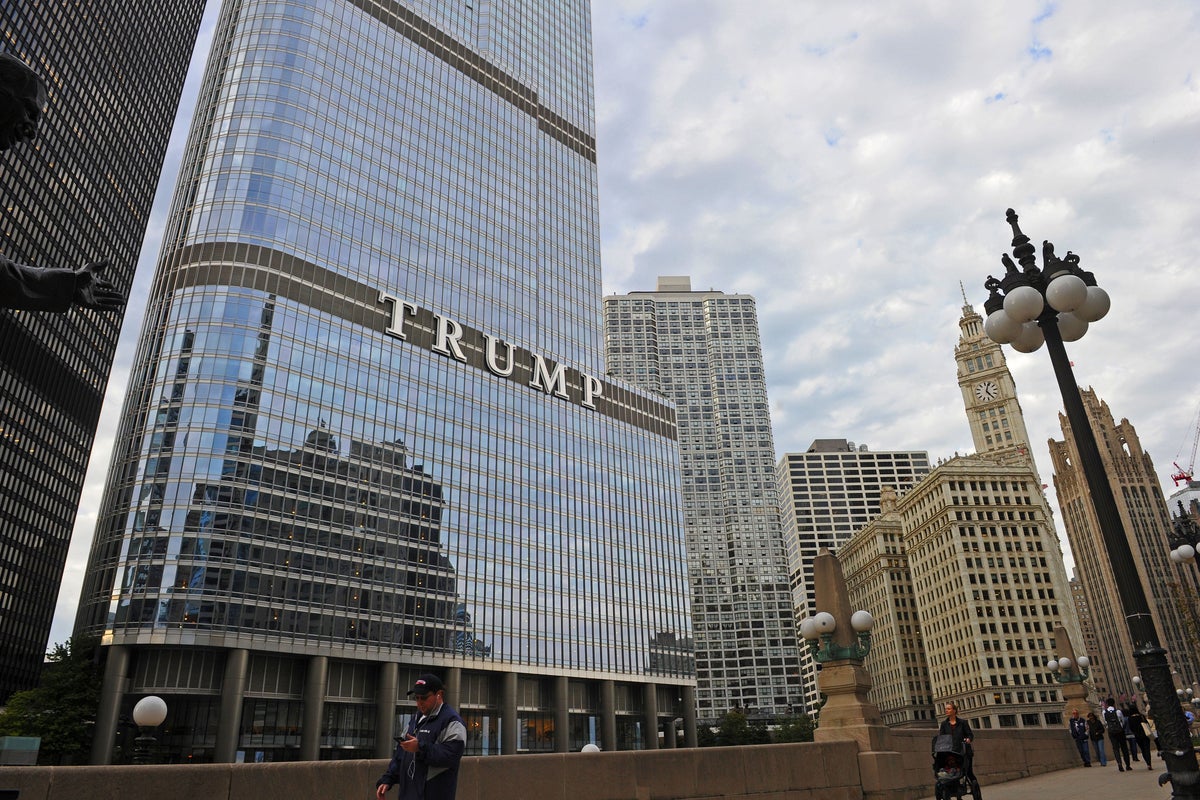
The architectural critics are having a collective meltdown over a building that doesn't exist yet, and they are missing the entire point. They see a gold-plated skyscraper and scream "narcissism." They see a lack of physical books and scream "illiteracy." They are looking at the 20th-century blueprint of a mausoleum and wondering why Donald Trump is building a broadcast center instead.
Traditional presidential libraries are where legacies go to die. They are taxpayer-subsidized warehouses for dead paper, located in places nobody visits, curated by academics who spent four years hating the guy they are now archiving. Trump’s vision of a vertical, bookless monument isn't a failure of design; it is a brutal realization of how power and information actually function in 2026.
The Paper Fetish is a Lie
Critics point to the lack of "books" in the preliminary sketches as evidence of a shallow legacy. This is a fundamental misunderstanding of modern record-keeping. We haven't lived in a paper-based administration since the early nineties.
The National Archives and Records Administration (NARA) deals with petabytes of data, not pallets of parchment. To build a massive limestone box in the middle of a field to house "books" that were never printed in the first place is a performance of intellectualism, not an act of it.
The Obama Presidential Center in Chicago already signaled this shift by deciding not to house the physical archives on-site. Trump is simply stripping away the pretense. If the records are digital, the building should be an interface, not a shelf. He is building a server farm wrapped in a luxury aesthetic. It’s honest.
Skyscrapers vs. Sprawl: The Efficiency of Ego
The "skyscraper" model is being mocked as a departure from the horizontal, park-like settings of the Clinton or Bush libraries. But look at the math of urban density and influence. Horizontal libraries are land-hungry, expensive to maintain, and socially isolating. They require "campus" environments that often displace local communities or sit unused as glorified picnic grounds.
A vertical library in a high-traffic environment—whether it’s Florida, New York, or a digital metaverse—is a high-yield asset. It maximizes the footprint. It creates a focal point of visual dominance that a flat building can never achieve. In the attention economy, height is a metric. A skyscraper is a 24/7 billboard for a brand that never sleeps.
The gold escalator isn't just an interior design choice; it’s a callback to the 2015 launch that disrupted the political system. It’s a relic of a moment, much like the pieces of the Berlin Wall or a vintage Air Force One. Architecture is supposed to communicate a narrative. The narrative here isn't "I love reading Thomas Jefferson in a quiet corner." The narrative is "I built an empire and then took over the world."
The Library as a Content Studio
Why do we insist that a president’s legacy be static? The traditional model is:
- Build a museum.
- Fill it with glass cases.
- Hope school groups show up for the gift shop.
This is a failing business model. Trump’s vision treats the library as a live media property. Without the burden of physical stacks, the space becomes a theater, a broadcast studio, and a stage for live events. It’s a machine designed to generate new content, not just archive the old.
In my years analyzing brand positioning, I’ve seen heritage brands vanish because they focused on their history instead of their current relevance. Trump understands that a "library" that isn't producing daily social media clips, live streams, and polarizing discourse is a graveyard. He isn't building a place to study history; he’s building a place to continue making it.
The "No Books" Critique is Classist Nonsense
The outrage over the lack of books is the last gasp of an elite class that believes physical media equals intelligence. We live in an era where the most influential ideas are disseminated via short-form video, podcasts, and digital threads.
If you want to understand the Trump presidency, you don't read a leather-bound tome. You analyze the tweets. You watch the rallies. You deconstruct the meme wars. To archive that history in a room full of books is like trying to store a thunderstorm in a jar. It doesn't fit the medium.
A bookless library is a recognition that the "Word" has been replaced by the "Stream." It’s an admission that the gatekeepers of the written word—the publishers and the academic press—no longer hold the keys to the legacy.
The Cost of "Dignity"
The most common argument against this skyscraper vision is that it lacks "presidential dignity." This is the same argument used against every disruptive force in history. "Dignity" is usually just code for "the way we used to do things before we lost control."
The Clinton Library cost roughly $165 million. The George W. Bush Presidential Center cost $250 million. The Obama Center is pushing toward $830 million. These are staggering sums spent on buildings that cater to a dwindling audience of researchers and tourists.
If Trump builds a skyscraper that functions as a commercial entity—housing a library alongside profitable ventures—he disrupts the "charity case" model of presidential legacies. He turns a liability into an asset. It is the ultimate capitalist move: making the archive pay for itself.
Why the Critics are Terrified
The real reason for the backlash isn't the gold or the height. It’s the realization that the traditional rules of the "Great Man" history are being rewritten.
The critics want a library that acts as a cage—a place where they can contain a presidency, categorize it, and eventually forget it. A skyscraper is the opposite of a cage. It’s a megaphone. It’s an assertion that the influence of the 45th and 47th President will not be buried in a quiet park in the Midwest.
By removing the books, he removes the silence. By adding the gold, he adds the noise.
Stop asking where the reading rooms are. Start asking who is going to be holding the microphone in the penthouse. That is the only question that matters. The presidential library isn't a place for your quiet reflection; it's a battleground for his next act.
Burn the blueprints of the past. The era of the dusty archive is over. Welcome to the era of the monument as a media empire.