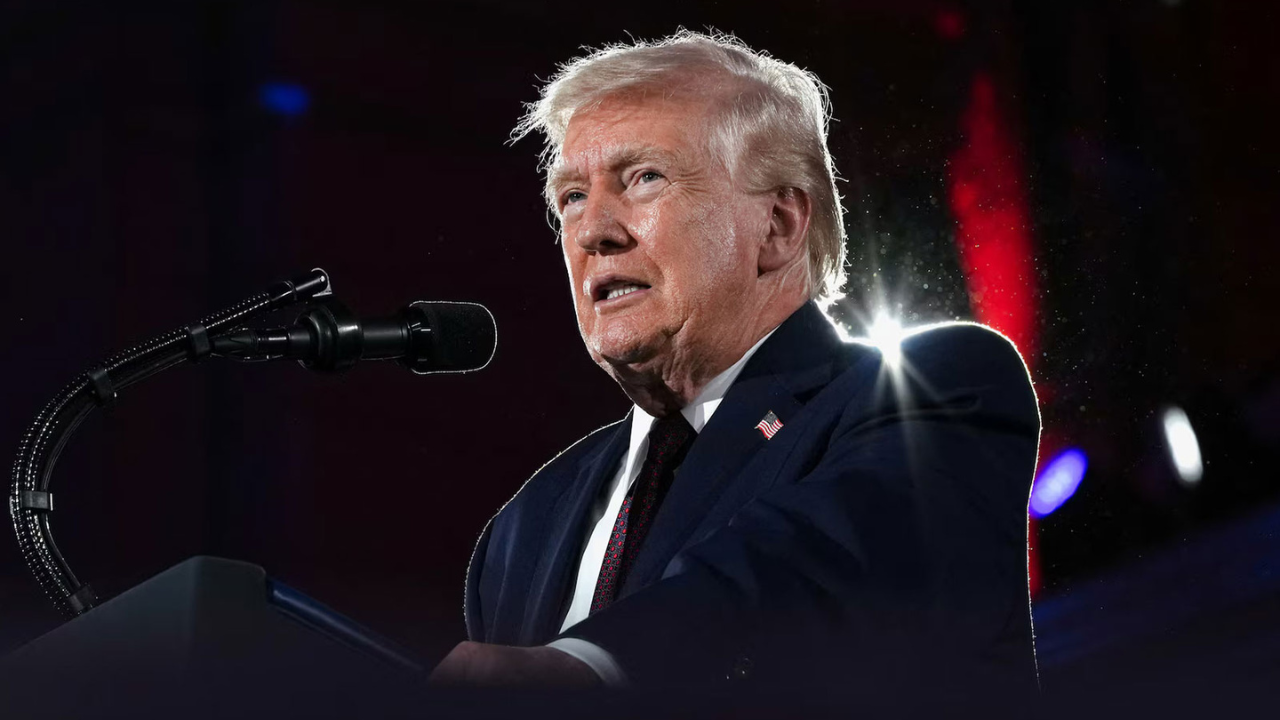
The White House just turned the medicine cabinet into a battlefield. In a pair of sweeping executive orders signed on the anniversary of his "Liberation Day" trade policy, President Donald Trump has functionally dared the global pharmaceutical industry to blink. By slapping a 100% tariff on patented drugs from companies that refuse to slash prices, the administration is moving past the broad, scattershot duties of 2025 and moving toward a surgical, high-stakes protectionism.
This is not a general tax on imports. It is a targeted ultimatum. If you are a drugmaker like Eli Lilly, Pfizer, or Novo Nordisk, and you haven't signed a "Most Favored Nation" (MFN) agreement to link U.S. prices to lower international benchmarks, your products just became twice as expensive to bring into the country.
At the same time, the administration is quietly easing the pressure on the industrial backbone of the country. New rules for steel, aluminum, and copper duties—previously a flat 50% across the board—are being dialed back for derivative products. This creates a strange, bifurcated reality where it is becoming cheaper to import a tractor but potentially impossible to afford the insulin of the person driving it.
The 100 Percent Ultimatum
The mechanism behind the 100% drug tariff is intentionally coercive. Large pharmaceutical firms have a 120-day window to comply before the full weight of the duty hits on July 31, 2026. Smaller outfits get 180 days. To escape the tax, companies must either join the MFN program—effectively a government-mandated price cap—or commit to building new manufacturing plants on American soil.
The administration is essentially holding the U.S. market hostage to force a massive "onshoring" of drug production. For companies that agree to build these domestic factories, a "grace period" tariff of 20% applies during construction. It is a carrot-and-stick approach where the stick is a skyscraper and the carrot is merely a slightly smaller stick.
Key exemptions exist, but they are narrow:
- Generic drugs and biosimilars are safe for at least one year.
- Orphan drugs (for rare diseases) carry a zero-percent rate.
- Specific Allies like the UK, EU, Japan, and Switzerland have negotiated caps between 0% and 15%.
This creates a tiered system of healthcare access based entirely on geopolitical loyalty and corporate submission. If your life-saving medication is made by a mid-sized European firm that hasn't kissed the ring in Washington, the cost of that drug at the pharmacy counter is about to go vertical.
Industrial Realism and the Metal Pivot
While the pharmaceutical industry is being squeezed, the metals sector is seeing a tactical retreat. After a year of chaotic 50% tariffs on everything from raw ingots to finished screws, the White House has realized that taxing "derivatives"—finished goods containing metal—at the same rate as raw materials was strangling domestic assembly lines.
Under the new rules effective April 6, 2026, goods "substantially made" of steel, aluminum, or copper will see their tariffs halved to 25%. More importantly, products with less than 15% metal content by weight are now entirely exempt. This is a massive win for manufacturers of complex consumer goods—think electronics with tiny metal frames or perfume bottles with aluminum caps—that were previously caught in the wide net of Section 232.
However, there is a catch. The administration is closing a loophole on how these duties are calculated. Previously, importers paid based on the "declared value" from the exporter, which the White House claims was being systemically underreported. Now, the tariff is assessed on the full U.S. sales price. You might be paying a lower percentage, but you are paying it on a much larger number.
The Strategy of Forced Consent
This isn't just about trade; it's about a fundamental shift in how the U.S. government interacts with private capital. By using Section 232 "national security" justifications, the administration is bypassing the legislative gridlock of Congress and the recent Supreme Court rulings that limited the use of emergency powers.
The goal is a "protected, secure, and domestic" supply chain. The cost of that security, however, is a massive distortion of the free market. When Pfizer CEO Albert Bourla noted that tariff threats were a "powerful tool" for price cuts, he wasn't just making an observation—he was acknowledging the new rules of the game. You don't negotiate with this administration; you settle.
For the American consumer, the immediate impact is a coin flip. The administration claims these moves won't raise shelf prices. History suggests otherwise. While the "Most Favored Nation" deals might lower the list price of some branded meds, the 100% tariff on non-compliant firms will almost certainly result in those drugs being pulled from the market or their costs being passed directly to the patient.
The Industrial Buildout Hedge
There is one final, overlooked detail in the Thursday proclamations. A special 15% tariff rate has been established for "metal-intensive industrial equipment and electrical grid equipment" through 2027.
This is a clear admission that the current "Buy American" push for data centers and power infrastructure is running into a hard reality: we simply don't make enough of the heavy transformers and specialized machinery needed to keep the lights on. By lowering the tax on these specific items, the government is trying to subsidize its own industrial ambitions while keeping the 50% wall up for the raw metals themselves.
We are entering an era of "managed trade" where the price of a product is determined less by supply and demand and more by where the factory is located and how many lobbyists the manufacturer has in D.C. The pharmaceutical industry is the current target, but the framework being built today is designed to be applied to any sector deemed "strategic" tomorrow.
The message to global CEOs is loud and clear. Build here, price low, or pay the 100% toll at the door.