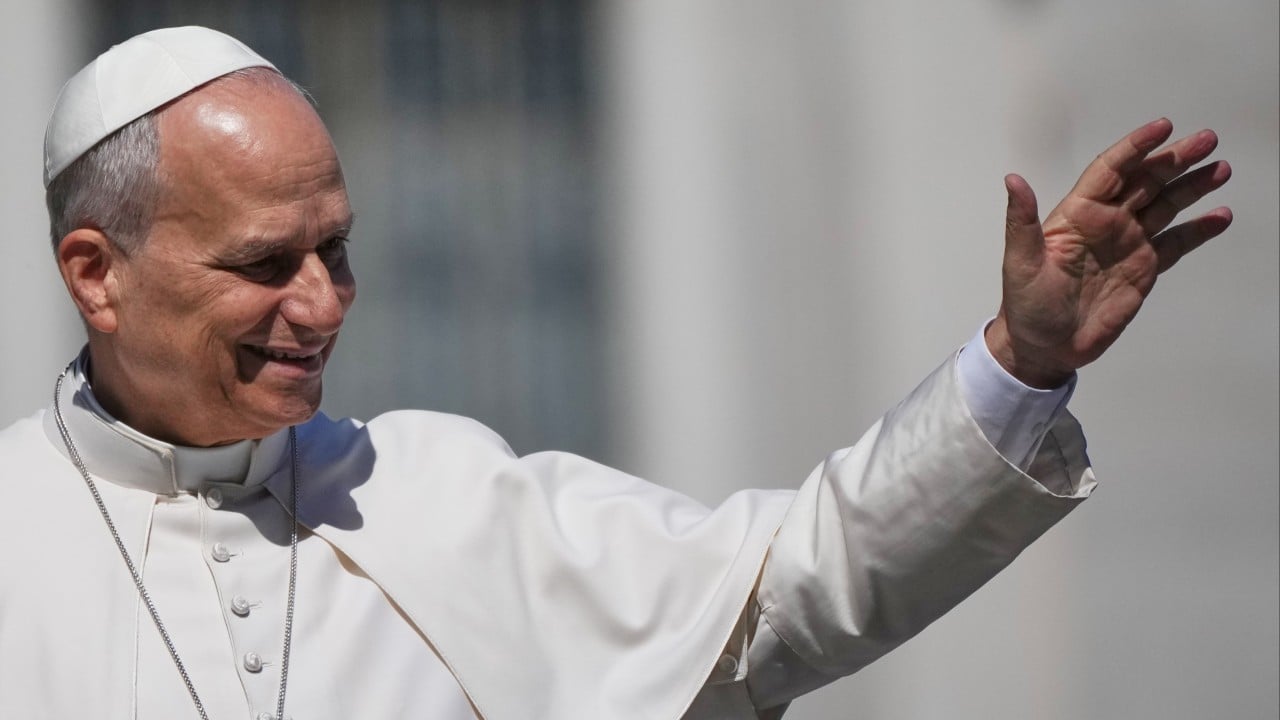
Pope Leo recently stood on the sun-drenched soil of Monaco to decry the "widening chasms" between the global elite and the impoverished. It is a predictable script. It plays well for the cameras. It warms the hearts of those who view the global economy as a zero-sum pie where a billionaire’s gain is a laborer’s loss.
But it is fundamentally wrong.
The narrative that Monaco—a two-square-kilometer rock of concentrated capital—is a symbol of moral decay ignores the mechanics of how wealth actually functions in a modern, interconnected world. When religious leaders attack the concentration of capital, they aren't just attacking "greed." They are attacking the very engine that prevents the "chasms" from becoming absolute voids of opportunity.
The Zero-Sum Fallacy
The most persistent myth in the Pope’s rhetoric is the idea that wealth is a stagnant pool. In this worldview, the "rich" are sitting on a pile of gold that could otherwise be fed to the "poor."
This is not how money works in the 21st century.
Wealth in places like Monaco is rarely liquid cash stuffed into silk mattresses. It is capital. It is equity. It is the fuel for global debt markets, infrastructure projects, and venture funds. When a family office in Monte Carlo invests $500 million, that money doesn't stay in the principality. It flows into emerging markets, tech startups in Nairobi, and manufacturing plants in Vietnam.
By demanding a "closing of the chasm" through redistribution or moral shaming, critics risk clogging the pipes of global investment. If you tax or shame that capital out of existence, you don't make the poor richer. You make the world poorer by starving the systems that create jobs and scale solutions to poverty.
Inequality is a Symptom, Not the Disease
We are obsessed with "gaps." We look at the distance between a yacht owner and a factory worker and call it a crisis. But the gap is a vanity metric.
The real metric that matters is the absolute floor of human suffering. Over the last thirty years, as the "chasm" between the ultra-wealthy and the rest has theoretically widened, the number of people living in extreme poverty globally has plummeted. According to World Bank data, the proportion of the world’s population living on less than $2.15 a day fell from nearly 36% in 1990 to under 10% before the recent pandemic-era disruptions.
The "rich" got richer. The "poor" also got richer, albeit at a different scale.
If you focus on the distance between the top and the bottom, you miss the fact that the entire ladder is being lifted. Shaming Monaco for its wealth is like blaming a mountain for being tall while ignoring the fact that the valley floor has risen by thousands of feet.
The Moral Hazard of Philanthropy
The Pope calls for more "generosity" and "solidarity." On the surface, this sounds beyond reproach. In practice, high-level philanthropy often creates a feedback loop of dependency that stifles local industry.
I have seen private equity firms move into developing regions only to find their efforts undercut by "charitable" shipments of goods that put local entrepreneurs out of business. Why start a shoe factory if the West is sending free crates of sneakers to look "solidary"?
Concentrated wealth in a tax haven like Monaco is actually more "honest" than the performative charity the Vatican often promotes. Capital seeks a return. To get a return, it must be productive. Productivity, unlike charity, is sustainable.
The Monaco Anomaly: A Laboratory of Success
Critics view Monaco as an enclave of the selfish. In reality, it is a case study in what happens when you remove the friction of bureaucracy and punitive taxation.
Monaco has:
- Zero percent unemployment.
- One of the highest life expectancies on the planet.
- A debt-to-GDP ratio that makes most G7 nations look like insolvent casinos.
Instead of demanding Monaco become more like the rest of the world, we should be asking why the rest of the world can’t replicate its efficiency. The "chasm" exists because the rest of the world insists on stifling growth through bloated public sectors and inefficient social spending.
The Truth About "Fairness"
The word "fair" is the most dangerous term in the economic lexicon. Is it "fair" that a hedge fund manager earns more in an hour than a nurse earns in a year? Emotionally, no. Economically, the manager’s decisions might affect the retirement accounts of ten million nurses. The scale of impact dictates the scale of reward.
When the Pope speaks of "widening chasms," he is using a linguistic trick to imply that the success of the few is the cause of the misery of the many. There is no data to support this. In fact, the most "equal" societies in history—think the Soviet Union or Maoist China—achieved that equality by ensuring everyone was equally destitute.
I’ll take a world with deep "chasms" and a rising floor over a flat world where everyone is starving in the mud.
The Risk Nobody Admits
There is a downside to my stance. Concentrated wealth can lead to disproportionate political influence. That is a valid concern. However, the solution isn't to destroy the wealth; it’s to insulate the law.
If we spent half the energy we use on "wealth taxes" on simplifying global trade and protecting property rights in developing nations, the "chasm" would cease to be a talking point. The poor don't need the Pope to shame billionaires in Monaco. They need the billionaires in Monaco to have a clear, safe path to invest in their local economies without the money being skimmed by corrupt officials.
Stop Asking the Wrong Question
The media loves the "Rich vs. Poor" narrative because it’s easy. It’s a soap opera with gold leaf and rags. But asking "How do we close the gap?" is the wrong question. It assumes the gap is the problem.
The right question is: "How do we make it easier for capital to flow from a vault in Monte Carlo to a small business in Jakarta?"
The "chasm" isn't a sign of failure. It is a sign of a high-functioning, specialized global economy where capital pools in centers of stability before being deployed to the rest of the world.
If we bridge that chasm with the wrong materials—like forced redistribution or moral grandstanding—we don't create a path for the poor to walk across. We just create a bridge for the wealth to walk away.
Stop looking at the yachts. Start looking at the investment ledgers.
Next time a world leader or a religious icon stands in a place like Monaco to lecture the world on "greed," remember that the very platform they stand on was built by the growth they are currently trying to dismantle.
The chasm is not the enemy. Stagnation is.
Give me the billionaire's excess over the bureaucrat's "equality" every single day.