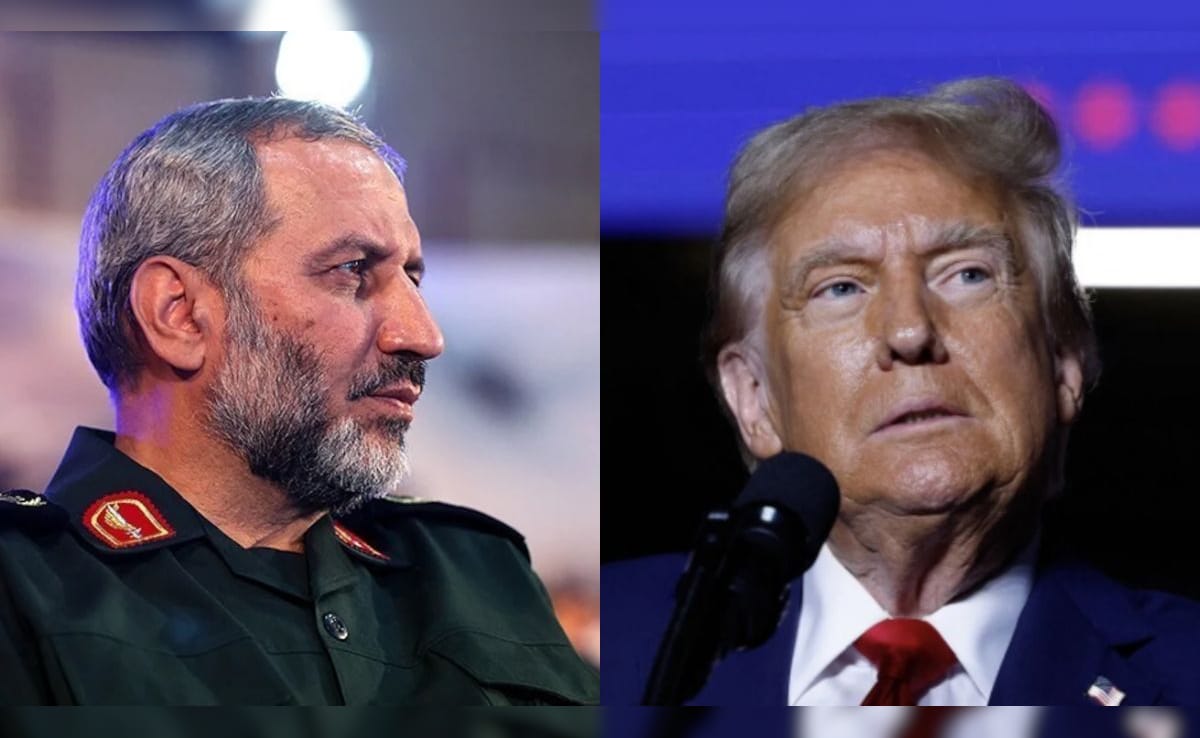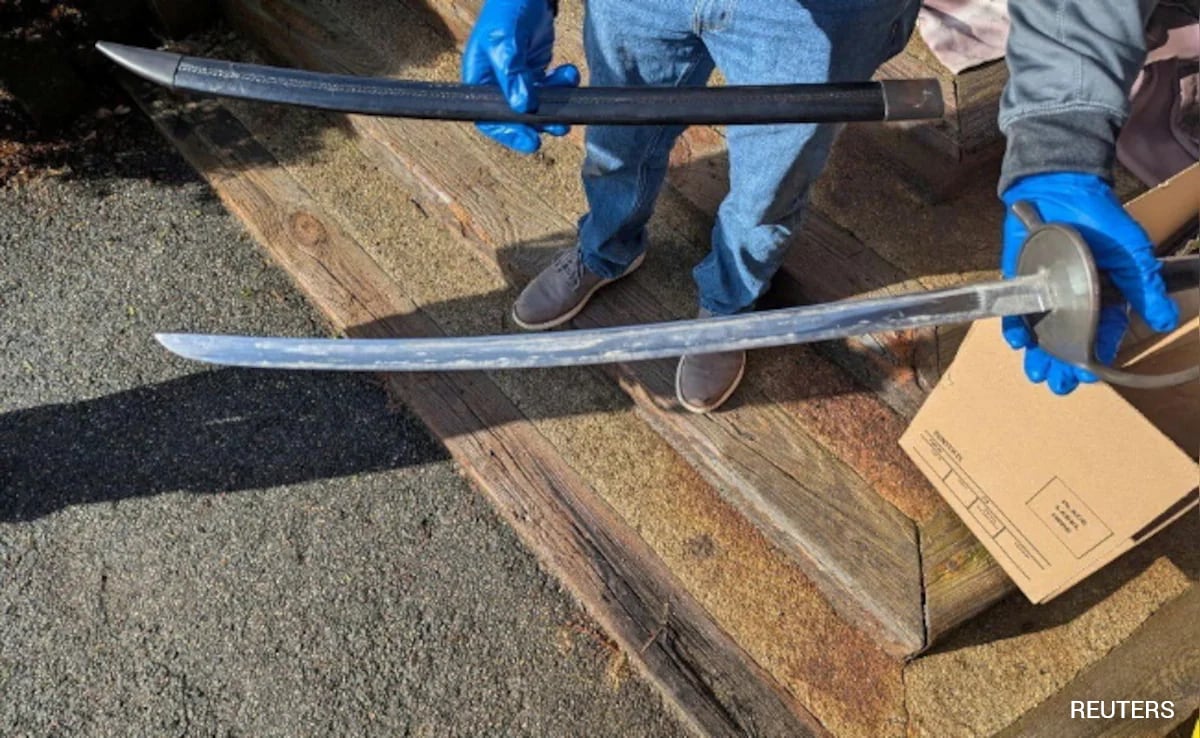
The escalation of digital threats into kinetic confrontations represents a critical failure in the deterrent lifecycle of federal law enforcement. When a 63-year-old Arizona man transitioned from social media-based death threats against Donald Trump to a physical standoff involving a sword, the event highlighted a specific intersection of radicalization, mental health volatility, and tactical engagement risks. Analyzing this incident requires moving beyond the sensationalism of the "sword standoff" to examine the structural mechanics of threat assessment, the logistics of the arrest, and the legal framework governing political violence in the United States.
The Threat Trajectory Spectrum
To understand why federal agents arrived at a residence in Buckeye, Arizona, one must map the Threat Maturation Model. Law enforcement agencies do not deploy tactical teams for every online insult; they deploy when specific criteria of "True Threats" are met under the Watts v. United States (1969) and Counterman v. Colorado (2023) standards.
The subject, identified as Mitchell Ray Gardner, allegedly crossed the threshold from protected speech to actionable threat through three distinct phases:
- Target Specificity: Threats were directed at a specific protected individual, Donald Trump, during a period of heightened political sensitivity.
- Temporal Proximity: The language indicated an intent to act within a defined or immediate window, rather than a vague future desire.
- Capability Assertion: The communication suggested the possession of means to carry out the act, which triggers a mandatory federal response under 18 U.S.C. § 871 (Threats against President and successors to the Presidency).
Tactical Asymmetry in the Standoff Phase
The transition from a standard warrant execution to a standoff involving a non-ballistic weapon (a sword) introduces a specific set of operational challenges known as Tactical Asymmetry. In this scenario, the suspect utilized a weapon that, while less lethal than a firearm at range, creates a "21-foot rule" hazard—the distance at which an attacker with a blade can close the gap before a holstered officer can effectively discharge a firearm.
The standoff duration is a function of the De-escalation Calculus. Federal agents prioritize the preservation of life to avoid creating a "siege-martyr" narrative, which often fuels further domestic extremism. The decision to use non-lethal or "less-lethal" munitions (such as bean bag rounds or flashbangs) is dictated by the suspect's proximity to agents and the structural layout of the environment. In the Buckeye incident, the standoff lasted several hours, indicating a deliberate choice by the FBI to exhaust the suspect’s psychological stamina rather than force a kinetic entry.
The Legal Architecture of Federal Prosecution
The arrest of Gardner is not merely a local criminal matter; it is a federal case managed by the Department of Justice (DOJ). The charges typically involve:
- 18 U.S.C. § 871: Explicitly criminalizes the mailing or making of any "threat to take the life of, to kidnap, or to inflict bodily harm upon the President of the United States."
- 18 U.S.C. § 115: Pertains to influencing, impeding, or retaliating against a Federal official by threatening or injuring a family member.
- Interstate Communication of Threats: Under 18 U.S.C. § 875(c), transmitting a threat via the internet (interstate commerce) carries a maximum of five years in prison.
The prosecution's success hinges on proving Specific Intent. While the defense may argue that the sword was a ceremonial object or that the social media posts were hyperbole, the physical resistance during the arrest serves as powerful evidence of a "willingness to act," bridging the gap between digital rhetoric and physical violence.
Psychographic Profiling and the "Lone Actor" Bottleneck
A significant portion of the FBI’s domestic terrorism workload is consumed by "Lone Actors"—individuals who do not belong to a formal cell but are radicalized through decentralized online networks. This creates a data-processing bottleneck.
The suspect in this case fits the high-risk demographic profile:
- Age and Isolation: Older individuals (50+) in rural or suburban settings who show signs of social isolation.
- Digital Echo Chambers: Heavy reliance on unmoderated or fringe platforms where violent rhetoric is normalized.
- Weapon Hybridization: The use of unconventional weapons (swords, vehicles, incendiaries) which are harder to track than firearms through background checks.
The "sword" element, while seemingly archaic, is a recurring theme in certain extremist subcultures that value "traditional" or "warrior" aesthetics. This symbolic weaponization complicates the risk assessment, as it often correlates with a heightened desire for a dramatic or fatalistic confrontation with authority.
Resource Allocation and the Cost of Interdiction
Every standoff of this nature represents a significant "Sunk Cost" in federal resources. An FBI-led operation involving a tactical team (HRT or SWAT), negotiators, local police support (Buckeye PD), and medical standby can cost the taxpayer between $20,000 and $100,000 per incident depending on duration and equipment deployment.
The opportunity cost is equally high. For every Mitchell Gardner engaged in a six-hour standoff, dozens of other high-level threats are monitored with reduced intensity. This necessitates a Prioritization Algorithm within the FBI's National Threat Operations Center (NTOC), where threats are ranked by:
- Imminence (Is the suspect mobile?)
- Resource Access (Does the suspect have high-capacity firearms?)
- History of Violence (Does the suspect have a prior criminal record or mental health holds?)
Logistics of the Buckeye Arrest Operation
The Buckeye operation was likely a multi-agency effort. The tactical perimeter serves two functions: containment of the threat and protection of the public. In suburban environments, this requires the evacuation of neighboring homes, which adds a layer of civil liability and logistical complexity.
The use of "flashbang" devices (distraction devices) is a standard procedure in these standoffs. These devices create a temporary sensory overload (approx. 170 decibels and 7 million candela), disrupting the suspect's OODA loop (Observe, Orient, Decide, Act). This 2-to-5-second window of disorientation is typically when the arrest is finalized without the need for lethal force.
The Role of Digital Forensics
Post-arrest, the focus shifts to the Digital Footprint Recovery. The FBI will execute search warrants on the suspect’s hardware—phones, laptops, and routers—to determine if he was acting in coordination with others or if he was being "encouraged" by specific online influencers.
The identification of "Inciteful Actors"—people who do not make threats themselves but encourage others to do so—is the next frontier in federal law enforcement. However, current First Amendment jurisprudence makes it difficult to prosecute those who merely "cheerlead" from the sidelines, leaving a gap in the security apparatus that allows individuals like Gardner to be pushed toward the "Action" phase of the radicalization curve.
Strategic Mitigation and Institutional Preparedness
The Buckeye incident confirms that the current "Observe and Report" model for online threats is reactive and resource-heavy. To optimize the response to domestic extremism, a shift toward Predictive Behavioral Analytics is required, though this remains politically and legally contentious.
The strategic play for law enforcement agencies is the expansion of Threat Assessment and Management (TAM) teams. These multi-disciplinary units—comprising psychologists, digital investigators, and tactical officers—aim to intervene before the warrant phase. By utilizing "soft" interventions (mental health referrals, family outreach, or temporary firearm removal orders where "Red Flag" laws exist), the state can theoretically reduce the frequency of high-stakes standoffs.
In jurisdictions like Arizona, where firearm culture is prominent and political polarization is acute, the TAM model faces significant cultural resistance. Consequently, the reliance on high-cost, high-risk tactical interdiction remains the default operational mode. The legal system must now decide if the "sword standoff" was an isolated mental health episode or a calculated act of political intimidation. If the latter is proven, the sentencing must reflect a deterrent for the growing demographic of digital-to-kinetic actors.
The final strategic move for federal agencies involves a doubling down on "Interstate Threat" prosecutions to signal that digital anonymity does not provide immunity from kinetic consequences. By elevating the legal cost of violent rhetoric, the DOJ aims to shift the cost-benefit analysis for potential lone actors before they reach for a weapon.