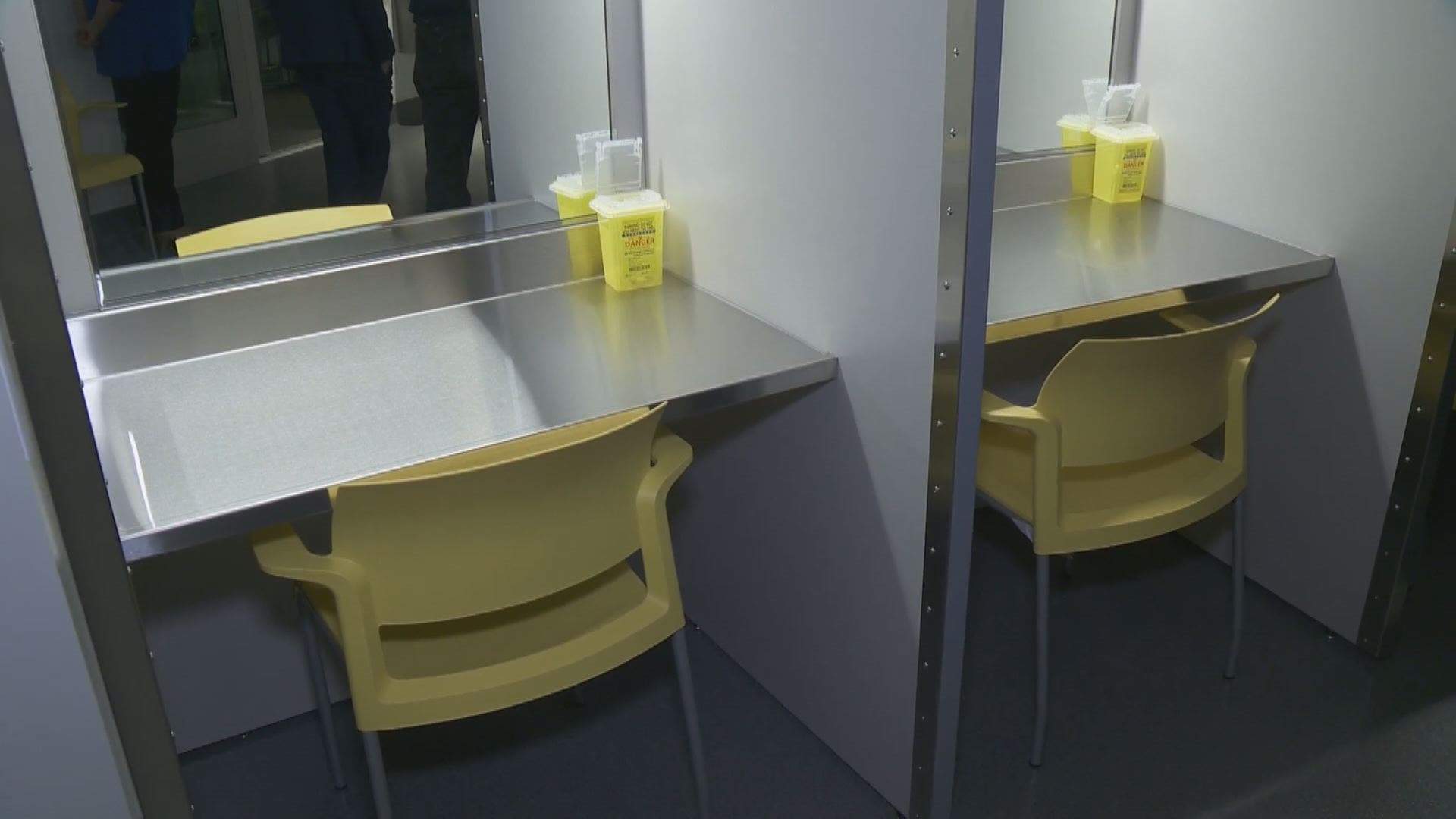
The Health and Recovery Transition (HART) Hub model was conceived as a structural intervention to decouple substance use disorder (SUD) treatment from the criminal justice system. However, twelve months post-activation, the gap between theoretical throughput and operational reality reveals a fundamental breakdown in the continuum of care. This failure is not merely a resource deficit; it is an architectural flaw in how low-barrier entry points interact with a high-friction medical and social services infrastructure. To understand why "addiction services are MIA," one must analyze the three structural bottlenecks preventing these hubs from functioning as the intended engines of recovery.
The Low-Barrier Paradox and Entry-Point Friction
The HART Hubs were designed on the principle of "low-barrier access," which assumes that removing immediate obstacles to entry—such as strict intake hours or rigorous sobriety requirements—will naturally lead to increased service utilization. While this theory holds for initial contact, it creates a secondary "entry-point friction" when the hub attempts to transition a client to specialized care. You might also find this related coverage insightful: The Promise Held In A Vial And Other Illusions.
The friction arises from a mismatch in operational protocols. While the HART Hub operates with an open-door, harm-reduction philosophy, the secondary providers (detox centers, residential treatment, and psychiatric facilities) maintain "high-barrier" requirements, including:
- Medical Clearance Mandates: Requiring physical exams or TB tests that hubs are often unequipped to provide on-site.
- Insurance Pre-authorization: A 24-to-72-hour administrative delay that exceeds the "window of willingness" for a person in active crisis.
- Behavioral Prerequisites: The expectation that a client can maintain stability during a multi-day wait for an open bed.
The result is a stagnant population within the hubs. Instead of acting as a fluid transition point, the hub becomes a static holding cell. The throughput efficiency ($T$) of the system can be expressed as the minimum capacity of any single stage in the recovery chain. If the hub can process 100 people but the downstream detox capacity is only 10, the systemic throughput is 10. The remaining 90 individuals represent a "service vacuum" that advocates mistake for missing services, but is actually a catastrophic queueing theory failure. As reported in latest coverage by CDC, the effects are significant.
The Capital Expenditure vs. Operational Expenditure Imbalance
A primary reason for the perceived absence of services is the misallocation of funding between Capital Expenditure (CapEx)—the physical building and renovation of the hubs—and Operational Expenditure (OpEx)—the actual delivery of clinical interventions.
Advocacy groups highlight a lack of "on-site medical detox" or "medication-assisted treatment (MAT) induction." The absence of these services is rooted in the fiscal reality that HART Hubs were funded as navigation centers rather than clinical facilities. This distinction is critical. A navigation center requires lower-cost peer support specialists, whereas a clinical facility requires:
- DEA-licensed prescribers for buprenorphine or methadone.
- 24/7 nursing staff for vitals monitoring during withdrawal.
- High-liability insurance premiums associated with medical detox.
The current HART model attempts to solve a medical crisis with a social-work budget. Without the vertical integration of clinical services—meaning the ability to provide the first dose of MAT on-site within 60 minutes of arrival—the hub remains a glorified referral desk. This "referral-only" status creates a psychological disillusionment among the target population. When a user enters a hub seeking immediate relief from withdrawal and is handed a list of phone numbers or a bus pass to a distant facility, the hub has failed its primary mission of immediate stabilization.
Structural Fragmentation of the Recovery Ecosystem
The lack of progress in the year since the HART Hubs opened can be attributed to the "fragmentation of the recovery ecosystem." In an optimized system, data and physical transit between nodes would be fluid. In the current iteration, the hubs exist as isolated silos.
The Information Gap
There is no real-time, centralized bed-tracking system. Hub staff must manually call individual facilities to check for vacancies. This manual process is inefficient and prone to error. By the time a spot is confirmed and transport is arranged, the vacancy is often filled by a patient arriving from an Emergency Room or another referral source. This lack of data transparency ensures that the most vulnerable clients—those at the hubs—are always at the back of the line.
The Logistics Gap
The "warm handoff" is a foundational concept in recovery science, yet it is rarely executed. A warm handoff requires the physical transportation of the client from the hub to the next level of care, accompanied by a clinical handoff of records. Without dedicated transport fleets and integrated Electronic Health Records (EHR), the "handoff" is often a "cold drop-off." The client is expected to navigate the transit system while in withdrawal or experiencing mental health crises, leading to high rates of "lost-to-follow-up" before they even reach the treatment facility.
Quantifying the "Missing" Services
When critics claim services are "MIA," they are generally referring to three specific clinical gaps that the HART Hubs have not yet closed.
- Acute Stabilization: The ability to manage the first 24 to 48 hours of withdrawal.
- Dual-Diagnosis Integration: Concurrent treatment for severe mental illness (SMI) and SUD.
- Long-Term Transitional Housing: The "bridge" between detox and independent living.
The HART Hubs were marketed as a comprehensive solution, but they were built as an intake solution. This nuance is vital for policy correction. If the goal is to reduce overdose rates and public drug use, the hub cannot just be a door; it must be a clinic. The absence of these services is not an oversight by the staff; it is a design choice dictated by the existing regulatory and licensing framework which separates "social support" from "medical treatment."
The Resource Scarcity Constraint
Even if the HART Hubs were perfectly designed, they operate within a broader healthcare economy suffering from a chronic labor shortage. The "missing services" are, in many cases, missing people. The vacancy rates for Licensed Clinical Social Workers (LCSWs) and Certified Alcohol and Drug Counselors (CADCs) in the public sector range from 20% to 40% in many jurisdictions.
This labor shortage creates a "tiering" of services. Private-pay facilities attract the highest-quality clinicians, leaving public-funded hubs to struggle with high turnover and understaffing. This creates a cycle where the hub cannot expand its service offerings because it cannot maintain a stable workforce. The lack of services is therefore a function of the Market Clearing Price for clinical labor. Until the state or municipal funding exceeds the private-market rate for these specialized roles, the hubs will remain under-resourced.
Redefining the Hub as a Clinical Node
To move beyond the current state of operational stagnation, the HART Hub model must undergo a radical shift from a "Navigation Hub" to a "Clinical Node." This requires a three-pronged tactical pivot:
- Immediate MAT Induction: State regulations must be streamlined to allow hubs to function as rapid-induction sites for MAT. The time-to-treatment metric must be reduced from days to minutes.
- On-Site Crisis Stabilization Units (CSU): Incorporating 23-hour observation beds allows for the immediate management of acute intoxication or psychiatric distress, bypassing the need for an ER visit.
- Mandatory Bed-Registry Integration: Downstream providers receiving public funds must be required to report real-time bed availability to a centralized system accessible by hub staff.
The failure of the first year of HART Hubs is a failure of integration, not intent. The "missing services" are the result of a system that treats the hub as an island rather than the anchor of a connected chain. Without bridging the gap between social navigation and medical intervention, the hubs will continue to serve as a high-visibility, low-impact response to a crisis that demands clinical depth.
The strategic priority is the elimination of the "referral loop." Every time a client is referred to another location for a service that could be provided on-site, the probability of successful treatment decreases by a measurable margin. The hub must evolve into a one-stop clinical environment where the transition is not to another building, but to another room within the same facility. This vertical integration is the only path toward reducing the "MIA" service gap.