The coffee in the plastic cup had gone cold hours ago. Across from me, a man named Omar—not his real name, but the fear in his eyes is real enough—watched the rain smear against the window of a cramped community center in Brussels. He has lived in the gray spaces of Europe for three years. He cleans offices when the sun is down. He sends half his earnings to a mother who thinks he is a successful businessman. But lately, the air has changed. It isn't just the winter chill. It is the shifting weight of a continent that has decided it is full.
For decades, Europe branded itself as the world’s moral compass, a sanctuary of human rights and due process. That image is fracturing. From the gilded halls of the European Commission to the barbed-wire fences appearing on eastern borders, the conversation has pivoted. It is no longer about how to integrate; it is about how to expel.
The Invisible Architecture of Exit
The numbers tell a story of systemic frustration. In the last year, EU member states issued nearly half a million return orders to individuals without legal residency. Only about twenty percent of those people actually left. To a politician in Berlin or Paris, that eighty percent gap represents a failure of sovereignty. To a voter, it feels like a broken promise.
Brussels is now drafting what they call a "Return Directive." It sounds clinical. It sounds like a filing system. In reality, it is a massive engineering project designed to build a conveyor belt from the heart of Europe back to the places people risked their lives to flee. The goal is simple: make deportations faster, more frequent, and harder to contest.
Consider the mechanics of a "return hub." This is the new buzzword circulating through the European Parliament. The idea involves transporting migrants to third-party countries—nations that are not their home and are not in the EU—while their cases are processed. It is an outsourcing of human presence. If you aren't on European soil, the legal protections of European courts become a distant, muffled echo.
The Echo of the Atlantic
The shift feels familiar because we have seen it across the ocean. When leaders in Italy or Hungary speak about "mass returns" and "sacred borders," they are using a script that was once exclusive to the American political theater. The tactics that were once dismissed as radical or "Trump-like" are becoming the European baseline.
There is a specific kind of political gravity at work here. As right-wing parties gain ground in the Netherlands, Austria, and Germany, the centrist governments find themselves adopting the rhetoric of their rivals to survive. They are building walls—some out of concrete, others out of legislation—to prove they haven't lost control.
But control is a fickle thing. When you streamline deportation, you inevitably trim the edges of due process. You move from individual stories to batches of files.
The Paperwork of Vanishing
I asked Omar if he knew about the new laws. He laughed, a short, dry sound. He doesn't read the directives. He reads the faces of the police in the metro. He reads the tension in the bakery when a siren goes off nearby.
"They want us to be ghosts," he said. "But ghosts don't just disappear because you pass a law. They just go deeper into the shadows."
This is the hidden cost of the deportation push. When you make the path to legal status impossible and the threat of expulsion constant, you create a permanent underclass. People do not simply pack their bags and head back to war zones or failing states because a letter arrived in the mail. They stop going to the doctor. They stop sending their children to school. They disappear into the informal economy, where they are ripe for exploitation by the very criminal networks the authorities claim to be fighting.
The logic of the new European stance relies on "leverage." The EU is increasingly tying trade deals and visa perks for foreign nations to their willingness to take back their citizens. It is a transactional approach to humanity. We will help you build your bridges if you take back the people we don’t want.
The Border Inside the Mind
The most profound change isn't happening at the airports or the detention centers. It is happening in the collective psyche of the continent.
For years, the "Schengen" ideal—the dream of a borderless Europe—was the crown jewel of the union. Now, internal borders are snapping shut. Germany has reinstated checks. France is tightening its grip. The fear of the outsider has become more powerful than the pride of the open door.
We are witnessing the birth of a "Fortress Europe" that isn't just defending its perimeter, but is actively purging its interior. The legal hurdles for deportation are being lowered. The definition of a "safe third country" is being stretched until it is paper-thin. In this new era, a person’s safety is no longer a fixed right; it is a variable in a political equation.
The Weight of the Departure Gate
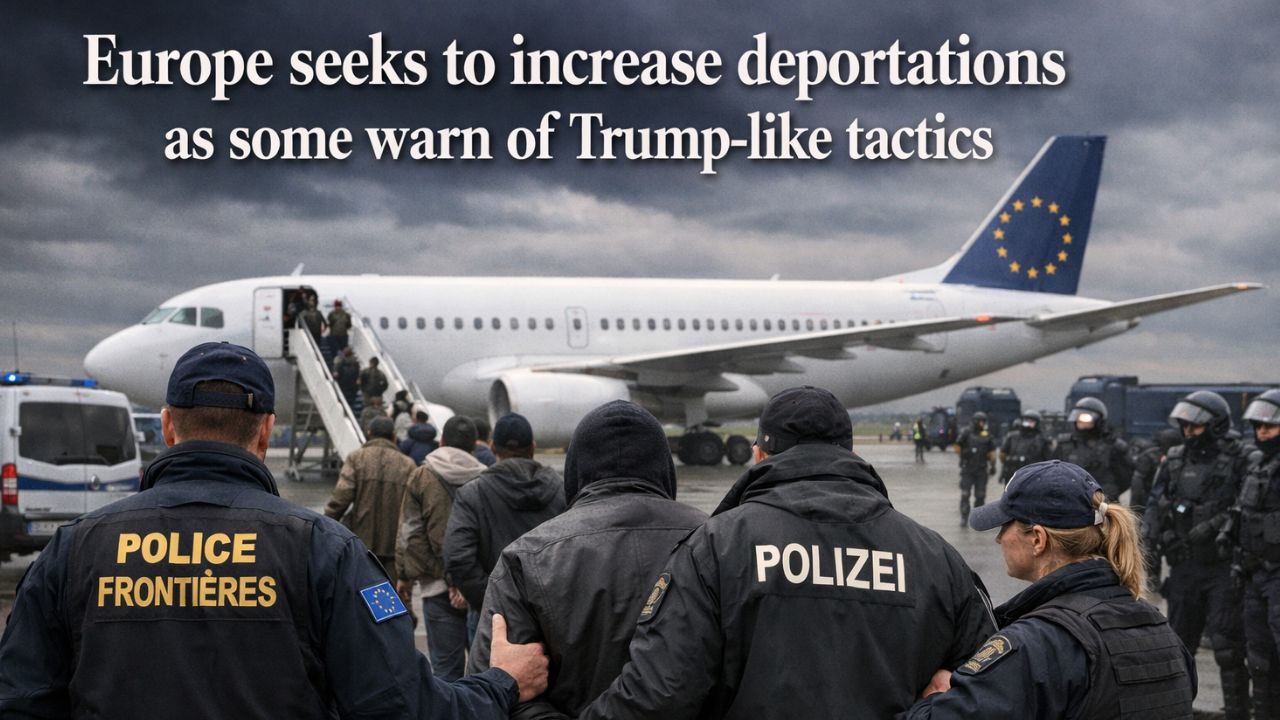
Last week, a charter flight left a small airfield in Western Europe. On board were forty men. Some had been here for months, others for years. There were no cameras. There was no grand political speech. There was only the hum of the engines and the heavy silence of forty different versions of a shattered dream.
The officials call this "restoring order."
But as the plane climbed into the clouds, it left behind a city where the people who clean the floors and cook the food are looking over their shoulders. It left behind a legal system that is slowly learning to prioritize speed over justice.
Omar finished his cold coffee and stood up. He adjusted his jacket, pulling it tight against the Brussels wind. He has to get to work. He will take the long way, avoiding the main station where the patrols usually gather. He is a part of the eighty percent that the statistics say should not be here.
He walked out into the rain, a man moving through a landscape that is rapidly forgetting how to see him as a man, and starting to see him only as a number to be subtracted.
The lights of the city flickered in the puddles. The sirens moved in the distance. The machinery of the new Europe was already turning, quiet and relentless, searching for the next ghost to send home.