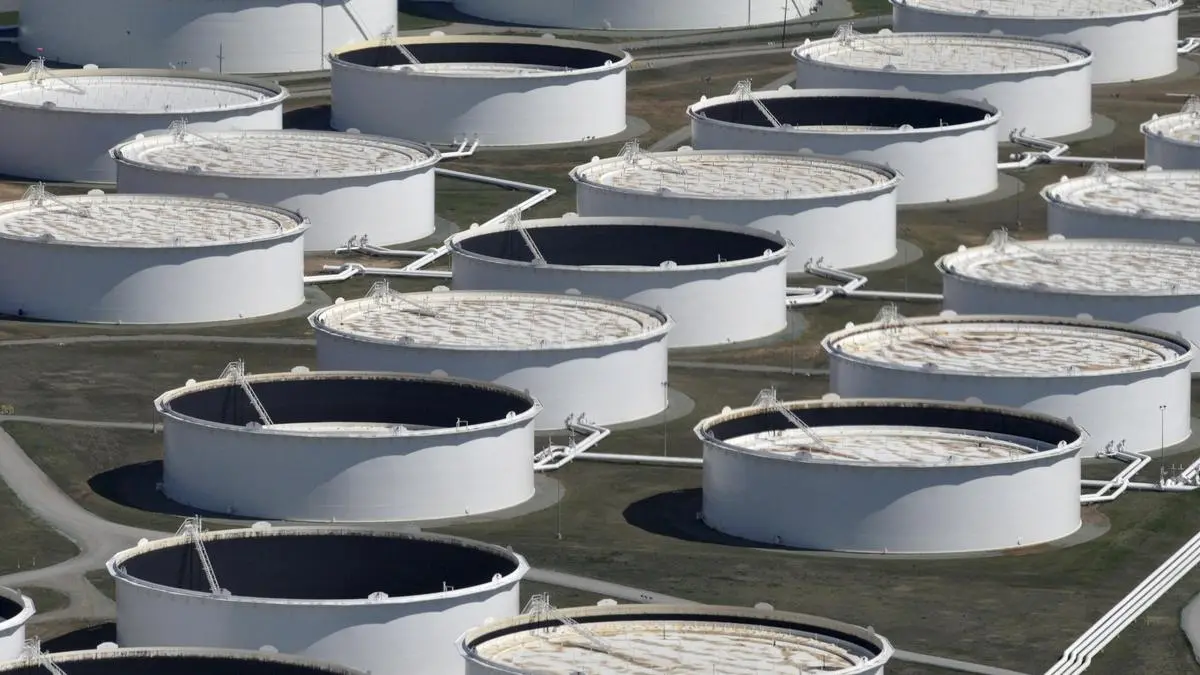
The air in the Khuzestan province doesn’t just carry the heat; it carries the weight of history, thick with the scent of salt and the metallic tang of refined crude. For a worker at the Abadan refinery, the rhythm of life is dictated by the steady hum of the turbines and the orange glow of the flare stacks that lick the midnight sky. It is a predictable, grueling, and essential existence. But lately, that rhythm has been shattered by a sound that no mechanical failure can produce. It is the high-pitched whine of a suicide drone, a sound that transforms a workplace into a front line.
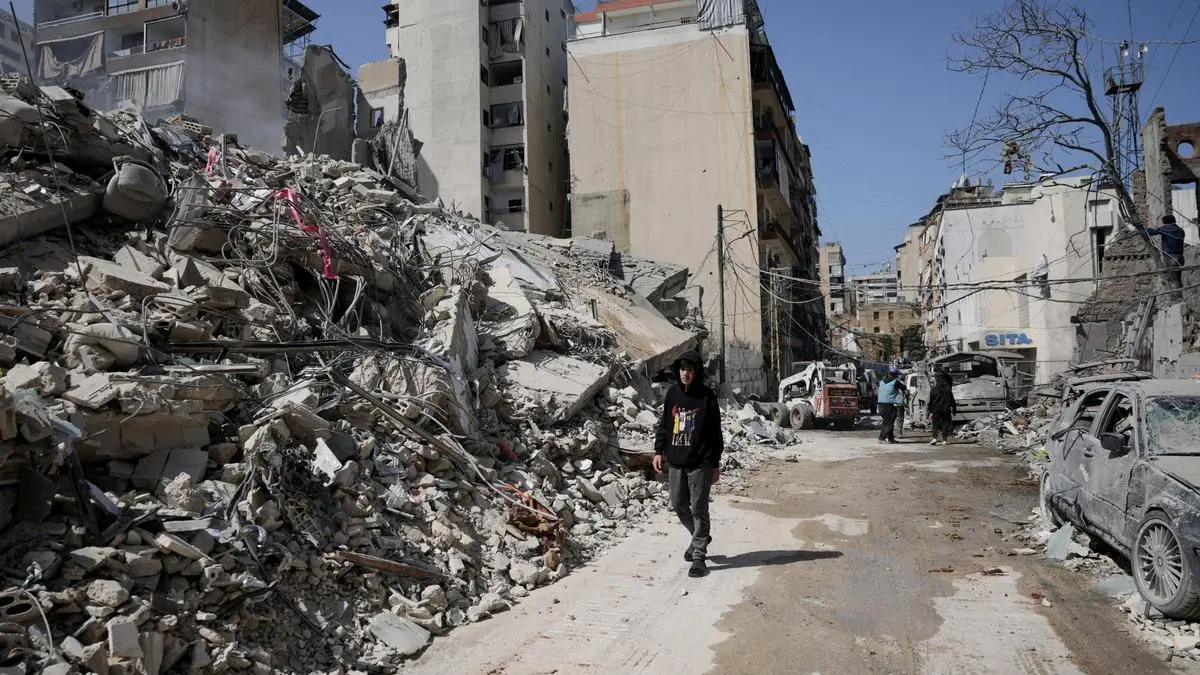
When we talk about "surging oil prices" or "attacks on energy infrastructure," we often treat them as abstractions on a digital ticker. We see green and red arrows. We hear analysts discuss "risk premiums" in air-conditioned studios thousands of miles away. But for the people living in the shadow of these facilities, the conflict isn't about a barrel price. It’s about the vibration in the floorboards. It’s about the sudden, terrifying silence when the power grid fails, followed by the roar of an explosion that turns the horizon into a false dawn.
The Geography of Vulnerability
The current escalation between the warring factions in the region has moved beyond traditional border skirmishes. It has entered a phase of economic attrition where the target isn't a soldier in a trench, but the very lifeblood of the modern state. The Strait of Hormuz remains the world’s most sensitive windpipe, a narrow passage where $20%$ of the globe’s liquid petroleum passes daily.
Consider a hypothetical tanker captain named Elias. He isn't a combatant. He is a mariner responsible for a vessel the size of three football fields, carrying millions of gallons of volatile cargo. When news breaks that a refinery has been struck or a pipeline sabotaged, Elias doesn't just check the charts for mines. He feels the tension in his crew. He watches the insurance premiums for his voyage skyrocket in real-time, sometimes doubling overnight. This is the "invisible tax" of war. Every time a drone finds its mark on a storage tank, every driver at a gas station in a different hemisphere pays a fraction of that cost.
The strategy is simple and devastating. By targeting energy facilities, each side seeks to bankrupted the other’s ability to govern. If you cannot provide electricity to your cities or fuel for your transport, the social contract begins to fray. It is a war of nerves played out in the dark.
The Calculus of Chaos
Global markets are notoriously jumpy, but the current volatility is driven by something deeper than mere supply and demand. It is driven by the realization that the world’s energy buffer is paper-thin. When an attack occurs, the immediate reaction is a spike in Brent Crude. Traders scramble. They bet on scarcity.
But the real story is the long-term erosion of stability.
When a missile hits a pumping station, the damage isn't just the twisted metal. It’s the three years of engineering expertise required to replace a custom-built German turbine that is now under export sanctions. It’s the loss of foreign investment from companies that decide the "geopolitical discount" is no longer worth the headache. The true cost of these attacks is measured in decades of stalled development and a generation of engineers who learn how to repair ruins rather than build the future.
We often assume that because oil is a global commodity, the impact is evenly distributed. It isn't. The wealthiest nations can absorb a $10 %$ increase in energy costs by adjusting their budgets. For a family in a developing economy, that same $10 %$ is the difference between keeping the lights on for homework or sitting in the dark. The "surge" isn't a statistic; it’s a localized tragedy that ripples outward until it touches everyone.
The Ghost in the Machine
Modern energy infrastructure is a marvel of interconnectedness. A strike on a natural gas processing plant in one region can trigger a "load-shedding" event a thousand miles away. This is because the grid is a living thing, constantly balancing the load. When a major node is ripped out, the system gasps.
Imagine the control room during an attack. It isn't like the movies. There are no dramatic countdowns. There is only a wall of monitors suddenly turning red. There is the frantic clicking of mice as operators try to reroute power to hospitals and water treatment plants before the frequency drops too low and the entire system collapses into a "black start" scenario. These workers are the unsung defenders of civilization, fighting a war of logic and physics against the forces of kinetic destruction.
They are fighting a losing battle as long as the hardware remains the primary target. You cannot patch a hole in a pressure vessel with software. You cannot "cyber-secure" a facility against a five-hundred-pound warhead.
The Feedback Loop of Escalation
The danger of this current "tit-for-tat" cycle is that it creates a feedback loop. Attack A leads to higher oil prices, which provides the attacker with more revenue (if they are an oil-producing state) to fund Attack B. Meanwhile, the victim of the attack feels increased pressure to retaliate to "restore deterrence."
But deterrence is a ghost. In the age of asymmetrical drone warfare, the cost of the attack is a tiny fraction of the cost of the defense. A drone that costs $20,000 can cause $200 million in damage and send global markets into a tailspin. This math is what keeps the fires burning. It is too "efficient" for either side to stop.
As the conflict intensifies, the rhetoric shifts. Leaders stop talking about "targeted strikes" and start talking about "total economic paralysis." This is the point where the human element is most at risk. When the goal is to make a country unlivable, the primary victims are not the politicians in their bunkers, but the shopkeeper whose refrigeration fails and the commuter who can no longer afford the bus.
The Fragility of the Status Quo
We have spent the last century building a world that relies on the friction-less movement of energy. We assumed the pipes would always flow and the tankers would always arrive. We treated the energy infrastructure as part of the geography, as permanent as a mountain range.
We were wrong.
The attacks we are seeing now are a reminder that our entire way of life is built on a foundation of "if." If the straits stay open. If the refineries stay intact. If the grid holds. We are witnessing the fragility of that "if" in real-time. The surge in oil prices is merely the fever; the attacks on the infrastructure are the infection.
There is a specific kind of silence that happens after a massive explosion at a refinery. It’s a ringing, hollow quiet where the background noise of the city has been extinguished. In that silence, the people of Abadan, and the people in cities just like it across the region, wait. They wait to see if the lights will come back on. They wait to see if the next drone will be louder than the last. They wait for a world where their livelihood isn't a target.
The crude continues to pump, for now. The tankers continue to sail, wary and darkened. But the cost of every gallon is rising, and it isn't just being paid in dollars. It is being paid in the steady, grinding erosion of the certainty that tomorrow will be as bright as today.
The flare stack in the distance flickers, a lonely candle against a sky that feels increasingly crowded.