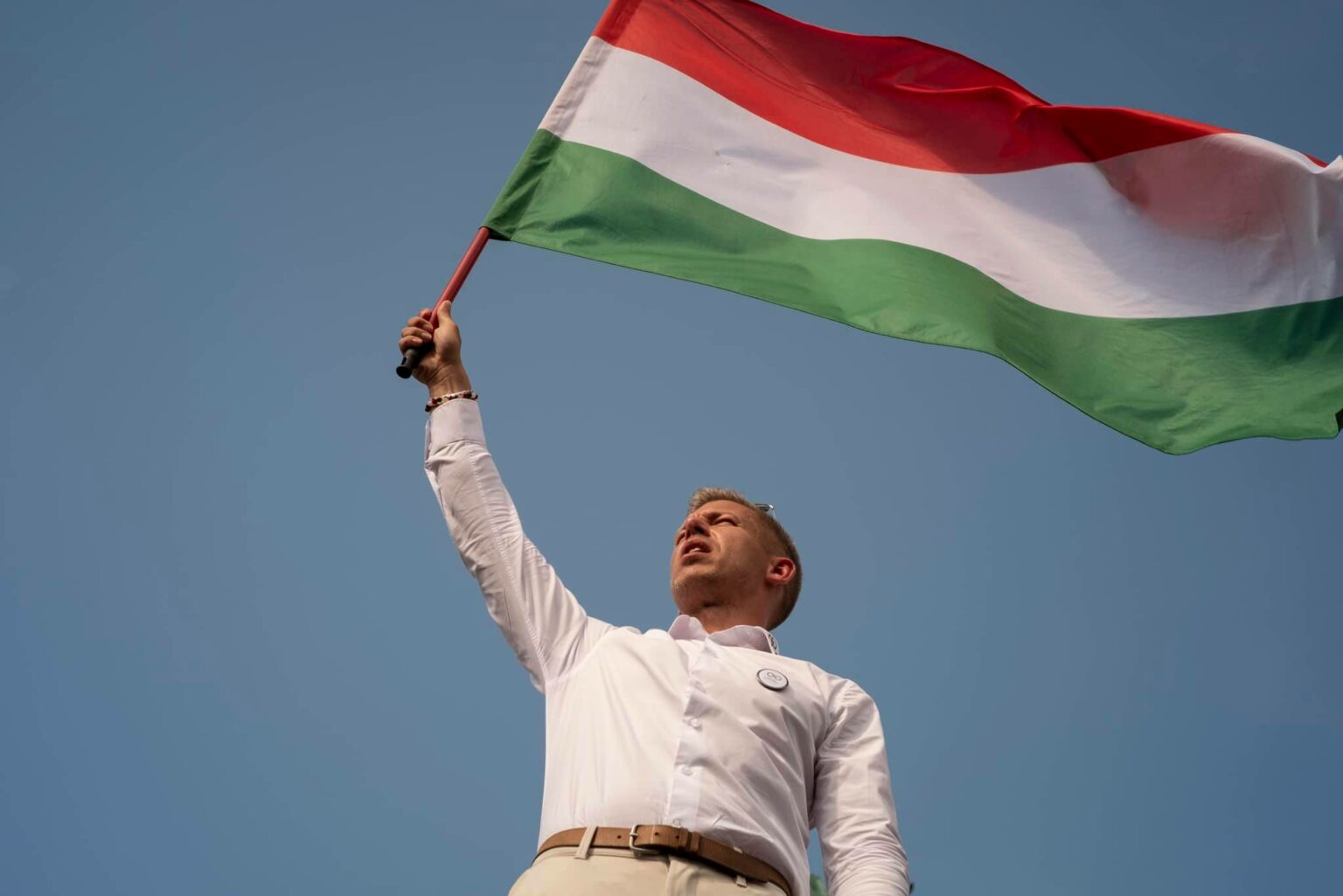
The air in Budapest usually carries the scent of roasted coffee and diesel, but on this particular Sunday, it smelled like ozone before a thunderstorm. You could feel it in the soles of your feet. For nearly two decades, the political geography of Hungary had felt like a fossilized seabed—hard, unmoving, and predictable. Then came Péter Magyar.
To understand what happened this week, you have to look past the tallies and the dry percentages reported by news wires. You have to look at the hands of the people in the crowd. There were hands calloused from farm work in the Great Plain, and hands that spend their days hovering over MacBooks in District V. They were all holding the same tricolor flag. They weren't just voting for a man; they were participating in a collective exhaling of a breath held for sixteen years.
The victory wasn't just a political shift. It was a glitch in a reality that many believed was permanent.
The Man from the Inside
Péter Magyar didn't emerge from the fringes of radical activism. He came from the mahogany-paneled rooms of the establishment. He was the ultimate insider, a man who knew the cadence of the regime because he had helped compose its music. This wasn't a stranger knocking on the door; it was the house architect pointing out the cracks in the foundation.
When he broke away, he didn't just bring secrets. He brought a specific kind of hope that only a defector can provide—the idea that the system isn't a monolith, but a collection of people who can, at any moment, choose to walk away.
Imagine a village where the clock has been stuck at noon for years. Everyone knows it’s evening. They see the stars. They feel the chill. But the official clock says noon, so they keep acting as if the sun is overhead. Magyar walked into the square and simply pointed at the moon. The moment he did, the spell broke.
The European Sigh of Relief
In Brussels, the reaction was less about partisan triumph and more about the restoration of a lost limb. For years, the European Union has dealt with Hungary like a family dealing with an eccentric, often combative relative who refuses to follow the house rules but still wants to sit at the dinner table.
Leaders across the continent didn't just send polite congratulatory notes. They spoke with a warmth that felt almost visceral. They saw in Magyar’s victory a sign that the populist tide, which many feared was an unstoppable force of nature, might actually be a seasonal event.
The stakes here are invisible but massive. We are talking about the integrity of the Schengen Area, the flow of billions in developmental funds, and the unified front against aggression to the east. When Hungary moves an inch toward the center, the entire continent feels a foot more stable.
Why This Felt Different
Standard political analysis tells us that voters care about the economy, healthcare, and education. While true, those are intellectual concerns. This election was fought in the gut.
For years, the narrative in Hungary was one of "us versus them." The "them" was always changing—Brussels, migrants, George Soros, the clouds—but the "us" was always defined by a narrow, rigid set of rules. Magyar changed the definition of "us." He spoke to the middle. He spoke to the tired. He spoke to the people who were weary of being told they had to hate their neighbors to be patriots.
Consider a hypothetical voter named András. András is fifty. He remembers the fall of the Wall. He has spent the last decade keeping his head down, watching his children move to London and Vienna because they felt the air in Budapest was getting too thin to breathe. For András, Magyar wasn't a savior. He was a window. A way to let some air back into the room so his kids might consider coming home for more than just Christmas.
The Mechanics of the Surge
The victory was fueled by a digital grassroots movement that bypassed the state-controlled media apparatus. While the traditional channels were broadcasting the same tired scripts, the real conversation was happening on Telegram, in Facebook groups, and in whispered conversations over unicum in basement bars.
The numbers are staggering when you consider the lopsidedness of the playing field. Magyar’s Tisza party didn't have the billboards. They didn't have the television slots. They had something more potent: the momentum of a secret that everyone was finally allowed to tell.
- The Transparency Factor: Magyar’s campaign operated on the principle of the "open book." By admitting his own past role in the system, he neutralized the standard attacks used against the opposition.
- The Rural Awakening: For the first time in a generation, the opposition didn't just win in the cosmopolitan bubble of Budapest. They made inroads into the heartland, the small towns where the government's grip was thought to be absolute.
- The Youth Pivot: Voters under thirty, who have known no other leader than the incumbent, turned out in record numbers. They didn't see a choice between two parties; they saw a choice between a museum and a future.
The Weight of the Morning After
Winning is the loud part. Governing is the silence that follows.
Magyar now faces the Herculean task of dismantling a system of patronage that is woven into the very fabric of the country’s bureaucracy. It is easy to tear down a fence; it is much harder to heal the soil where the fence stood. The euphoria of the victory is already being met with the sober reality of expectations.
The world is watching to see if this was a fluke or a blueprint. Can a centrist movement, led by a charismatic defector, actually unseat a deeply entrenched populist machine? Hungary has become a laboratory for the soul of modern democracy.
The invisible stakes are the most important ones. This wasn't just about who sits in the Parliament building on the banks of the Danube. It was about whether the concept of truth can still win an argument in an era of deepfakes and state-sponsored echoes.
As the sun rose over the Fisherman’s Bastion the morning after the results were finalized, the city looked the same. The yellow trams still rattled across the bridges. The parliament building still glowed with its Gothic intensity. But the people walking to work moved differently. There was a lightness in the stride of the commuters.
A victory like this doesn't just change the laws. It changes the way a person looks at their neighbor. It suggests that the person standing next to you on the metro might, despite everything you’ve been told, want the exact same thing you do: a country where the clock finally strikes the right hour.
The lights in Budapest are still on, but they are shining on a different city now. The fossilized seabed has cracked, and for the first time in a very long time, something new is growing in the gaps. It is fragile, it is uncertain, and it is undeniably alive.