The air in Isfahan usually carries the scent of rosewater and the ancient dust of the Silk Road. It is a city of turquoise domes and arched bridges, a place where history isn't studied so much as it is inhaled. But on a Tuesday that felt like any other, the atmosphere shifted. It wasn't a change in the wind. It was a change in the weight of the sky.
Somewhere in the stratosphere, a steel beast transitioned from a mathematical coordinate to a physical reality. The GBU-28, a 900-kilogram slab of laser-guided destruction known colloquially as the "Bunker Buster," began its descent. This isn't just a bomb. It is a five-thousand-pound architectural argument designed to settle disputes with the bedrock itself.
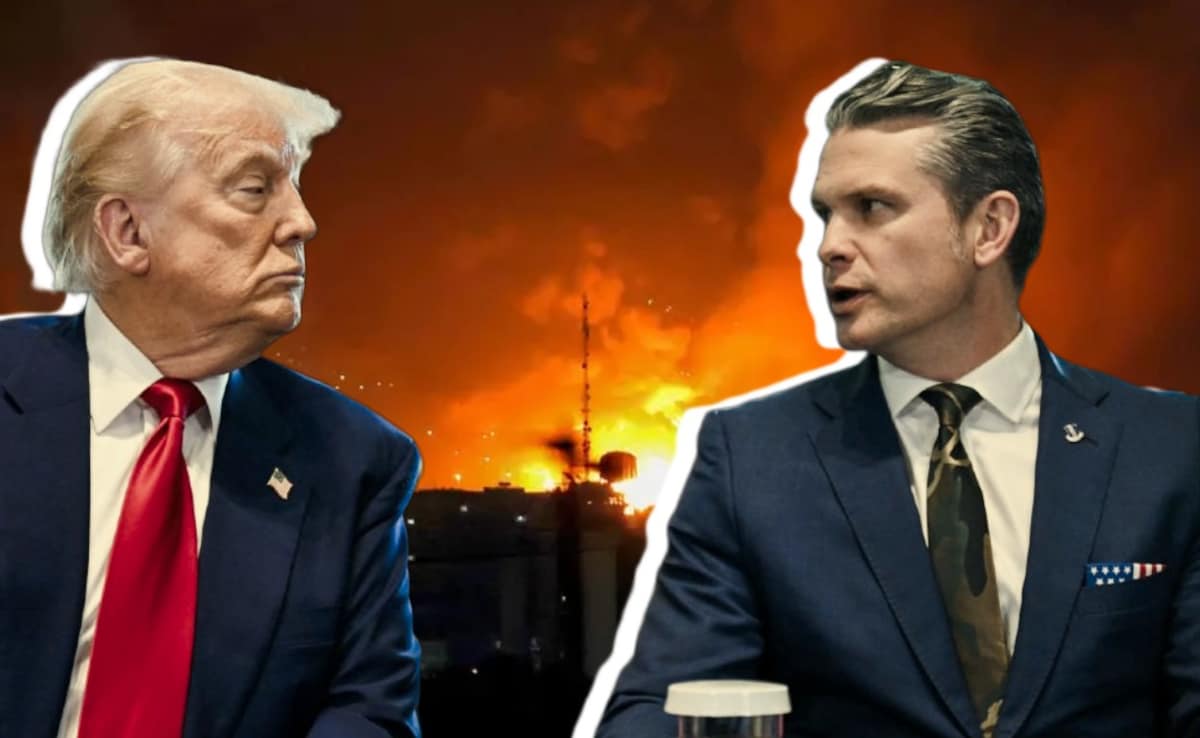
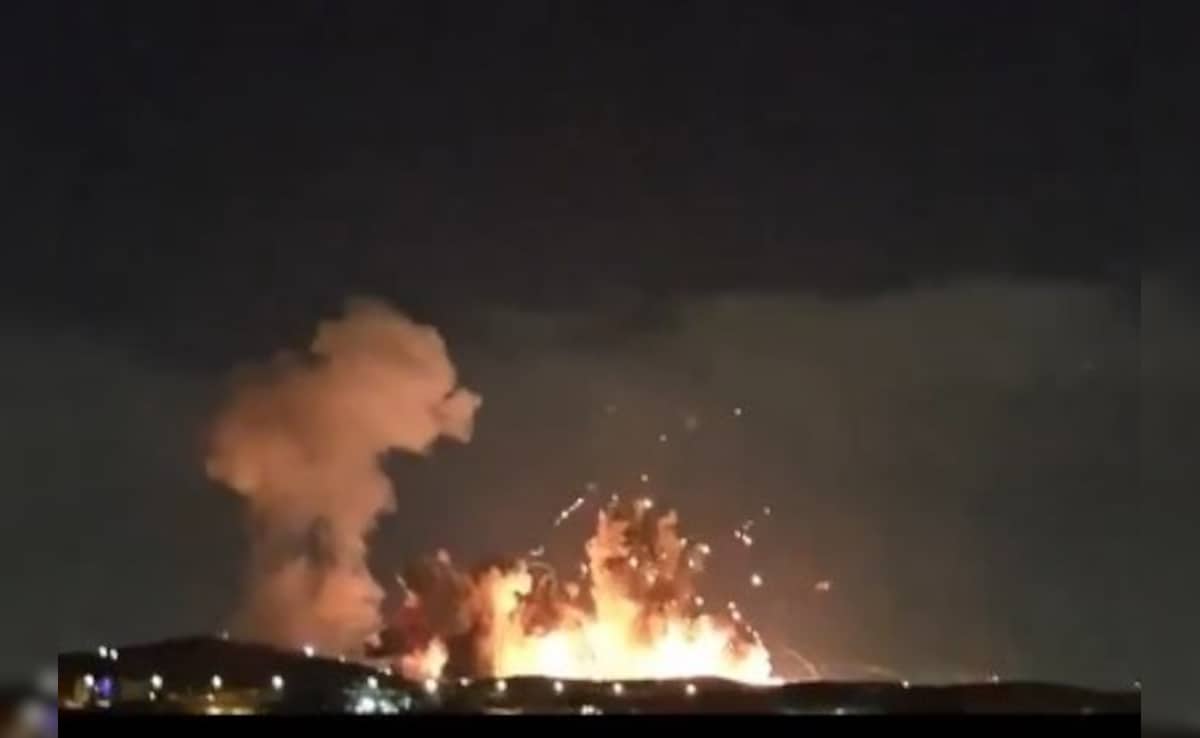
When Donald Trump shared the footage, the digital world treated it like another flickering pixel in an endless feed of geopolitical theater. We watch these videos on five-inch screens while waiting for coffee. We see the grainy black-and-white crosshairs, the silent bloom of a gray explosion, and the sudden cut to black. It feels clinical. It feels like a video game.
It isn't.
The Physics of the Unfathomable
To understand what happened in Isfahan, you have to stop thinking about explosions as fire. At this scale, an explosion is a kinetic conversation between man-made alloy and the crust of the Earth. A GBU-28 doesn't just hit a target; it introduces itself to the deep geology of a site.
Imagine a needle made of hardened steel, long as a sedan and heavy as a freight elevator, falling from the heavens. It is designed with a singular, terrifying purpose: to refuse to stop. When it hits the surface, it doesn't detonate immediately. That would be too simple. Instead, it uses its immense mass and velocity to "bore" through layers of reinforced concrete, soil, and granite. It treats the earth like water.
Only after it has burrowed deep into the subterranean veins of a facility—where the centrifuges hum and the scientists work in fluorescent-lit hallways—does the fuse trigger. The resulting shockwave doesn't go up. It goes out. It turns a bunker into a pressurized tomb.
The reports state the target was a facility near Isfahan, a region synonymous with Iran’s nuclear ambitions. For the strategist in Washington or the pilot in the cockpit, this is a "hardened target" neutralized. But for the person living three miles away, it is the moment the floor becomes an ocean. The windows don't just break; they atomize. The sound isn't a bang; it is a physical blow to the chest that steals the oxygen from your lungs.
The Man Behind the Share
When the former president hit "post," he wasn't just sharing news. He was wielding a specific kind of visual currency. In the modern age, a bomb doesn't truly explode until it is seen by a million people. The video serves as a punctuation mark in a long, rambling sentence of international Brinkmanship.
There is a psychological weight to seeing a 900-kilogram weapon strike. It serves to remind the world that the "red lines" drawn in diplomatic ink are backed by the cold, hard reality of specialized ordnance. By sharing the footage, Trump signaled a return to a specific brand of American posture: the "Big Stick" policy updated for the TikTok era.
But there is a disconnect between the grainy overhead footage and the human reality on the ground. We see the "hit," but we don't see the aftermath. We don't see the dust that hangs in the air for days, a fine powder of pulverized concrete and history. We don't see the terrified eyes of children who now realize that even the ground beneath their feet is no longer a promise of safety.
The Invisible Stakes of Isfahan
Why Isfahan? Why now?
The geography of Isfahan is a map of modern anxiety. It houses the Uranium Conversion Facility. It is the heart of a program that the West views as a ticking clock and Tehran views as a point of national pride. When a Bunker Buster falls here, it isn't just hitting a building. It is hitting the very idea of Iranian sovereignty.
Consider a hypothetical engineer named Abbas. He isn't a politician. He is a man with a degree in physics who took a job because it paid well and allowed him to stay near his aging parents. He spends his days monitoring pressure gauges and sipping tea. To him, the facility isn't a "threat" or a "target." It is an office.
When the GBU-28 arrives, Abbas doesn't see a political statement. He sees the ceiling liquefy.
The "invisible stakes" are the ripples this creates in the global psyche. Every time a weapon of this magnitude is used, the threshold for what is considered "acceptable" warfare shifts. We are moving into a period where the surgical strike is no longer a rare exception but a standard tool of communication. We are talking to each other through craters.
The Anatomy of a Shockwave
There is a specific rhythm to a high-stakes military operation. It begins with silence—the silence of satellites drifting over the Iranian plateau, snapping infrared photos that turn heat signatures into targets. Then comes the logistics, the fueling of planes, the checking of coordinates, and the final, heavy "thunk" as the 900-kilogram GBU-28 is latched onto the pylons.
Then, the release.
The bomb travels in a silent arc. It is guided by a laser designator, a tiny dot of light that acts as a finger pointing toward the end of the world for those beneath it. The GBU-28 is unique because of its casing; it is often made from repurposed artillery barrels—thick, heavy tubes of high-quality steel. It is built to survive the impact so that the explosion can happen where it hurts most.
When it struck Isfahan, the energy released was equivalent to a minor earthquake. Seismographs in neighboring countries likely registered the event before the news even broke. This is the new face of conflict: it is measured in Richter scales and megabytes.
The Deeper Fracture
Beyond the smoke and the political posturing lies a more profound fracture. The use of "Bunker Busters" signifies a shift from deterrence to active dismantling. For years, the presence of these facilities deep underground was thought to be a safeguard—a way to ensure that any attack would be too difficult or too costly to attempt.
That illusion has evaporated.
The message sent to Tehran, and by extension to the world, is that there is no "deep" deep enough. No amount of reinforced concrete can provide sanctuary from a 900-kilogram kinetic penetrator. It turns the earth itself into a weapon against those hiding within it.
We often talk about these events in terms of "escalation" or "de-escalation," as if we are turning a dial on a stove. But escalation isn't a dial. It is a staircase. And with each step—each shared video of a subterranean strike—we climb higher into a thin-aired atmosphere where mistakes become catastrophes.
The video shared by Trump is a Rorschach test. To some, it is a display of necessary strength, a reassurance that the world’s most powerful military can reach any shadow. To others, it is a terrifying glimpse into a future where the line between "targeted strike" and "total war" is blurred beyond recognition.
Shadows on the Turquoise Domes
As the dust eventually settles over Isfahan, the city remains. The bridges still stand. The rosewater still scents the air. But the silence has changed. It is no longer the silence of peace; it is the hushed, ringing ears of a population that knows the sky can open up at any second.
We watch the video again. The black-and-white crosshairs. The silent bloom. We hit the "like" button or we scroll past, returning to our lives of mundane concerns. But somewhere deep beneath the soil of Iran, the bedrock is still cooling. The fractures in the earth are permanent.
The 900-kilogram truth is that we have reached a point where we can delete a building from the map as easily as we delete a file from a desktop. We have mastered the art of reaching through the earth to crush a heart. What we haven't mastered is how to live with the ghosts that rise from the resulting dust.
The ground in Isfahan has stopped shaking, but the vibrations are still traveling, moving outward across borders and through the digital ether, waiting to see where the next tremor will begin.