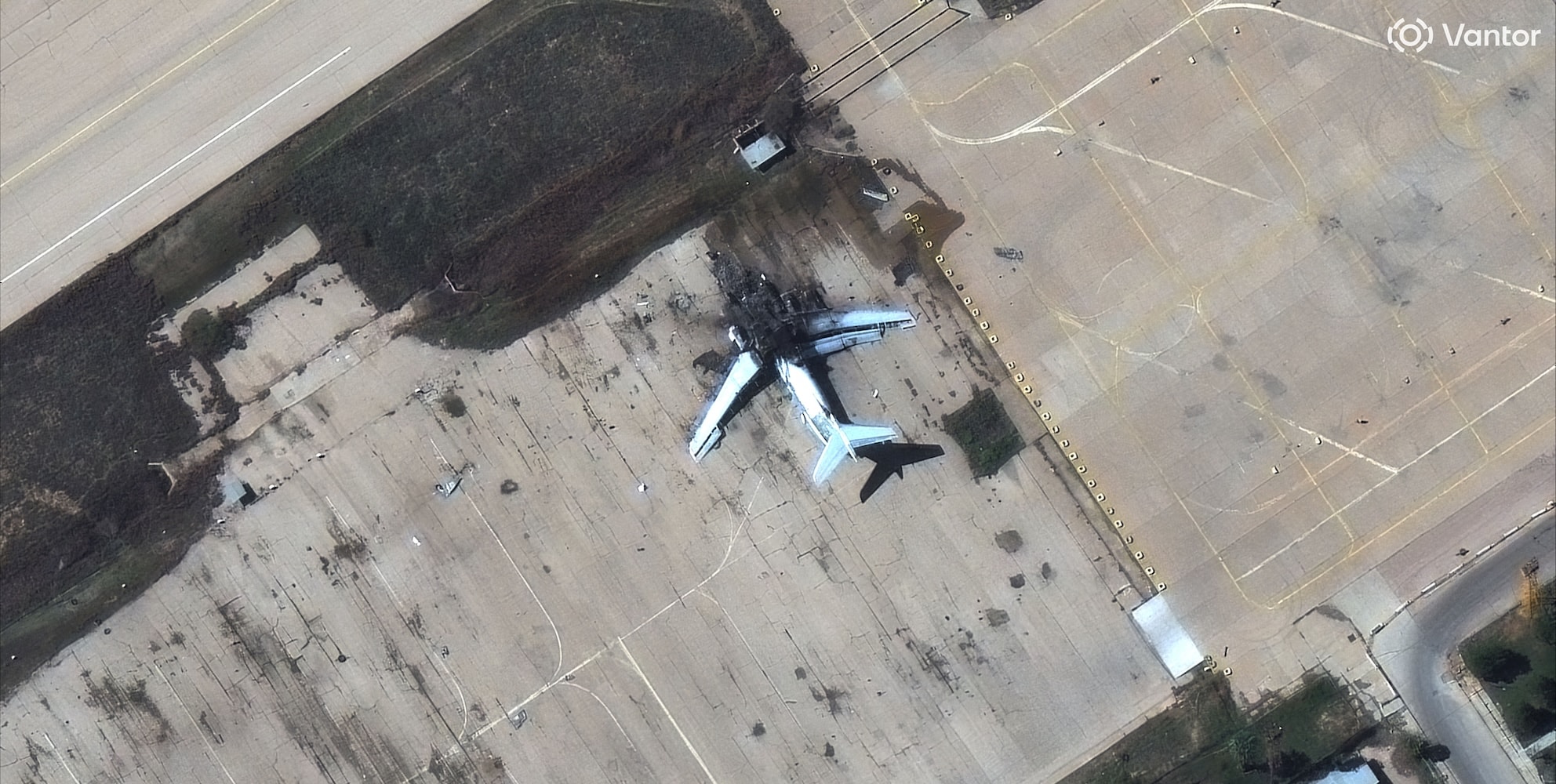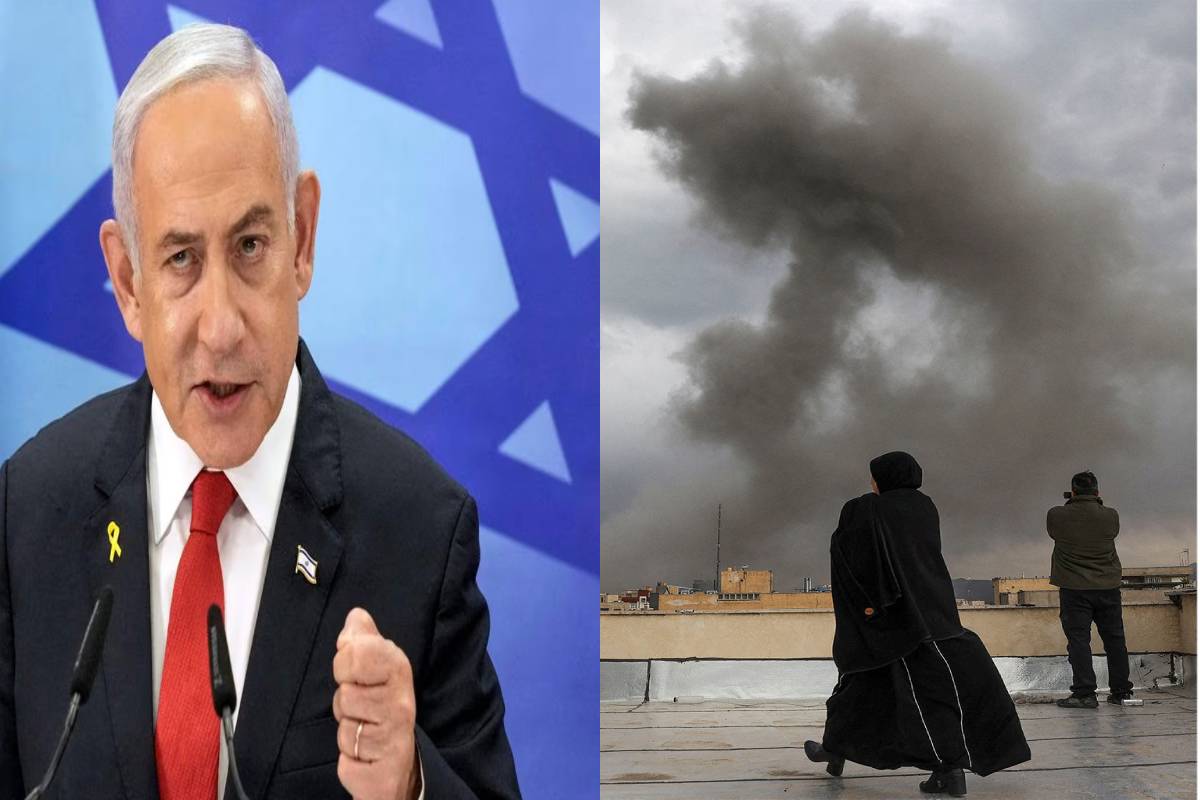
The windows of the dormitories didn't just break; they dissolved into a fine, crystalline powder that coated the notebooks of students who had stayed up late to study for exams. It was well past midnight. In the Sharif University of Technology district, the air usually carries the faint, metallic scent of industrial exhaust and the lingering aroma of saffron rice from street carts. In an instant, that scent was replaced by the acrid, choking stench of high explosives and pulverized concrete.
Tehran is a city that has learned to sleep with one eye open, but the strike on the university complex felt different. It wasn't just a military target on a digital map. It was a puncture wound in the intellectual heart of the country.
The Calculus of Kinetic Force
War today isn't fought with the clumsy bayonets of the past. It is a mathematical equation executed at three times the speed of sound. When the Israeli missiles struck targets linked to the Islamic Revolutionary Guard Corps (IRGC) inside the university perimeter, they weren't just aiming for brick and mortar. They were targeting a specific kind of dual-use infrastructure.
Imagine a research lab. On the surface, it looks like any other academic space: whiteboards covered in scrawled differential equations, rows of high-performance servers humming in air-conditioned silence, and grad students fueled by cheap tea. But in the shadow of the IRGC’s influence, those same servers might be crunching data for drone guidance systems or encryption protocols for proxy networks. This is the invisible tragedy of modern Tehran. The line between a student’s dissertation and a general’s tactical advantage has been blurred until it no longer exists.
The strike wasn't a random act of aggression. It was a surgical removal. The precision required to hit a specific wing of a university building while leaving the surrounding residential blocks relatively intact—save for the shattered glass—is a testament to a terrifying level of surveillance. It means that somewhere, in an office in Tel Aviv, someone has a floor plan of that school. They know which room holds the servers and which room holds the poetry books.
The Ghost in the Lecture Hall
Consider Arash. He is a hypothetical student, but his reality is shared by thousands. Arash spent three years scraping together the tuition and the political willpower to study aerospace engineering. He doesn't care about the ideological struggle between the Supreme Leader and the "Zionist Entity." He cares about the fluid dynamics of wing design. He wants to work for an airline.
When the explosion rocked his desk, Arash wasn't thinking about geopolitics. He was thinking about the fact that his research—years of data stored on those targeted servers—was gone.
The IRGC uses these institutions as human shields of the intellect. By embedding military research within civilian universities, they force an impossible choice on their adversaries: allow the technology to develop, or strike a school. When the strike happens, the IRGC gains a propaganda victory, and the students lose their future. It is a cynical cycle that treats the brightest minds of a generation as collateral damage in a game they never asked to play.
The debris in the streets of Tehran tells a story that the official news agencies refuse to print. Among the blackened rebar and the chunks of gray stone, you can find the remains of everyday life. A charred sneaker. A singed copy of a physics textbook. A shattered smartphone. These are the artifacts of a life interrupted by the cold logic of regional hegemony.
A City of Shadows and Sirens
Tehran’s skyline is dominated by the Alborz Mountains, majestic and indifferent. Below them, the city is a grid of frantic energy. But after the strike, a heavy, suffocating silence descended. The sirens of the ambulances were the only rhythm left.
The IRGC immediately cordoned off the area. They don't want the world to see what was actually inside those buildings. If the public sees only the rubble of a "university," the narrative is simple: Israel attacked a school. If the public sees the specialized hardware and the classified documents fluttering in the wind, the narrative becomes complicated. And complexity is the enemy of the state.
The technical reality of the strike involves a sophisticated interplay of electronic warfare and satellite guidance. To penetrate the air defenses of a sovereign capital, the incoming projectiles had to "speak" to the Iranian radar systems, convincing them they were nothing more than ghosts or glitches. This isn't just a physical war; it is a battle of code. The missiles are merely the final punctuation mark in a long, silent sentence written in binary.
The Weight of the Invisible Stakes
Why does this matter to someone sitting thousands of miles away? Because the strike on Tehran is a preview of the future of global conflict. We are moving into an era where there is no "front line." The battlefield is the power grid, the water treatment plant, and, increasingly, the university laboratory.
When we talk about "dual-use technology," we often treat it as a dry, bureaucratic term. It is anything but. It is the reason a student’s hard drive becomes a legitimate military target. It is the reason a professor might be watched by three different intelligence agencies. The stakes are the erosion of the sanctuary of thought. If schools are no longer safe from the reach of missiles because they have been co-opted by the machinery of war, then the very foundation of progress is under threat.
The people of Tehran are resilient. They have lived through revolutions, eight years of war with Iraq, and decades of soul-crushing sanctions. They know how to sweep up the glass and keep going. But you can only replace a window so many times before you decide it’s better to live in the dark.
The true cost of the strike isn't measured in the millions of dollars of hardware destroyed. It is measured in the tremor in a student's hands as they try to pick up a pen the next morning. It is measured in the silence of a mother who realizes that sending her son to the best university in the country might have been the most dangerous thing she ever did.
As the sun began to rise over the Alborz the next day, the smoke from the university district mingled with the morning mist. The IRGC issued their statements of defiance. Israel maintained its customary, calculated silence. And on the ground, a janitor began the long, thankless task of sweeping the dust of a laboratory into a plastic bin. He moved slowly, his broom scratching against the pavement, a solitary sound in a city that was still holding its breath. The math was done. The target was neutralized. But the humans left in the wake of the equation were still trying to figure out how to live in a world where even the classrooms can scream.
The ink on the diplomas may be dry, but the air in Tehran still tastes like fire.