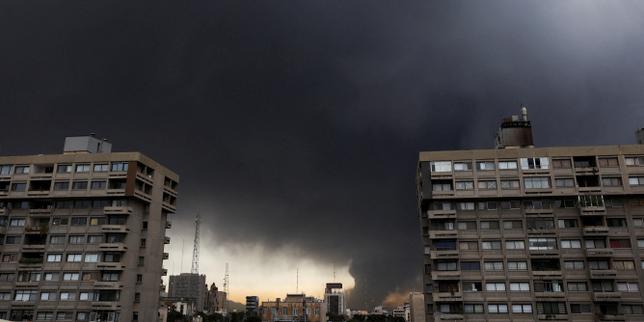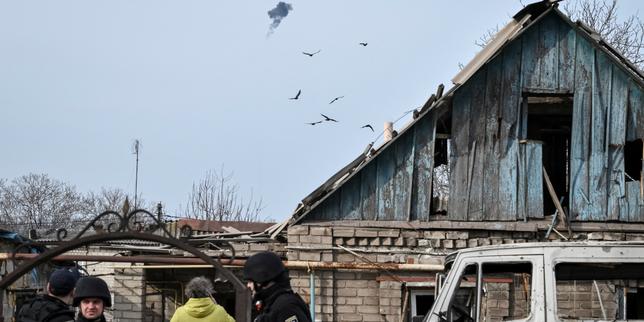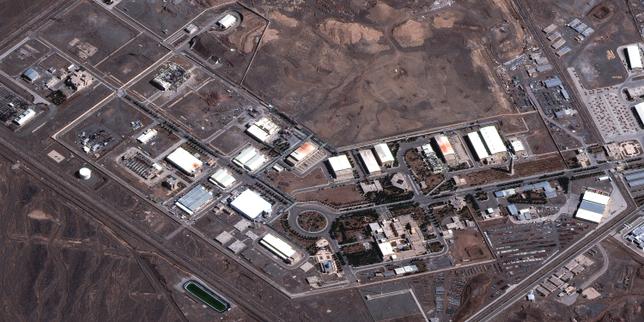
The sirens in Isfahan weren't a drill this time. When news broke that joint U.S. and Israeli forces launched a precision strike on the Natanz nuclear facility, the global geopolitical landscape didn't just shift. It fractured. We aren't looking at another "tit-for-tat" exchange in a long-standing shadow war. This is a direct, kinetic assault on the crown jewel of Iran’s nuclear program, and it marks a point of no return for Middle Eastern security.
For years, the "red line" was a moving target. Analysts argued about whether the West would ever actually pull the trigger on a site buried under meters of reinforced concrete. Well, they pulled it. If you've been following the regional tensions, you know Natanz isn't just any warehouse. It's the heart of Iran’s uranium enrichment, housing the sophisticated IR-6 centrifuges that have been spinning closer and closer to weapons-grade levels.
This strike wasn't a lone wolf operation. It was a massive, coordinated display of electronic warfare and bunker-busting capability that bypasses years of failed diplomacy. The immediate question isn't just about the physical damage. It’s about what happens to the global oil market, the safety of shipping lanes in the Strait of Hormuz, and whether we're looking at the opening act of a much larger regional conflict.
The Strategic Reality of the Natanz Operation
Let’s be real about the "why" here. Diplomacy has been on life support for months. The International Atomic Energy Agency (IAEA) had been sounding increasingly desperate alarms about the lack of access to Iranian sites. When you see the U.S. and Israel acting in such public synchronicity, it’s a signal. They’re telling the world—and Tehran—that the window for talk is officially nailed shut.
Natanz is located in central Iran, carved into the mountains to survive exactly this kind of scenario. To hit it successfully, you need more than just a few jets. You need a total suppression of Iranian air defenses and cyber capabilities. Early reports suggest a multi-layered attack involving long-range stealth assets and high-yield munitions designed specifically for hardened targets.
It's a huge gamble. By hitting Natanz, the U.S. and Israel have removed the ambiguity that usually defines these conflicts. Usually, it's a "mysterious explosion" or a "cyber glitch." This time, the fingerprints are everywhere. It's a loud, clear statement that the strategy of "strategic patience" is dead.
What This Means for Global Energy Markets
Every time a grain of sand shifts in the Middle East, gas prices at your local station feel the tremors. This is much bigger than a tremor. Iran has long threatened to close the Strait of Hormuz if its vital interests were attacked. Around 20% of the world’s total oil consumption passes through that narrow waterway.
If Iran retaliates by targeting tankers or mining the strait, we’re not talking about a few cents at the pump. We’re talking about a global supply shock that could stall economies still recovering from previous years of volatility.
- Supply Chains: If the Gulf becomes a no-go zone, insurance rates for shipping will skyrocket.
- Regional Stability: Partners like the UAE and Saudi Arabia are now in a high-alert posture, fearing "asymmetric" responses from Iranian proxies.
- Market Speculation: Traders hate uncertainty. The mere fact that the U.S. is now a direct participant in strikes on Iranian soil creates a risk premium we haven't seen in decades.
Don't expect prices to settle anytime soon. Even if the military situation stabilizes, the political risk is now "baked in" to the price of a barrel.
Why the Centrifuge Damage Matters More Than the Building
When news outlets talk about a "strike," people often imagine a pile of rubble. In nuclear terms, the rubble is secondary. The real target is the enrichment capability. Iran’s IR-6 centrifuges are delicate, high-speed machines. Even a small vibration or a power surge caused by a nearby impact can cause them to shatter in a "cascading failure."
Replacing these machines isn't like buying parts for a car. It takes months, if not years, of precision manufacturing. By destroying the underground halls at Natanz, the coalition has effectively reset Iran’s "breakout time"—the time it would take to produce enough fissile material for a bomb.
Critics will say this only encourages Iran to go further underground or to kick out IAEA inspectors entirely. They're probably right. But from a military perspective, a delay is a win. It buys time for further political maneuvering or more permanent "solutions."
Navigating the Asymmetric Response
Iran knows it can't win a conventional war against the U.S. and Israel. Their playbook is different. We should expect a surge in cyberattacks targeting Western infrastructure. Think power grids, water treatment plants, and financial institutions.
Then there are the proxies. Hezbollah in Lebanon and the Houthis in Yemen have been waiting for a reason to escalate. We’ve already seen how much damage a few well-placed drones can do to international shipping in the Red Sea. Now, those groups have been given the ultimate "green light" from their sponsors in Tehran.
The U.S. presence in Iraq and Syria also becomes a massive liability. Bases like Al-Asad or the Green Zone in Baghdad are sitting ducks for rocket and drone fire. If American soldiers start coming home in flag-draped coffins, the domestic political pressure on the Biden administration—or whoever is in the Oval Office in this 2026 reality—will be immense.
The Failure of Modern Nuclear Diplomacy
This strike is the ultimate admission that the JCPOA and its various iterations are ghost ships. You don't bomb a facility you think you can regulate with a treaty. The international community is now split. While the U.S. and Israel are locked in step, many European nations are likely scrambling to figure out how to avoid being dragged into a full-scale war.
There’s a clear divide in how the world views this.
- The Hawks: They argue that the strike was long overdue and that Iran only understands strength.
- The Realists: They worry about the "day after." What happens when Iran decides it has nothing left to lose?
- The Neutrals: Countries like China and India, who rely heavily on Iranian and regional oil, are now in a precarious spot.
Honestly, the idea that we could "negotiate" a solution with a regime that views its nuclear program as its only guarantee of survival was always a bit of a pipe dream. This strike just brought everyone back to reality.
Preparing for the Fallout
If you're looking for a silver lining, there isn't one. We’re in a period of extreme volatility. The next 72 hours are critical. Watch for the official Iranian response. If they downplay the damage, they’re looking for a way to avoid a total war. If they vow "crushing revenge," buckle up.
You should be monitoring the price of Brent Crude and the movement of U.S. carrier strike groups in the region. These are the real barometers of how bad this is going to get. Most people ignore the technicalities of nuclear enrichment until the bombs start falling, but now everyone has to pay attention.
The move at Natanz wasn't just a military operation; it was a loud declaration that the era of shadow boxing is over. We’re in the light now, and it’s blinding. Keep your eyes on the maritime corridors and the cyber-defense bulletins. The response won't just be in the desert; it’ll be in the wires and on the water. Check your portfolios, watch the headlines, and don't assume the "red lines" mean anything anymore.