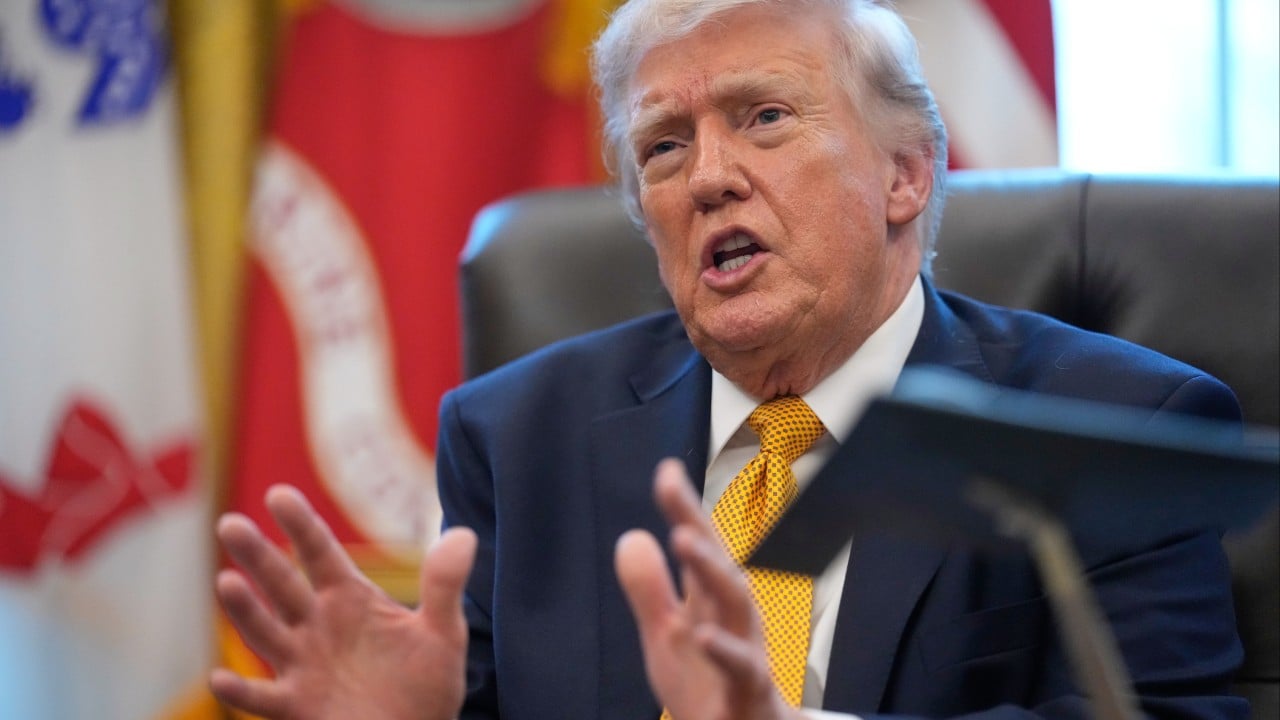
The headlines are screaming about a collapse in Western unity. They are wrong. When Donald Trump declares he no longer needs NATO’s help to secure the Strait of Ormuz, the "geopolitical experts" on cable news reach for their smelling salts. They see a breakdown of the post-WWII order. I see the inevitable result of energy math that has been shifting for a decade while the bureaucrats were asleep at their mahogany desks.
The consensus view is that a refusal by NATO allies to patrol the Persian Gulf is a catastrophic security gap. This is a fundamental misunderstanding of how power is projected in 2026. The panic assumes we are still living in 1990, where every barrel of crude moving through that narrow chokepoint was the lifeblood of the American economy.
It isn't.
America is now a net exporter. The nations trembling at the thought of a closed Strait are the ones who refused to help: the European manufacturing hubs and the Asian industrial giants. By stepping back, the U.S. isn't "losing" influence; it is finally forcing the world to pay the true market price for its own stability.
The Ormuz Obsession is a Relic
For forty years, the U.S. Fifth Fleet has acted as a free global insurance policy. We spent trillions of taxpayer dollars to ensure that oil could flow to our competitors in Berlin and Shanghai. When Trump says he doesn't need NATO's help, he isn't being a hermit. He is recognizing that the cost-benefit analysis of being the world's maritime police no longer pencils out for the American middle class.
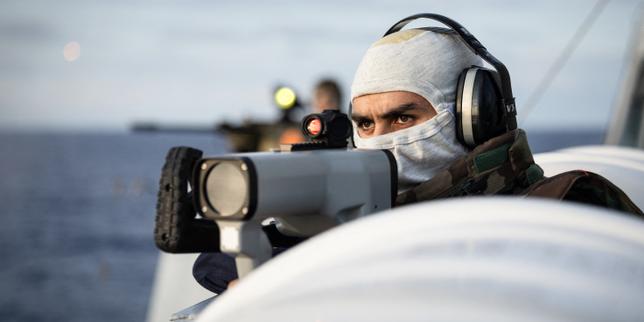
The Strait of Ormuz is roughly 21 miles wide at its narrowest point.
The "lazy consensus" says that if the U.S. doesn't guard it, global trade ends. The nuance missed by the mainstream media is the Asymmetric Cost of Defense. It costs the U.S. millions of dollars a day to keep a carrier strike group in the region. It costs a regional disruptor a few thousand dollars to launch a swarm of suicide drones or sea mines.
I’ve watched defense contractors salivate over these tensions for years, pitching "kinetic solutions" that cost 100x more than the threats they neutralize. The smart move isn't to buy more ships; it's to walk away from the table when the stakes aren't yours.
The Shale Shield and the End of Energy Dependency
The reason the U.S. can afford to snub NATO on this specific issue is the Permian Basin.
In the old world, a 10% spike in oil prices meant a recession in Ohio. Today, that same spike increases the capital expenditure and hiring in Texas, North Dakota, and Pennsylvania. We are insulated by our own geology.
- U.S. Crude Production: Roughly 13.5 million barrels per day.
- European Dependency: Still hovering at massive import levels for refined products.
- The Reality: If Ormuz closes, Europe freezes and China’s factories go dark. The U.S.? We just throttle up domestic production.
This isn't isolationism. It’s a ruthless re-prioritization. The "allies" in NATO have spent decades under-funding their own militaries while lecturing the U.S. on climate policy, all while staying hooked to the IV drip of Middle Eastern oil protected by American sailors. The bluff has been called.
The Technology Gap: Drones vs. Destroyers
The competitor's article focuses on the "refusal" of NATO countries to participate as a sign of weakness. It’s actually a sign of obsolescence. Even if NATO wanted to help, what are they bringing? A handful of aging frigates that aren't equipped for the era of mass-produced autonomous submersibles?
We are seeing the Death of the Blue Water Navy as a tool of regional stabilization.
Imagine a scenario where 5,000 $2,000-drones are launched simultaneously at a $13 billion Ford-class carrier. The math doesn't work. The U.S. move to step back from Ormuz is a quiet admission that protecting commercial shipping in a localized pond like the Persian Gulf is a fool's errand for a superpower.
Instead of burning through the service life of our hulls, we are forcing the primary consumers of that oil—the ones who benefit from the "status quo"—to develop their own security architecture. If the EU wants their BMWs to have fuel, they can send their own ships to face the Iranian batteries.
Why the "Experts" Are Wrong About Alliances
You’ll hear that this move "erodes trust."
Trust in geopolitics is a euphemism for "unpaid bills." I’ve sat in rooms where "strategic partnerships" were discussed as if they were friendships. They aren't. They are temporary alignments of interest.
The U.S. interest in the Middle East has shifted from Physical Control to Price Stability. Because we are now an energy powerhouse, we don't need to control the physical flow. We just need to ensure our domestic infrastructure is resilient.
People also ask: "Won't China just step in and fill the vacuum?"
Let them.
Let Beijing take on the "Great Satan" mantle in the eyes of regional extremists. Let them spend their wealth trying to bribe every local militia to keep the tankers moving. The moment China becomes the guarantor of the Gulf, they inherit the trillion-dollar headache that has plagued Washington since 1979.
The Real Cost of NATO’s "No"
By refusing to join the Ormuz task force, NATO hasn't asserted independence; they have signed their own energy death warrant in the event of a real conflict. They have signaled to every bad actor in the region that the West is fragmented.
But here is the twist: The U.S. doesn't mind a fragmented West if the fragmenting happens on the other side of the Atlantic.
For the American tech and energy sectors, a weakened Europe is a less competitive Europe. This isn't "fostering" (to use a banned term of the weak) cooperation. This is cold-blooded economic Darwinism.
The Blueprint for the New Era
If you are a business leader or an investor, stop looking at the Middle East as a primary risk factor for the U.S. economy. The risk is now localized to the Eurasian landmass.
- Divest from Global Logistics Chains reliant on Chokepoints: If your components pass through Ormuz or Malacca, you are exposed to a security bill that the U.S. Navy is no longer willing to pay.
- Bet on North American Autarky: The shift toward "Near-shoring" isn't a trend; it's a survival strategy.
- Ignore the "Diplomatic Incident" Noise: These press releases are theater. The underlying reality is that the U.S. has outgrown its need for the Persian Gulf, and the rest of the world is realizing they don't have the muscle to replace us.
The U.S. isn't leaving the world stage. We are moving to the VIP section and letting the people on the floor fight over the scraps.
If NATO wants a seat at the table of the future, they need to bring more than just "concerns" and "resolutions." They need to bring a fleet that can actually defend their own interests. Until then, Donald Trump is right: we don't need their help, because we're no longer interested in winning a game that has no prize for us.
Stop mourning the "liberal international order." It was a subsidized luxury we can no longer afford to give away for free.
The security of the Strait of Ormuz is now a "them" problem. Treat it accordingly.
Would you like me to break down the specific energy production stats of the Permian Basin versus the Gulf states to show exactly when the U.S. reached this point of strategic indifference?