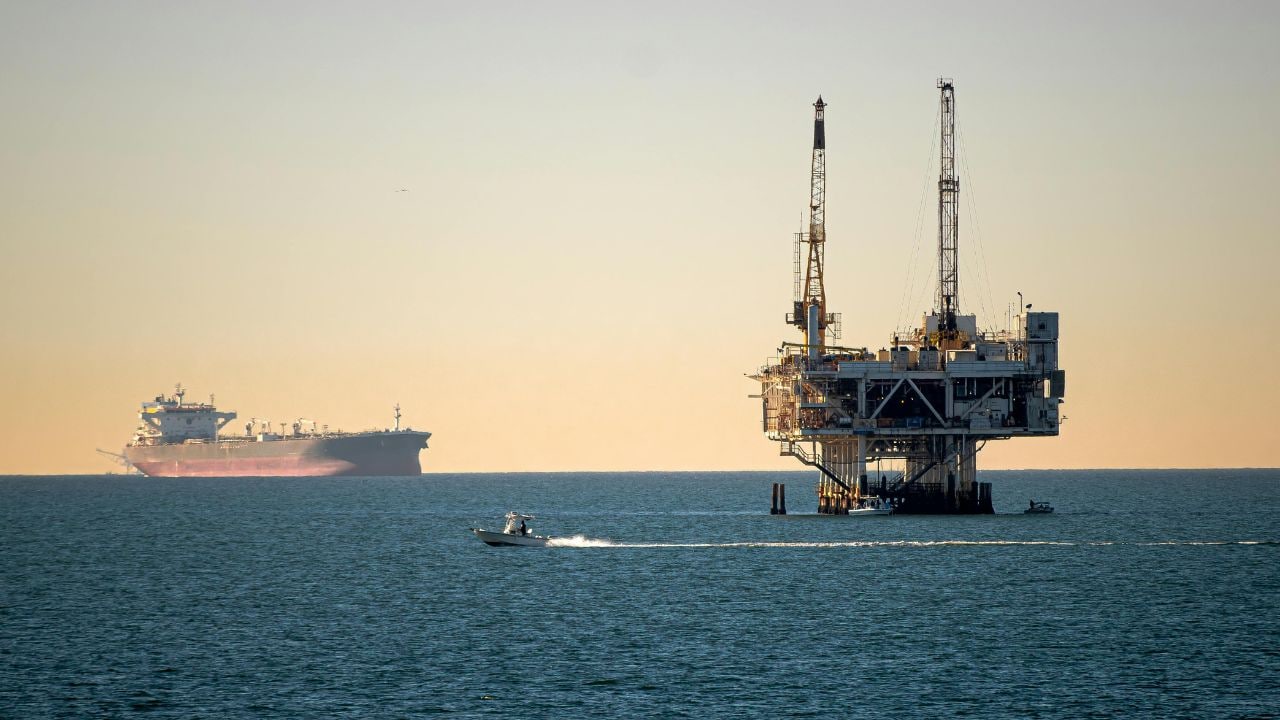
Pakistan’s energy architecture has reached a point of systemic failure where domestic price stability is no longer a policy variable but a casualty of external geopolitical shocks and internal fiscal insolvency. The breach of PKR 450 for petrol and PKR 500 for high-speed diesel (HSD) represents more than a psychological threshold; it is the manifestation of a three-way collision between the Brent crude "War Premium," a collapsing rupee, and a rigid IMF-mandated revenue extraction model. To understand why these prices are technically inevitable, one must dissect the pricing mechanism into its component parts: the Arab Gulf mean price, the exchange rate volatility index, and the domestic taxation floor.
The Triple Pressure Framework
The pricing of petroleum products in Pakistan is governed by a rigid formula that leaves the government with almost zero maneuvering room unless it chooses to default on fiscal targets. This framework is defined by three primary vectors:
- The Import Parity Price (IPP): Based on the average of Platts oil prices in the Arab Gulf market. When West Asia enters a cycle of instability, the physical supply risk adds a $5 to $10 per barrel "fear premium" that bypasses actual supply-demand fundamentals.
- The Currency Delta: Because Pakistan imports nearly 85% of its refined petroleum products and crude oil, the USD/PKR exchange rate acts as a force multiplier. Every 1% depreciation in the rupee requires a commensurate increase in the ex-depot price to maintain the same import volume.
- The Fiscal Floor (Petroleum Levy): Under current IMF Extended Fund Facility (EFF) conditions, the Petroleum Levy (PL) is utilized as a substitute for direct taxes. This is a fixed PKR amount per liter, meaning as the base price rises, the tax remains a heavy, non-flexible burden on the end consumer.
The West Asian Contagion and Supply Chain Friction
The escalation of conflict in West Asia serves as a primary disruptor not just through price speculation, but through the physical logistics of the Strait of Hormuz and the Red Sea. Pakistan’s proximity to these shipping lanes does not grant it an advantage; rather, it increases the sensitivity of its energy security to regional kinetic actions.
Energy analysts often overlook the distinction between "paper barrels" and "wet barrels." While global benchmarks like Brent might fluctuate based on algorithmic trading, the actual cost of "wet barrels" reaching Pakistani ports includes rising insurance premiums (Hull and Machinery/War Risk) and increased freight rates. When regional tensions rise, shipowners categorize the North Arabian Sea as a higher-risk zone. These "hidden" costs are eventually baked into the "Incidentals" section of the Oil Regulatory Authority (OGRA) pricing sheet, often before the actual crude price spike hits the pumps.
The Diesel-Industrial Linkage
The crossing of the PKR 500 mark for High-Speed Diesel is significantly more damaging to the macro-economy than the petrol price hike. Diesel is the primary fuel for:
- The Logistics Backbone: 90% of Pakistan’s freight moves via heavy-duty trucks powered by HSD.
- Agricultural Output: Tube wells and harvesters are diesel-dependent.
- Captive Power Generation: Industrial units use diesel generators to bridge the gap during grid instability.
The inflationary feedback loop here is immediate. A 10% rise in diesel prices correlates to a 3-4% rise in the Wholesale Price Index (WPI) within a single 15-day pricing cycle. This creates a cost-push inflation scenario where the central bank’s interest rate hikes become ineffective, as the inflation is driven by supply-side energy costs rather than excess demand.
Analyzing the IMF Revenue Constraint
The government's inability to provide "relief" is a structural constraint of the Sovereign Debt Management strategy. In previous cycles, the government used the "Price Differential Claim" (PDC)—essentially a subsidy where the state paid the difference between the international price and the domestic retail price. Today, the PDC is legally prohibited under the current bail-out terms.
The Petroleum Levy, currently capped at PKR 60-70 per liter depending on the latest legislative adjustments, functions as a regressive consumption tax. From a data-driven perspective, the PL is the most efficient revenue collection tool for the Federal Board of Revenue (FBR) because it has a 100% collection rate at the source (refineries and OMCs). Unlike income tax, it cannot be evaded. Consequently, the state is incentivized to maintain high fuel prices to meet quarterly revenue targets, even if it suppresses GDP growth.
Structural Vulnerability: The Refining Gap
A critical failure in Pakistan’s energy strategy is the lack of modern refining capacity. The country’s five major refineries are mostly hydroskimming units, which are less efficient than modern deep-conversion refineries. These older units produce a higher ratio of low-value Furnace Oil (FO) and a lower ratio of high-value Euro-V compliant Petrol and Diesel.
Because the domestic refineries cannot meet the demand or the environmental specifications (Euro-V), Pakistan is forced to import refined products. Importing finished petrol is significantly more expensive than importing crude. This "Refining Gap" forces the country to pay a "Complexity Premium" to international refineries in Singapore or the Middle East. If the domestic refining sector were upgraded to deep-conversion technology, the cost per liter could theoretically be reduced by PKR 15-25 by capturing the refining margin domestically.
The Fallacy of the "Russian Oil" Solution
Public discourse often suggests that importing discounted Russian Urals crude is a panacea for the PKR 450+ price point. However, rigorous analysis reveals technical bottlenecks. Russian Urals is a "medium-sour" grade, while Pakistani refineries are optimized for "light-sweet" Arab Extra Light or similar grades.
The technical limitations include:
- Yield Loss: Processing sour crude in a hydroskimming refinery increases corrosion and produces excessive furnace oil, for which there is shrinking demand.
- Freight Logistics: The cost of transporting oil from the Black Sea or Baltic ports to Karachi often eats into the $10-$15 discount offered by Russia.
- The Middle-Man Spread: Due to sanctions and banking restrictions, transactions often involve third-party traders who extract a significant portion of the discount as a "risk fee."
Therefore, the net impact on the retail price of petrol from Russian imports is estimated to be less than PKR 5-8 per liter—a marginal gain that is easily erased by a single day’s depreciation of the rupee.
Energy Intensity and Economic Contraction
The "Price-Demand Elasticity" for fuel in Pakistan is becoming increasingly inelastic. While higher prices usually lead to lower consumption, Pakistan’s lack of viable public transport infrastructure means that commuters cannot easily switch modes of travel. Instead, the high cost of fuel results in "Consumption Displacement," where households reduce spending on healthcare, education, and protein-heavy food to afford the commute to work.
From a consultancy perspective, this indicates a looming "Demand Destruction" phase. When fuel prices breach the PKR 500 barrier, small-scale industrial units and transport fleets begin to shut down permanently rather than just scaling back. This reduces the total tax base, creating a paradox where higher tax rates on fuel lead to lower total tax collection because the volume of liters sold drops sharply.
The Smuggling Variable
An unintended consequence of the PKR 500 diesel price is the widening "Arbitrage Gap" with neighboring Iran. As domestic prices rise, the incentive for the illegal inflow of Iranian fuel increases. This create a "Shadow Energy Market" that:
- Deprives the state of the Petroleum Levy.
- Damages the formal Oil Marketing Companies (OMCs) who cannot compete with untaxed smuggled fuel.
- Leads to the degradation of vehicle engines due to the high sulfur content and poor quality of smuggled products.
Tactical Response and Risk Mitigation
For entities operating within this environment, the strategy must shift from cost-absorption to radical energy efficiency.
- Logistics Optimization: Firms must move toward "Last Mile Decentralization" to reduce the ton-mileage of their supply chains. Relying on centralized warehousing in a PKR 500-diesel environment is a terminal strategy.
- Energy Hedging: Large-scale consumers should explore long-term supply contracts with fixed-price collars, though the volatility of the PKR makes this complex.
- Thermal Efficiency: For the industrial sector, the focus must shift to waste-heat recovery and transitioning from diesel-based backup power to BESS (Battery Energy Storage Systems) integrated with solar, despite the high upfront CAPEX.
The current price trajectory suggests that unless there is a de-escalation in West Asia and a simultaneous stabilization of the PKR through a massive injection of Foreign Direct Investment (FDI), the floor for fuel prices has permanently shifted. The PKR 450-500 range is not a peak; it is the new baseline for an economy that has failed to decouple its growth from carbon-intensive, dollar-denominated imports.
The immediate strategic priority for the state must be the forced modernization of the refining sector and the aggressive electrification of two- and three-wheelers, which account for a massive portion of petrol consumption. Without these structural shifts, the economy remains a hostage to the geography of the Middle East and the math of the IMF.