A ground invasion of Iran by United States forces would represent the most complex amphibious and montane military undertaking in modern history, surpassing the logistical requirements of both the 1991 and 2003 Iraq campaigns by a factor of four. Unlike the flat, desert topography of Iraq, Iran's geography serves as its primary defensive asset, creating a series of natural "kill zones" that would dictate the pace of any Western military intervention. The strategic reality of such a conflict is not found in the initial "shock and awe" of missile strikes, but in the specific friction points of the Zagros Mountains, the logistical vulnerability of the Strait of Hormuz, and the cascading failure of the global oil supply chain.
The Geography of Attrition
The Iranian landmass spans approximately 1.6 million square kilometers, characterized by a central plateau ringed by the Alborz and Zagros mountain ranges. Any ground-based invasion forces originating from Iraq or the Persian Gulf would immediately encounter the Zagros range, which extends 1,600 kilometers and reaches elevations over 4,000 meters.
The Vertical Defense Constraint
The Zagros Mountains create a natural bottleneck for armored divisions. Military history demonstrates that mountainous terrain acts as a force multiplier for the defender. Iran’s "Mosaic Defense" doctrine decentralizes command and control, allowing local units to operate autonomously if the central leadership is decapitated. This means that even if a US force successfully breaches the initial mountain passes, they would face thousands of independent, highly mobile insurgent cells equipped with anti-tank guided missiles (ATGMs). The cost-to-kill ratio for the invader rises exponentially in this environment, as $100 million main battle tanks are neutralized by $30,000 man-portable systems.
The Problem of Urban Fortification
Tehran and other major population centers are located deep within the interior. Reaching these targets requires traversing hundreds of miles of hostile territory with limited supply lines. The logistical tail—the ratio of support personnel to combat troops—for such an operation would likely exceed 10:1. Maintaining these supply lines through narrow mountain passes would subject them to constant ambushes, effectively turning the invasion into a war of attrition where the invader's primary struggle is simply keeping their forward units fueled and fed.
The Maritime Chokepoint Paradox
The Strait of Hormuz is the most critical maritime chokepoint in the world, facilitating the transit of approximately 21 million barrels of oil per day, or roughly 21% of global petroleum liquid consumption. In a ground war scenario, Iran would utilize its asymmetric naval capabilities to disrupt this flow, creating a "Symmetric Economic Shock."
Asymmetric Naval Interdiction
Iran does not need to win a blue-water naval battle against the US Fifth Fleet to succeed. Instead, it employs a strategy of "Area Denial" using:
- Smart Mines: Advanced naval mines that can be programmed to ignore small vessels and detonate under specific acoustic signatures of tankers.
- Swarm Tactics: Hundreds of fast-attack craft (FAC) armed with short-range missiles, designed to overwhelm the Aegis Combat Systems of US destroyers through sheer volume.
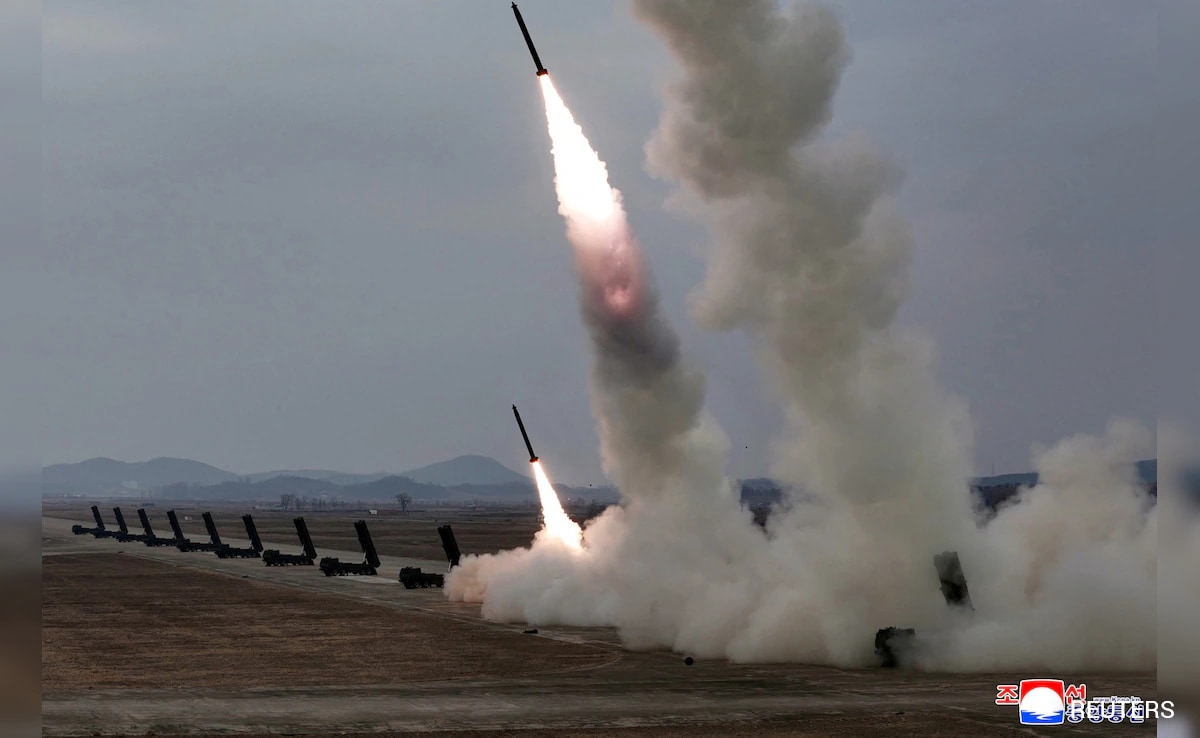
- Anti-Ship Cruise Missiles (ASCMs): Mobile batteries hidden in coastal caves along the rugged coastline, making them nearly impossible to eliminate through pre-emptive air strikes.
The Insurance and Freight Tailspin
Even if the US Navy successfully keeps the Strait "open" in a technical sense, the global market would respond as if it were closed. Maritime insurance premiums would skyrocket, potentially making it economically unfeasible for commercial tankers to enter the Gulf. This creates a "Risk-Induced Embargo." The mere presence of Iranian ASCMs on the coast would trigger a global supply shock, driving oil prices toward $200 per barrel within the first 14 days of combat operations.
The Regional Proxy Feedback Loop
A ground war would not remain contained within Iranian borders. Iran’s "Axis of Resistance" would activate a multi-front pressure strategy designed to overstretch US assets across West Asia. This is not a matter of ideology, but a calculated survival mechanism intended to force a US withdrawal by making the regional cost of presence unbearable.
The Levant and Arabian Peninsula Vectors
Hezbollah in Lebanon possesses an arsenal of over 150,000 rockets and precision-guided munitions. Upon a ground invasion of Iran, this arsenal would likely be deployed against Israeli infrastructure and US bases in the Mediterranean. Simultaneously, the Houthi movement in Yemen would intensify strikes against shipping in the Red Sea and energy infrastructure in the Arabian Peninsula. This creates a "Strategic Overload" for US air defense systems like the Patriot and THAAD, which cannot effectively defend every critical infrastructure point across three different sub-regions simultaneously.
The Internal Iraqi Destabilization
Iraq serves as the primary transit point for any US ground invasion coming from the west. However, the presence of powerful Iranian-aligned Popular Mobilization Forces (PMF) within Iraq creates a "Rear-Guard Threat." US supply convoys moving through Iraqi territory would be subject to constant IED attacks and direct fire from groups that are technically part of the Iraqi state security apparatus. This forces the US to divert significant combat power away from the Iranian front just to secure its own lines of communication.
The Energy Market Cost Function
The global economy operates on a "Just-in-Time" energy delivery model. A ground war in Iran breaks this model by removing a significant portion of the global spare capacity from the equation. Most of the world's spare oil production capacity resides in Saudi Arabia and the UAE, both of which are within easy range of Iranian ballistic missiles.
Infrastructure Vulnerability
Unlike a simple blockade, a ground war would likely lead to the physical destruction of energy infrastructure. Iranian ballistic missiles, such as the Khorramshahr or Sejjil, are capable of reaching every major refinery and desalination plant in the Persian Gulf. If these facilities are damaged, the recovery time is measured in years, not months. This shifts the crisis from a temporary price spike to a long-term structural deficit in global energy markets.
The Petro-Dollar Transition Risk
A prolonged conflict that spikes oil prices and disrupts the Middle Eastern security architecture could accelerate the global move away from the US dollar as the primary currency for energy settlement. Countries like China and India, the primary importers of Iranian and Gulf oil, may seek to establish non-dollar payment mechanisms to ensure their own energy security during the conflict. This would represent a fundamental shift in the global financial order, where the US loses its ability to use financial sanctions as a primary tool of statecraft.
Logistical Requirements and The "Iron Mountain"
To execute a successful ground invasion of Iran, the US would need to build an "Iron Mountain" of supplies. The sheer scale of the operation would require the mobilization of the Civil Reserve Air Fleet and a massive increase in the production of munitions.
The Munitions Depletion Rate
Modern high-intensity conflict consumes precision-guided munitions at a rate that exceeds current industrial production capabilities. During the first few weeks of such a conflict, the US would likely deplete its inventory of Long Range Anti-Ship Missiles (LRASMs) and Tomahawk Land Attack Missiles (TLAMs). Replacing these stocks takes years due to specialized components and rare-earth material requirements. This creates a "Window of Vulnerability" in other theaters, such as the Indo-Pacific, which adversaries might exploit.
The Human Capital Toll
The topography of Iran ensures that any ground war will be a "Close Quarters Battle" (CQB) environment. This leads to high casualty rates and requires a massive medical evacuation (MEDEVAC) infrastructure. Given the distance to the nearest secure high-level trauma centers (Landstuhl, Germany), the "Golden Hour" for survival would be impossible to maintain for many frontline troops.
The strategic play in any West Asian ground conflict is the recognition that military victory does not equate to strategic success. A US ground invasion of Iran would likely result in the tactical seizure of key coastal areas but would fail to achieve interior stability. The long-term recommendation for any regional actor is the diversification of energy transit routes away from the Persian Gulf—such as pipelines through Turkey or Central Asia—and the stockpiling of three to six months of strategic petroleum reserves to weather the inevitable decade-long price volatility that would follow the first boot on Iranian soil.