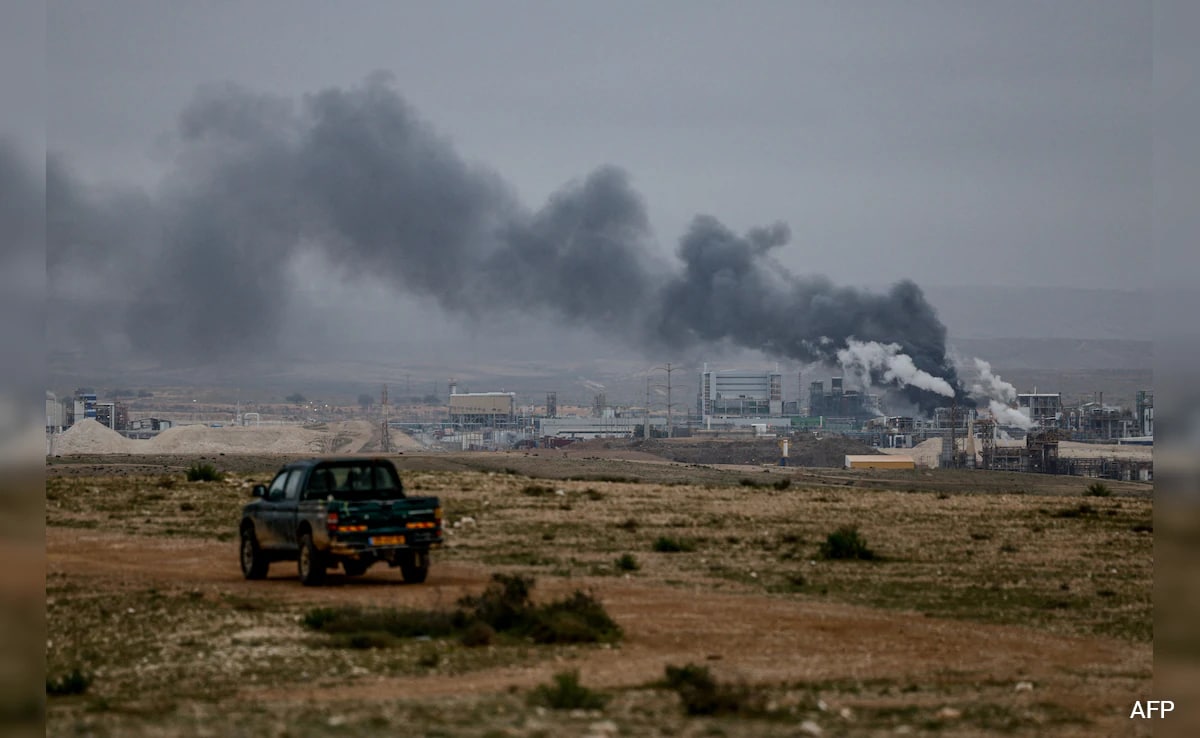
The smoke rising from missile impacts in the Middle East often clears long before the legal fog even begins to settle. When you look at the recent cycle of strikes involving Iran, you're seeing more than just a military confrontation. You’re watching the slow-motion collapse of international accountability. Everyone talks about "war crimes" the moment a building explodes. It’s a term thrown around on social media like a political football, but the reality of actually prosecuting these actions is a mess that most international law experts are terrified to admit is getting worse.
We’ve reached a point where the gap between what the law says and what powerful states actually do is a canyon. International humanitarian law (IHL) is supposed to be the referee. Instead, it’s being treated like a set of suggestions that only apply to the side that loses. When we analyze the strikes on Iranian soil and the subsequent retaliations, we have to look past the headlines and deal with the hard truth about why nobody is likely to face a judge for any of it.
The Mirage of Proportionality and Military Necessity
The two pillars of war are distinction and proportionality. You’re supposed to hit military targets only. If civilians die, the "advantage" gained must outweigh the horror. It sounds simple on paper. In practice? It's a lawyer’s playground.
In the context of strikes against Iranian interests—whether targeting drone manufacturing sites, IRGC command centers, or proxy logistics—the attacking party always claims "imminent threat." They say they're acting in self-defense under Article 51 of the UN Charter. The problem is that "imminent" has become a word with no meaning. Does a drone that might be shipped in three months count as an imminent threat today? According to the current logic of global power, the answer is yes.
When a strike hits a target in a crowded urban area like Isfahan or Tehran, the legal defense is almost always "human shielding" or "collateral damage." I’ve seen this play out in dozens of conflicts. The attacker says the target was a valid military asset. The defender says it was a biscuit factory. Because there is no independent, immediate forensic access to these sites, the "truth" becomes whoever has the loudest PR machine. This lack of transparency is the first and biggest hurdle to accountability. It’s hard to prove a war crime when you can’t even prove what was in the building that got hit.
Why the International Criminal Court Stays Silent
You might wonder why the ICC isn't jumping all over this. The answer is bureaucratic and frustrating. Neither Iran nor the major powers often involved in strikes against it are signatories to the Rome Statute. That means the court has no automatic jurisdiction. Unless the UN Security Council refers the situation to the ICC, the judges have their hands tied.
The Security Council is a joke when it comes to this. You have permanent members with veto power—the US, Russia, China—who all have skin in the game. They aren't going to vote to investigate themselves or their allies. This creates a legal "black hole." It means that for strikes occurring on Iranian soil, or Iranian-led strikes abroad, the victims are left with nowhere to go.
- Jurisdictional gaps: No Rome Statute membership means no automatic ICC investigation.
- Veto power: Political interests at the UN block legal referrals.
- State sovereignty: Iran rarely allows international investigators to poke around their sensitive military sites.
This isn't just a technicality. It’s a systemic failure. When a missile hits a civilian area, the families don’t care about the Rome Statute. They care about justice. But the system is designed to protect the state, not the individual. We're seeing a return to "might makes right," where the law is just a tool for the powerful to justify their actions after the fact.
The Problem of Attribution in the Age of Proxy War
Modern warfare is messy. It’s rarely one army in uniforms fighting another. It’s drones, cyberattacks, and "non-state actors" doing the dirty work. This makes accountability nearly impossible. When a strike hits an Iranian facility, and no one officially claims responsibility, who do you sue? Who do you indict?
Iran has mastered this by using its "Axis of Resistance." When a proxy group fires a rocket, Iran claims it’s an independent action. When a retaliatory strike hits Iranian soil, the attackers often remain silent or use "ambiguous denial." This shadow boxing is the death of law. If you can’t prove who pulled the trigger, you can’t have a trial.
I’ve looked at the data on attribution in modern strikes. The time it takes to definitively link a specific missile or drone to a specific command structure can take years. By then, the political winds have shifted. Evidence is gone. Witnesses are silenced. The accountability gap isn't just about bad laws; it's about the technology of war moving faster than the technology of justice.
The Failure of Universal Jurisdiction
Some hope lies in universal jurisdiction. This is the idea that certain crimes are so heinous—like genocide or torture—that any country can prosecute them. We’ve seen this work for Syrian war criminals caught in Europe. But for active strikes against a sovereign nation like Iran? It’s a pipe dream.
No European judge is going to issue an arrest warrant for a sitting military commander of a major power over a drone strike. The political cost is too high. It would trigger a diplomatic war. So, while universal jurisdiction exists in theory, it’s rarely used against the big players. It’s reserved for the low-level guys or the leaders of "pariah" states that have already lost their protection.
Evidence Collection in Closed Societies
Let’s talk about the boots on the ground. To prove a war crime, you need more than a grainy satellite photo. You need soil samples. You need fragments of the weapon. You need medical records of the victims. You need the "chain of custody" for every piece of evidence.
In Iran, getting this evidence is nearly impossible for international bodies. The government considers these sites national security zones. They clean up the rubble quickly. They control the narrative. If an international team did manage to get in, they’d be followed by handlers every step of the way.
This isn't unique to Iran, but it highlights a massive flaw in our global system. We rely on the "good faith" of states to help investigate themselves. That’s like asking a fox to provide a detailed report on why the chickens are missing. Without a mechanism for forced entry or truly independent satellite forensics that are admissible in court, the strikes will continue with zero legal consequence.
Double Standards Are Killing the Rule of Law
The biggest threat to accountability isn't a lack of evidence. It's the blatant double standards. When one country carries out a "surgical strike" that kills civilians, it’s a "tragic mistake." When their enemy does it, it’s a "terrorist atrocity."
You can't have a functioning legal system if the rules change based on who’s breaking them. This hypocrisy is what fuels the fire. It gives every actor a "get out of jail free" card. They just point at the other side and say, "They did it first, and you didn't stop them." This cycle of grievance makes the law look like a weapon of the West rather than a universal standard for humanity.
We are watching the erosion of the Geneva Conventions in real-time. These documents were written after the horrors of World War II to ensure that even war has limits. Today, those limits are being treated as obstacles to be bypassed by clever legal wording. If we don't fix the way we handle strikes against nations like Iran, we’re essentially saying that the Geneva Conventions are dead.
What Needs to Change Immediately
If you're looking for a way out of this mess, it’s not going to come from a new treaty. We have enough treaties. We need enforcement.
First, we need to modernize the definition of "imminence" in self-defense. It can't be a blank check for preemptive strikes based on secret intelligence that nobody ever sees. There has to be a post-strike review process that is mandatory and transparent.
Second, we need to decouple humanitarian law from political alliances. That means empowering regional courts or creating an ad-hoc tribunal that isn't beholden to the UN Security Council veto. It sounds radical, but the current path is leading to a world where war has no rules at all.
Stop looking at these strikes as isolated military events. They are cracks in the foundation of the world we built after 1945. Every time a missile hits a target and the legal world just shrugs, the crack gets wider.
Keep a close eye on the documentation coming out of NGOs like Amnesty International and Human Rights Watch. They’re often the only ones doing the actual work of tracking these strikes while the politicians bicker. Support efforts for open-source intelligence (OSINT) because, in 2026, a guy with a smartphone and a satellite map is often more reliable than a government spokesperson. Demand that your representatives support the ICC, regardless of whether it's "convenient" for current foreign policy. If the law doesn't apply to everyone, it doesn't apply to anyone.