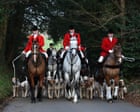
The long-running battle over hunting in the UK has reached a definitive breaking point. For two decades, the 2004 Hunting Act was a piece of legislation with more holes than a block of Swiss cheese. It was supposed to end the pursuit of wild mammals with dogs, but "trail hunting" emerged as a convenient workaround that allowed the tradition to persist in a legal gray area. Now, the Labour government is moving to shut that door for good. This isn't just another dry policy update; it's a fundamental shift in how the British countryside is managed and policed.
Labour has officially launched a public consultation to gather views on banning trail hunting, fulfilling a manifesto pledge that many rural campaigners have waited years to see. If you've followed the headlines, you know this is a deeply polarized issue. On one side, you have animal welfare groups documenting what they claim is "old-fashioned hunting" under a new name. On the other, the hunting community argues they are following the letter of the law and that a ban would destroy a vital part of rural social fabric.
The Problem With the Status Quo
Let’s be honest about why we're here. The 2004 Act was a compromise that satisfied almost no one. It banned the intentional hunting of foxes, deer, and hares, but allowed trail hunting—where hounds follow a pre-laid scent, usually fox urine or a chemical equivalent. The theory was simple: keep the pageantry and the riding, but lose the kill.
In practice, it’s been a mess. Monitoring these events is a nightmare for police and volunteers. Anti-hunt saboteurs and monitors have spent years filming "accidental" kills, where hounds veer off the laid trail and pick up the scent of a live animal. These "accidents" happen often enough that critics argue trail hunting is simply a "smokescreen" for illegal activity.
A landmark 2021 court case involving Mark Hankinson, a former director of the Masters of Foxhounds Association, blew the lid off this. Leaked webinars appeared to show hunting officials discussing how to use trail hunting as a legal cover. While some convictions were later overturned on appeal, the reputational damage was done. The public perception shifted from seeing hunting as a quaint tradition to seeing it as a community that thinks it's above the law.
What the Consultation Actually Covers
Environment Secretary Steve Reed isn't just asking if people like hunting. The consultation is designed to look at the specifics of how a ban would be worded and enforced. This is crucial because a poorly drafted law is just as useless as the one we have now.
The government wants to know about the impact on jobs, the effectiveness of current enforcement, and the potential for a "full ban" on the activity of trail hunting itself. They aren't just looking at fox hunting either. This covers the use of dogs to track any wild mammal under the guise of a trail.
If you live in a rural area, you've likely seen the tension firsthand. It’s not just about the foxes. It’s about land access, the behavior of hounds in private gardens, and the intense friction between those who follow the hunt and those who want it gone. This consultation is the chance for both sides to put their evidence on the record.
Why This Matters in 2026
The political landscape has changed since the early 2000s. Back then, the hunt ban was seen by some as a "class war" move by Tony Blair’s government. Today, the debate is framed much more around wildlife conservation and the rule of law.
Public opinion has hardened. Recent polling consistently shows that a massive majority of the British public, including those in rural constituencies, support a full ban. People are tired of the loopholes. They want laws that actually do what they say on the tin.
For the Labour party, this is about more than just animal rights. It's about demonstrating that they can govern the countryside as effectively as the towns. By framing this as a "closing of a loophole" rather than a brand-new attack on rural life, they're trying to minimize the backlash. But make no mistake, the backlash is coming. Organizations like the Countryside Alliance are already gearing up for a fight, claiming that the government is ignoring "real" rural issues like the cost of living and rural transport in favor of a "prejudiced" attack on a minority hobby.
The Enforcement Nightmare
Here is what nobody tells you about a ban. It’s incredibly hard to police. Even if you ban the act of trail hunting, you still have "drag hunting," where hounds follow a non-animal scent like aniseed. Critics worry that if you ban one, the other will just become the new smokescreen.
The police don't exactly love being caught in the middle of this. Rural policing teams are often underfunded and stretched thin. Asking a lone officer to determine if a pack of hounds is following a pre-laid aniseed trail or a fresh fox scent is a big ask. That’s why the wording of the new legislation is so important. Labour is looking at "reckless" clauses—meaning a hunt could be prosecuted if they didn't take enough steps to prevent their dogs from chasing a wild animal, regardless of whether they "intended" it or not.
How to Have Your Say
If you care about this, don't just shout into the void on social media. The consultation is open to everyone. You don't need to be an expert in the 2004 Act to participate, but it helps if you have specific examples or evidence of how hunting (or the lack of it) affects your local area.
- Search for the "Trail Hunting Consultation" on the Department for Environment, Food & Rural Affairs (DEFRA) website.
- Be specific. If you’ve seen illegal hunting, say when and where.
- If you’re a farmer who relies on the hunt for fallen stock services or land management, explain that impact clearly.
- Don't use templates. The government often discounts identical "copy-paste" responses from pressure groups. Use your own words.
The window for feedback won't stay open forever. This is the first step in a legislative process that will likely see a bill introduced to Parliament later this year. Given Labour's current majority, the ban is almost a certainty. The only question now is how "watertight" the final law will be.
Get your response in before the deadline. This is your chance to influence the most significant change to countryside law in two decades. Read the consultation document thoroughly, stick to the facts of your experience, and submit your views through the official government portal to ensure they are legally counted in the final report.