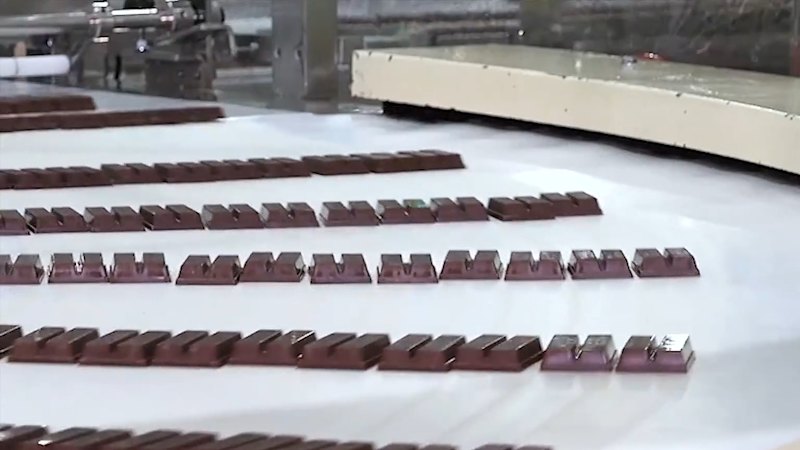
Twelve tonnes of KitKat bars do not simply vanish. When a refrigerated trailer loaded with thousands of Nestlé’s flagship wafers disappeared from an industrial park in northern Italy, the initial reaction was one of bemused irony. The internet made the expected jokes about "having a break." But for the logistics firms, insurers, and specialized police units who track freight crime across Europe, there was nothing funny about it. This was a professional hit executed with surgical precision, highlighting a massive, invisible hole in the global supply chain.
The theft represents more than just a massive loss of chocolate. It is a symptom of a highly organized "theft-to-order" economy that has turned high-volume food products into a form of untraceable currency. While the media focuses on high-tech cybercrime or gemstone heists, the reality of modern organized crime is far more mundane and much more profitable. They are coming for the snacks.
The Anatomy of a High Volume Food Heist
To understand how 12 tonnes of chocolate evaporate, you have to look at the mechanics of modern freight. This wasn't a stick-up. It was likely a "fictitious pickup," a sophisticated method of identity theft that has become the bane of the logistics industry.
Criminal syndicates now operate like legitimate freight brokers. They create shell companies, complete with professional websites, fake VAT numbers, and forged insurance documents. They bid on transport contracts through digital freight exchanges where speed is prioritized over deep vetting. When the "contractor" arrives at the warehouse in Italy, they have the right paperwork and the right truck. They load the pallets, drive out the gate, and the cargo is never seen again.
By the time the actual recipient realizes the shipment is overdue, the goods have already been offloaded and the "transport company" has deleted its digital existence. The 12 tonnes of KitKats were likely moved to a "cross-dock" facility—a neutral warehouse where the original packaging is often stripped or obscured—within hours of the theft.
Why Chocolate is the Perfect Target
You might wonder why a criminal organization would risk prison for biscuits and chocolate rather than electronics or designer handbags. The answer lies in the ease of liquidation.
Fungibility is the criminal's best friend. A stolen iPhone has a serial number that can be tracked, blocked, and traced the moment it hits a network. A KitKat bar has a batch code, but once it reaches a shelf in a small, independent grocery store or a weekend market, that code is functionally invisible. There is no central registry for candy.
Furthermore, the "barrier to entry" for selling stolen food is non-existent. There is a massive secondary market of wholesalers and "jobbers" who buy excess stock or near-expiry goods for cash, no questions asked. The thieves can flip 12 tonnes of product at 30% of its retail value and walk away with a clean, six-figure profit in less than 48 hours. For the criminals, this is a low-risk, high-reward business model with a built-in "disappearing act" as the evidence is literally eaten by the public.
The Geography of Italian Freight Crime
Italy serves as a crucial hub for European distribution, but its geography and fragmented logistics network make it a prime hunting ground. The northern industrial corridors, specifically around Milan and the ports of the Adriatic, handle thousands of truck movements daily.
Law enforcement agencies like Europol have noted that these heists are rarely random. They require inside information. Someone knew the exact timing of the shipment, the lack of GPS tracking on that specific trailer, or the vulnerabilities in the warehouse’s gate security. This suggests a level of infiltration into the logistics workforce that goes far beyond a simple "smash and grab" operation.
The Hidden Costs of Your Snack
When we see reports of a massive food heist, the consumer rarely feels the sting immediately. However, the ripple effects are significant.
- Insurance Premiums: As food theft rises, the cost of insuring "low-risk" cargo like confectionery is skyrocketing. These costs are eventually passed down to the consumer at the checkout counter.
- Supply Chain Fragility: To combat theft, companies are forced to implement aggressive tracking and vetting protocols. While necessary, these layers of bureaucracy slow down the movement of goods and increase operational overhead.
- Safety Risks: This is the most overlooked factor. Professional thieves do not care about the "cold chain." If those KitKats sat in a non-refrigerated warehouse in the Italian summer before being sold to a cut-rate wholesaler, the quality and safety of the product are compromised. The consumer ends up buying a sub-standard, potentially unsafe product, unaware it was part of a criminal enterprise.
The Failure of Digital Freight Platforms
The rise of the "Uber-for-trucking" model is partially to blame. Digital marketplaces have made shipping more efficient, but they have also stripped away the personal relationships and rigorous vetting that used to define the industry.
In the rush to find the lowest price for a backhaul route, companies are inadvertently handing their keys to criminals. The KitKat heist is a glaring reminder that a verified profile on a digital platform is not the same as a trusted partner. The industry is currently in a defensive crouch, trying to integrate blockchain and real-time biometric verification for drivers, but the criminals are already moving on to the next exploit.
A National Security Issue in a Wrapper
We often categorize these events as "property crime," but there is a growing argument that large-scale food theft is a matter of economic security. When organized crime can intercept 12 tonnes of a global brand's product with impunity, it demonstrates a level of control over the infrastructure that should alarm any government.
These heists fund other, darker activities. The profits from stolen sugar often wash through the same channels as human trafficking or arms smuggling. The "break" the thieves took in Italy was funded by the very supply chain that feeds the continent.
Companies can no longer treat logistics as a background process. Every pallet is a target. Every contractor is a potential risk. If the industry doesn't move toward a model of radical transparency and physical security, the next 12 tonnes to go missing won't just be chocolate—it could be something far more critical.
The trail for the Italian KitKats has likely gone cold. The wrappers are in the trash, the chocolate is gone, and the money has been laundered into the next operation. The only way to stop the next heist is to acknowledge that the supply chain is currently a playground for the world's most patient and professional thieves.
Audit your brokers before the cargo leaves the dock.