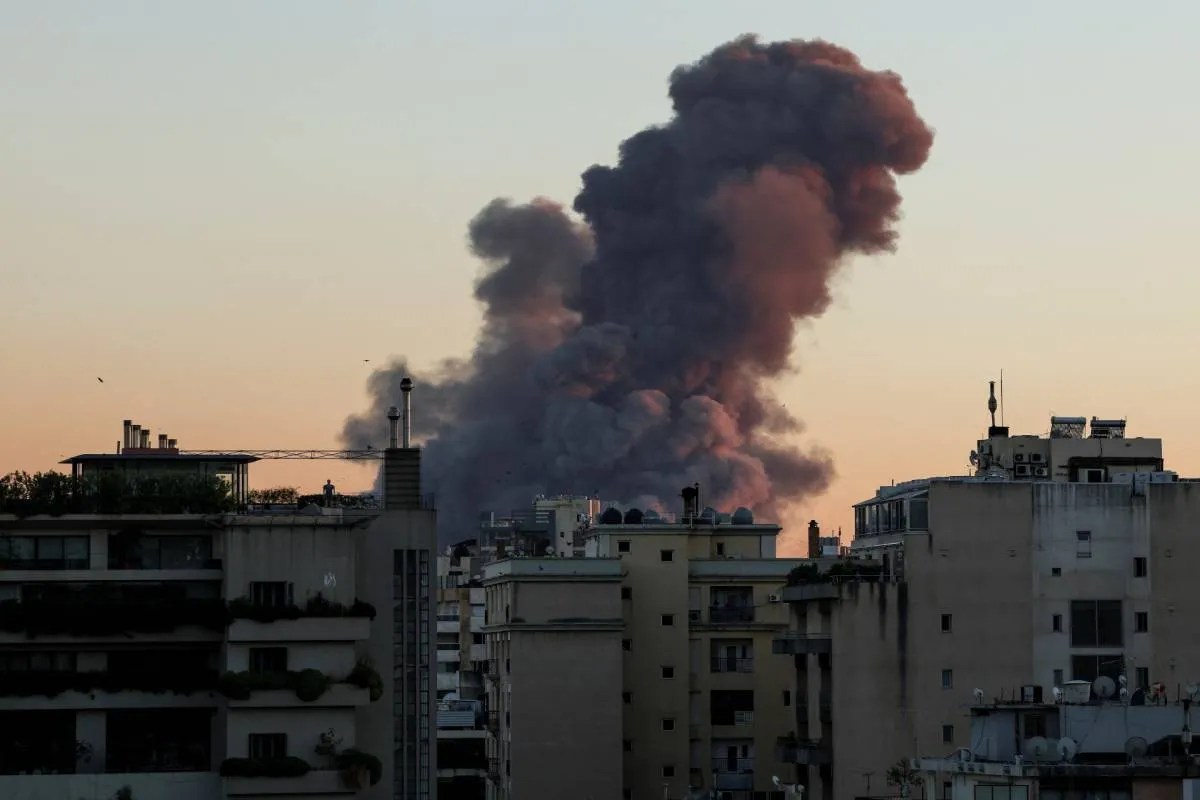
The shift from sporadic cross-border attrition to the systematic dismantling of a non-state actor's central command-and-control (C2) node marks a fundamental transition in regional military doctrine. When an established air power targets a fortified subterranean headquarters in a densely populated urban center, the objective transcends simple tactical damage; it is an exercise in decapitation logic. This strategy presumes that by severing the neural pathways between leadership and the tactical edge, the operational efficacy of the remaining force will undergo rapid entropy.
The Mechanics of Structural Penetration
To neutralize a buried command center located beneath residential infrastructure, the physics of the strike must solve for three specific variables: depth of cover, structural reinforcement, and blast containment.
- Overburden Mitigation: Standard high-explosive ordnance is insufficient for targets located tens of meters below the surface. Success requires a sequence of delayed-fuse penetrators. The first wave strips the protective layer (the "earth-cushion"), while the subsequent wave utilizes the vacuum created to drive kinetic energy deeper into the bedrock.
- Acoustic and Pressure Lethality: Within a confined subterranean space, the primary killer is not the shrapnel but the overpressure wave. When an explosion occurs in an enclosed bunker, the pressure cannot dissipate. It reflects off walls, multiplying the atmospheric force to levels that cause immediate pulmonary and neurological failure in personnel, regardless of physical shielding.
- The Infrastructure Dilemma: Using urban centers as a shield for high-value military assets creates a "collateral constraint" that the attacking force must calculate through the lens of international law and reputational risk. The choice to proceed indicates a shift in the perceived cost-benefit ratio, where the existential threat posed by the command node outweighs the certain political fallout of urban destruction.
The Decay of the Command Chain
The immediate aftermath of a high-value target (HVT) strike is defined by Information Asymmetry. Lower-level field commanders lose the ability to synchronize their actions with the broader strategic intent. This leads to several predictable failures in military logic:
- Tactical Paralysis: Without confirmation from the center, units often default to defensive postures, losing the initiative.
- The Succession Vacuum: In highly centralized organizations, authority is often tied to charismatic or long-standing figures. Removing these figures forces a transition to "shadow leadership," which may lack the established trust or technical expertise to manage complex systems like long-range missile batteries.
- Signal Chaos: As the organization attempts to regroup, its communication volume increases. This surge provides a target-rich environment for signals intelligence (SIGINT) to map the remaining hierarchy.
Calculating the Attrition Rate
The effectiveness of these air strikes is measured by the Rate of Replacement vs. Rate of Elimination. If the attacking force can eliminate specialized personnel—such as drone engineers, logistics coordinators, or communications officers—faster than the organization can train them, the organization faces a technical "debt" that leads to system failure.
Conventional analysis often focuses on the number of missiles destroyed. However, the more critical metric is the Kill Chain Latency. If the strikes successfully disrupt the time it takes for a sensor (a spotter or radar) to talk to a shooter (a missile crew), the organization's offensive capability is effectively neutralized even if its inventory remains intact.
The Geopolitical Cost Function
Every kinetic action of this scale triggers a reaction in the regional power balance. This is not a linear relationship; it is an Escalatory Lattice.
- Proxy Entanglement: When a primary regional power's proxy—in this case, Hezbollah—is weakened, the patron state faces a dilemma. To intervene directly is to risk a high-intensity war for which it may not be prepared. To remain on the sidelines is to allow the degradation of its primary deterrent.
- Strategic Displacement: As high-level assets move to more secure, less centralized locations, their operational speed decreases. This displacement is a hidden cost of the air strikes.
Operational Conclusion and Strategic Forecast
The systematic targeting of a centralized command structure in the Levant signalizes that the attacking force has moved from containment to strategic neutralization. The primary objective is no longer the prevention of individual rocket launches, but the total disruption of the organizational hierarchy that makes such launches effective.
This shift suggests that future operations will focus on identifying the secondary and tertiary leadership chains. The organization’s response—reverting to decentralized, cellular warfare—is the only logical defensive adaptation. This will likely result in a prolonged, low-intensity conflict that shifts the risk from high-value military assets to ground-level tactical units. The decisive factor in the coming months will be whether the organization can rebuild its C2 structure faster than the intelligence-led air strikes can dismantle it.