The sun over Tenerife usually promises a specific kind of mercy. For the thousands of retirees who flock to the Canary Islands every spring, that golden light is a reward for decades of gray British winters. It is the light of a long-awaited rest. But on a Tuesday that began like any other, the light reflecting off the winding asphalt of the TF-1 motorway turned harsh. It became the backdrop for a scene that shattered the quiet rhythm of a holiday dream.
Imagine the interior of a coach bus ten minutes before the world breaks. It is a space of soft murmurs. There is the rustle of a peppermint wrapper, the low hum of a conversation about dinner plans, and the rhythmic thrum of tires against the road. For the 43 passengers on board, mostly British tourists, this was the final leg of a journey from the airport to their hotels in the south. They were minutes away from checking in, from the first cold drink, from the sight of the Atlantic. Read more on a similar topic: this related article.
Then, the rhythm failed.
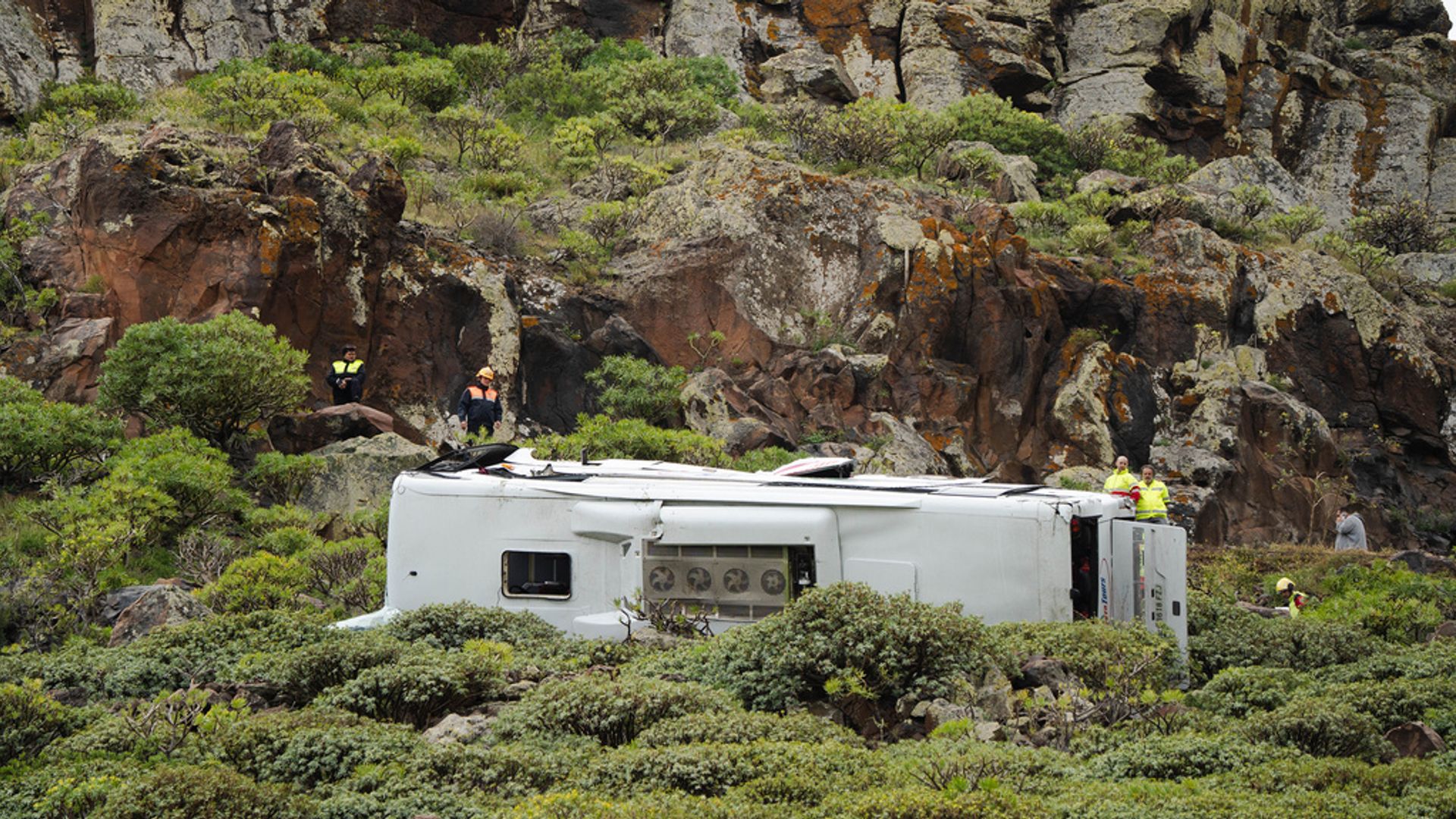
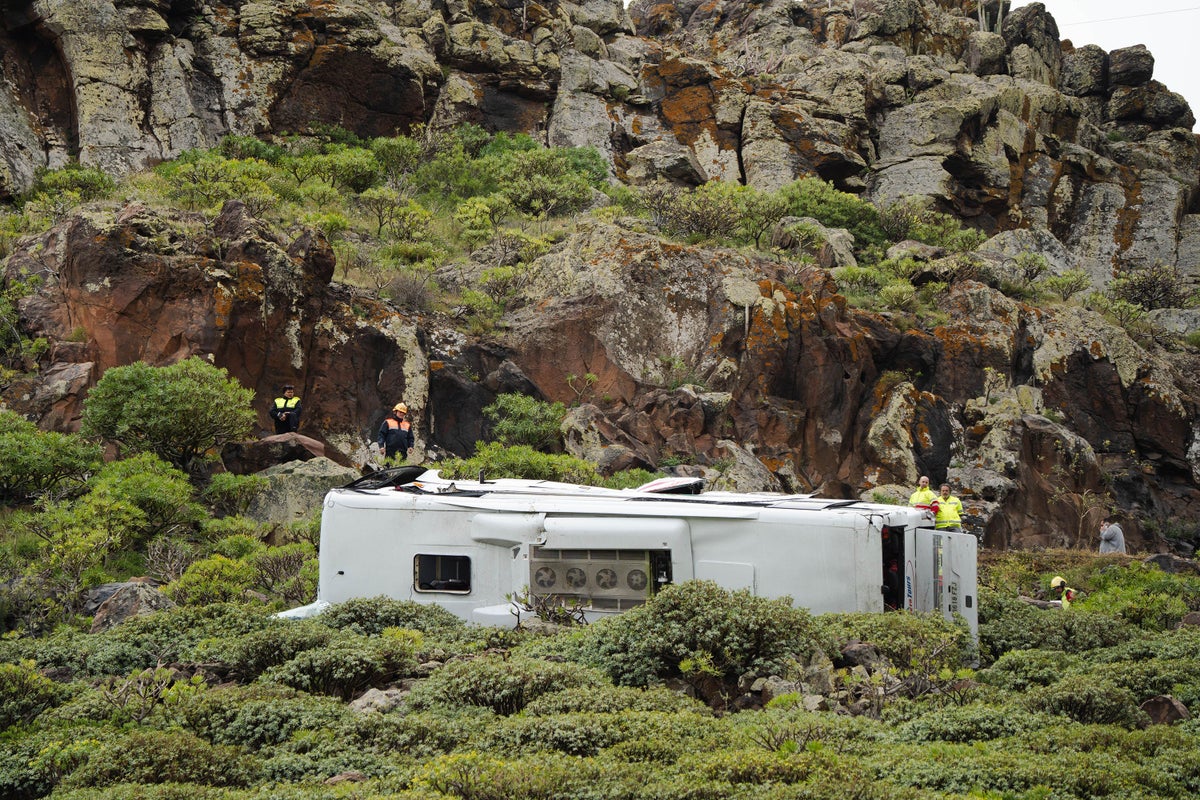
The bus, a massive vessel of steel and glass, veered. It didn't just drift; it surrendered to gravity and momentum. Near the municipality of Arico, the vehicle careened off the road and tumbled into a ditch, coming to rest on its side like a fallen giant. In that single, violent rotation, the geography of forty lives shifted forever. Additional reporting by AFAR explores related perspectives on this issue.
The Weight of a Single Moment
When the dust settled, the silence was different. It wasn't the silence of a nap or a peaceful ride. It was the heavy, ringing quiet of shock. Emergency sirens soon tore through the coastal air, but for those inside the wreckage, time had already slowed to a crawl.
A 77-year-old British man, a traveler who had likely spent his life looking forward to moments just like this one, did not survive the impact. He became the tragic center of a story that rippled back across the ocean to the UK. While the headlines focused on the numbers, the reality was a singular, devastating loss of a father, a husband, a friend. He was a man who had packed a suitcase with the expectation of returning home with a tan and a few souvenirs. Instead, his journey ended in a roadside trench on a Spanish island.
The statistics are cold. One dead. Dozens injured. But the human reality is a chaotic map of trauma. Among the passengers, several were listed in critical or serious condition. Imagine the sudden transition from the soft upholstery of a tour bus to the sterile, frantic energy of a Spanish trauma ward. For some, the injuries were broken bones—the physical manifestation of a sudden stop. For others, the wounds were internal, the kind that don't show up on a scan but linger in the way a person flinches when a car brakes too hard.
The Invisible Stakes of the Open Road
We often treat travel as a teleportation act. We board a plane in London and expect to "be" in Tenerife, ignoring the complex machinery and human fallibility that bridges the gap. When a disaster like the Tenerife bus crash occurs, it forces us to look at the invisible stakes we overlook every time we buckle a seatbelt.
The investigation into the crash began almost before the glass was cleared from the road. Was it a mechanical failure? A momentary lapse in concentration? A medical emergency suffered by the driver? Spanish authorities and the bus company, Canaryblast, faced the immediate pressure of these questions. But for the families waiting at hotel lobbies or back in suburban England, the "why" mattered less than the "what now."
Consider a hypothetical traveler named Margaret. She is 75, traveling with her sister. They chose a package tour because it felt safe. They didn't want to navigate foreign car rentals or complex maps. They placed their trust in the system—the driver, the maintenance logs, the safety regulations of a major tourist hub. When that system fails, it isn't just a logistical error. It is a profound breach of a silent contract.
The Canary Islands are a well-oiled machine for tourism. They handle millions of visitors with staggering efficiency. Yet, this incident serves as a grim reminder that even in the most choreographed environments, the margin for error is razor-thin. The road where the bus flipped is a main artery, a path traveled by thousands of vacationers every day. It is a road built for escape, which makes its transformation into a site of mourning all the more jarring.
The Anatomy of an Emergency Response
There is a specific kind of heroism found in the aftermath of a roadside catastrophe. Local residents were among the first to see the bus leave the road. They didn't wait for the official sirens. They ran toward the smoke.
Spanish emergency services, known for their proficiency in high-stakes coastal rescues, deployed a massive response. Ambulances from across the island converged on Arico. Firefighters worked with surgical precision to extract those pinned by the twisted metal. The local hospitals—Hospital Universitario Nuestra Señora de Candelaria and others—were placed on high alert.
This is where the narrative of a "crash" turns into a narrative of "recovery." In the hours following the accident, the focus shifted from the cause to the survivors. Consular officials from the British Embassy began the grueling task of visiting bedsides, acting as the bridge between terrified patients and their worried kin thousands of miles away.
The physical wreckage is usually cleared within twenty-four hours. The road is swept. The bus is towed to a lot to be picked apart by investigators. By the next morning, other buses are driving past the exact same spot, filled with other tourists looking out the window at the same ocean views. But the site remains changed for those who know what happened there.
The Fragility of the Golden Years
There is a particular cruelty to accidents involving the elderly. For a 20-year-old, a broken leg is a setback, a story to tell over drinks. For a 77-year-old, it is a catastrophic interruption of their most precious, hard-earned years. It can mean the end of independence or the start of a long, grueling decline.
The British pensioner who died in the Tenerife crash represents a generation that views travel as a hard-won prize. They grew up in an era where international travel was a luxury, and they spent their working lives contributing to a world that promised them a sunset period of exploration. To have that snatched away in a ditch on the TF-1 is a tragedy that resonates with anyone who has a parent or grandparent currently navigating their own "golden years."
We don't talk enough about the vulnerability of the traveler. We focus on the excitement of the destination, the quality of the hotel, or the temperature of the pool. We rarely discuss the fact that when we travel, we are at our most exposed. We are in a land where we may not speak the language fluently, where the medical systems are different, and where we are entirely dependent on the competence of strangers.
The Long Road Back
The news cycle moves with a ruthless speed. A day after the crash, the headlines began to fade. The "British pensioner killed" becomes a footnote in the digital archives. But the story isn't over.
For the survivors, the journey home will be the longest one they ever take. There is the logistical nightmare of medical repatriations—flights where the passenger is on a stretcher rather than a seat. There are the legal battles that will stretch on for years as insurance companies and coach operators argue over liability and compensation.
But beyond the paperwork lies the psychological landscape. How do you sit on a bus again after feeling it tip? How do you look at a sunny horizon without remembering the sound of shattering glass?
The Tenerife crash isn't just a story about a vehicle that left the road. It is a story about the precariousness of our plans. It is about the fact that we are all, at any given moment, just a few degrees of a steering wheel away from a completely different life.
As the sun sets over the Atlantic today, the light is still golden. The waves still hit the volcanic shores of Tenerife with the same steady pulse. The hotels are full, and the bars are humming with the sound of vacationers. But somewhere in a quiet room, a suitcase sits unpacked. It contains a sun hat, a novel with a bookmark halfway through, and a pair of sunglasses that will never be worn again.
The road continues, but for some, the journey has stopped exactly where the asphalt met the earth.