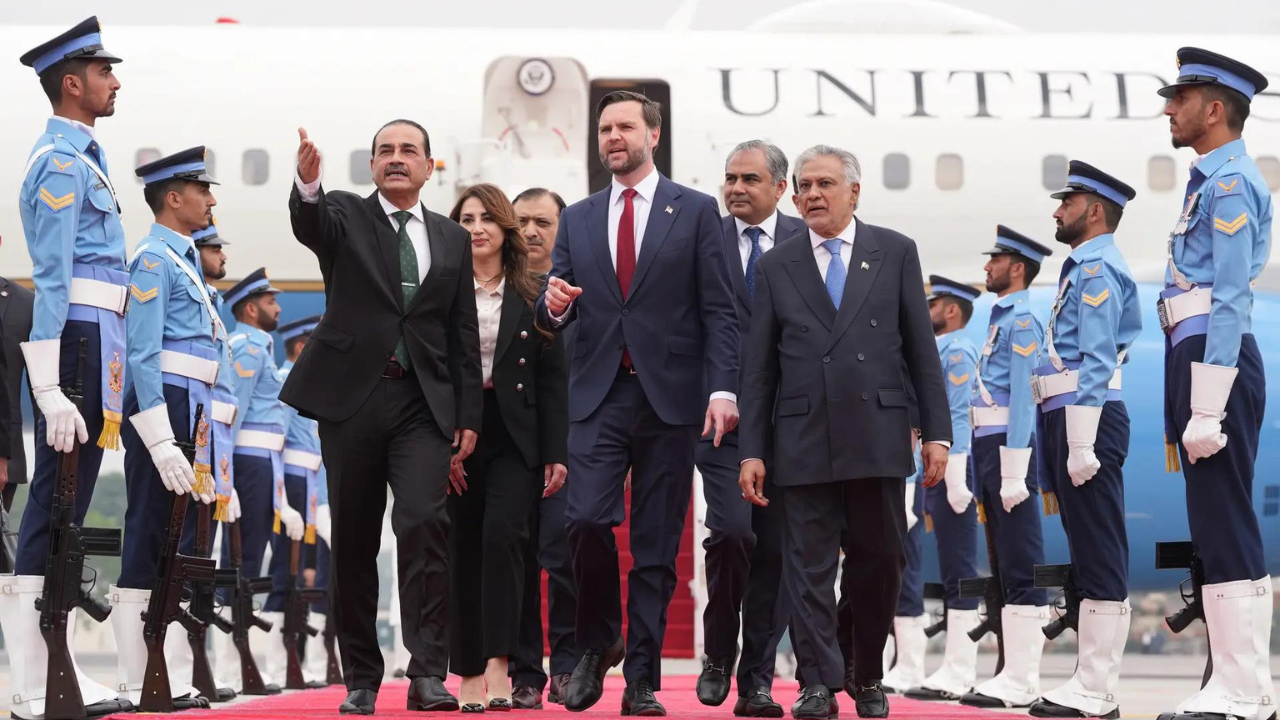
The mainstream press is currently obsessed with the visual of JD Vance touching down in Islamabad. They see a "fragile truce." They see a vice president stepping into the breach to mediate a US-Iran ceasefire. They see a return to high-stakes shuttle diplomacy.
They are seeing a ghost.
The prevailing narrative—that this trip represents a stabilization of the Middle East through South Asian mediation—is a fundamental misreading of power dynamics in 2026. If you believe the headlines, Islamabad is the new Geneva, and Vance is the architect of a lasting peace. In reality, this is a desperate attempt to manage a retreat while pretending it’s a victory lap. The "lazy consensus" assumes that showing up is 90% of the battle. In the brutal world of realpolitik, showing up at the wrong table is just an expensive way to lose.
The Islamabad Fallacy
Why is Vance in Pakistan to talk about Iran? The surface-level logic is that Islamabad maintains a unique, if strained, bridge between Washington and Tehran. The deeper truth is that this location wasn't chosen for its influence, but for its insulation.
By conducting these talks in Pakistan, the administration avoids the political radioactive fallout of a direct sit-down in a Gulf state or a European capital where the optics of "appeasement" would be scrutinized by every hawk in DC. It’s a move designed for domestic consumption, not foreign results.
I’ve watched diplomatic missions like this drain political capital for decades. You don't go to Islamabad to sign a definitive treaty with Iran; you go there when you’ve run out of direct channels and need a buffer to absorb the shock when the deal inevitably frays.
The Illusion of the Ceasefire
The media keeps calling this a "truce." Let’s call it what it actually is: a tactical pause.
Iran isn't stopping because JD Vance landed in a private jet. Iran is pausing because they have achieved their immediate regional objectives and need to consolidate their gains. The US is "leading" talks that are essentially an exercise in managed decline.
The core friction points remain untouched:
- Proximal Autonomy: Tehran’s network of non-state actors doesn't take orders from a boardroom in Islamabad.
- Nuclear Latency: The technical knowledge within Iran’s centrifuge programs cannot be "negotiated" away.
- Sanction Erosion: The global financial shift toward non-Western payment systems means the US "stick" is shorter than it was five years ago.
The "nuance" the competitor articles miss is that a ceasefire without a structural shift in power is just a countdown to the next explosion. We are treating the symptoms of a fever while the infection remains systemic.
Why the VP is the Wrong Messenger
Sending a Vice President to lead these talks is a classic "prestige trap."
When you send the second-in-command, you signal that the situation is critical but you aren’t willing to risk the President’s direct reputation on a likely failure. It’s a hedging strategy. But Tehran sees through this immediately. They know that if Vance fails, the administration can distance itself. If he succeeds, they take the win.
This isn't "bold leadership." It’s a risk-mitigation maneuver.
In my experience advising on trade and security frameworks, the most effective deals happen in the shadows, led by career technocrats who don't care about the evening news cycle. When you bring the cameras, you bring the theater. Theater is the enemy of durable policy.
The China Factor No One Mentions
You cannot talk about US-Iran relations in Islamabad without mentioning Beijing.
Pakistan is the crown jewel of the Belt and Road Initiative. Iran is a strategic energy partner for China. If a deal is being brokered in Islamabad, you can bet your last dollar that the real terms were vetted in Beijing long before Vance’s wheels touched the tarmac.
The Western press treats this as a US-led initiative. The reality? The US is acting within a framework largely dictated by Chinese economic interests in the region. China wants stability for its trade routes; the US wants to avoid another multi-billion dollar conflict. These goals overlap temporarily, but don’t mistake shared interests for American dominance.
Dismantling the "Fragile Truce" Logic
People often ask: "Isn't any peace better than no peace?"
This is the wrong question. The right question is: "At what cost does this temporary quiet come, and who pays the bill?"
By legitimizing a "truce" that allows Iran to maintain its current posture while removing the pressure of active deterrence, the US is essentially subsidizing the next round of conflict. We are buying time with the credit card of our future security.
Imagine a scenario where a business has a massive debt. Instead of restructuring the debt, the CEO takes out a high-interest loan to pay this month’s interest. The "truce" is that loan. It looks good on this month's balance sheet, but the principal is still growing.
Actionable Realities for the Global Observer
If you want to understand what’s actually happening, ignore the handshakes in Islamabad. Look at these three metrics instead:
- The Straits of Hormuz Transit Volume: If insurance rates for tankers aren't dropping significantly, the "truce" is a lie.
- Enrichment Levels: If the IAEA reports continue to show 60% plus enrichment, the talks are a distraction.
- Cross-Border Capital Flows: Watch the movement of Renminbi between Tehran and Islamabad. That is the real pulse of the region.
The Flaw in the "Stability" Argument
The status quo loves the word "stability." It’s the ultimate shield for lazy policy.
But stability in a broken system is just stagnation. By propping up a "fragile truce," we prevent the necessary—though painful—realignment of regional powers that needs to happen for actual, long-term peace. We are terrified of the vacuum, so we fill it with "dialogue" that leads nowhere.
I’ve seen boards of directors do this when a company is failing. They hire a consultant to "streamline" instead of firing the CEO. Vance is the high-priced consultant in this metaphor. He’s there to provide a report that says things are "moving in the right direction," while the foundation continues to crack.
The Hard Truth About Regional Mediation
Pakistan is not a neutral arbiter. It is a state struggling with its own internal economic collapses and security nightmares. To expect Islamabad to provide the moral or political weight to hold a US-Iran deal together is a fantasy.
They are hosting these talks because they need the IMF's good graces and Washington's military hardware. They aren't mediators; they are landlords renting out a conference room to pay the mortgage.
If the US were serious about a paradigm shift with Iran, the talks would be happening in a context that addresses the underlying economic realities of the 21st century, not the 20th-century model of "Great Power" diplomacy.
The JD Vance mission to Islamabad is a masterclass in performative statecraft. It provides the illusion of movement without the friction of actual progress. It satisfies the 24-hour news cycle’s need for a "breakthrough" story while leaving the geopolitical tinderbox exactly as dry as it was before.
Stop looking at the podium in Islamabad. The real deals are being made in the currency exchanges and the centrifuge halls, and JD Vance isn't invited to those rooms. Peace isn't found in a photo op; it’s built on the wreckage of failed assumptions. Right now, those assumptions are still standing tall.