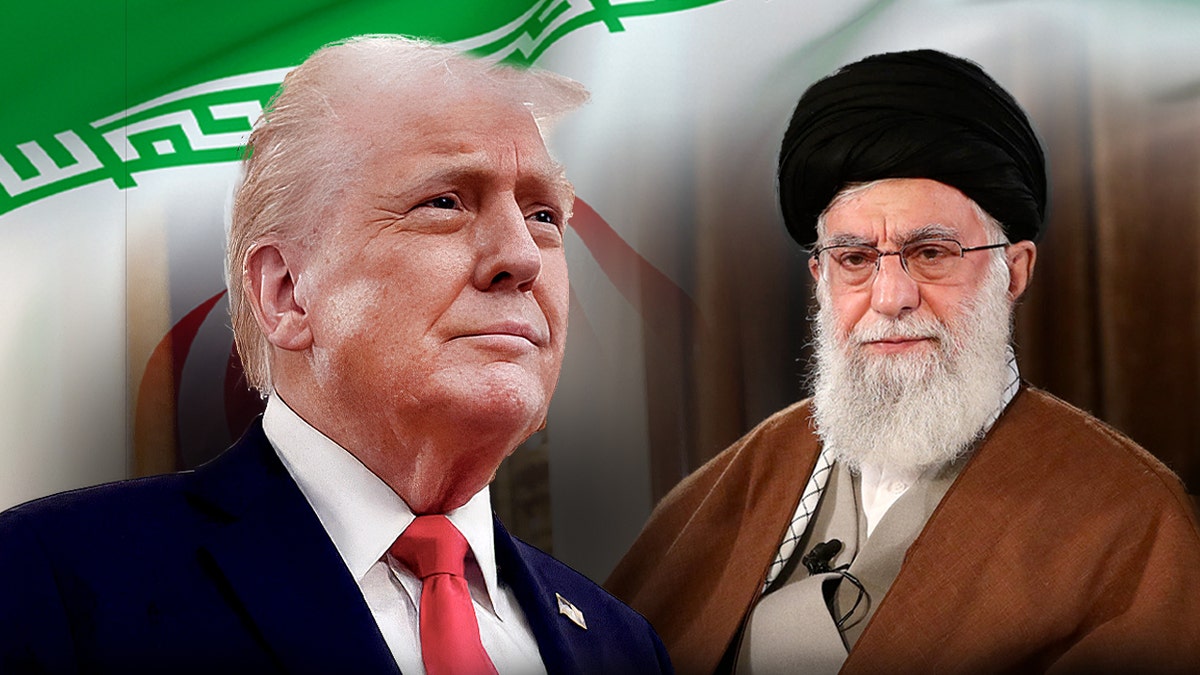
The headlines are screaming that the sky is falling on Middle East diplomacy. Tehran says there are no talks. The media says the gap is unbridgeable. The "experts" are dusting off their old playbooks on "maximum pressure" versus "strategic patience."
They are all wrong.
When a regime like the one in Tehran issues a flat, public denial of negotiations, they aren't closing the door. They are bracing the door so they don't look like they’re being pushed through it. In the world of high-stakes geopolitical restructuring, a public "no" is the most common precursor to a private "yes."
If you’re reading the official statements from the Iranian Foreign Ministry and taking them at face value, you aren’t just naive; you’re ignoring how every major diplomatic pivot of the last fifty years actually happened.
The Theater of Face-Saving
Diplomacy is 10% substance and 90% choreography. For the Iranian leadership, the "Great Satan" isn't just a slogan; it is the structural load-bearing wall of their domestic legitimacy. They cannot walk into a room with Donald Trump—a man who ordered the liquidation of Qasem Soleimani—without first convincing their hardline base that they were dragged there kicking and screaming.
The "no direct talks" narrative is a defensive crouch. It’s a signal to the IRGC (Islamic Revolutionary Guard Corps) and the internal clerical structure that the leadership hasn't "sold out." But look at the math, not the rhetoric.
Iran’s economy is a hollowed-out shell. Inflation is rampant, the rial is a joke, and the youth population is one spark away from another season of "Woman, Life, Freedom" protests. The regime doesn't need a "dialogue." It needs a transaction. Trump, love him or hate him, is the only Western leader who treats geopolitics as a pure transaction rather than a moral crusade.
The Nixon-to-China Fallacy
Most analysts compare this to the Cold War. They’re looking for a "thaw." That’s the wrong lens. This isn't about two ideologies finding common ground. This is about two counter-parties identifying a shared exit strategy.
- Trump’s Incentive: He wants the "Greatest Deal Ever." He wants to prove that his predecessor’s JCPOA was a "disaster" and that he can extract a better, broader agreement that covers ballistic missiles and regional proxies.
- Tehran’s Incentive: Survival. They know the current trajectory leads to state collapse or a devastating kinetic conflict they cannot win.
The genius of a "contrarian" approach here is recognizing that the very volatility of the Trump administration is what makes a deal possible. Traditional diplomacy—the kind practiced by the "Blob" in D.C.—relies on incrementalism. Incrementalism fails in the Middle East because it gives spoilers too much time to blow things up.
A sudden, disruptive "Grand Bargain" is the only thing that works because it moves faster than the opposition can mobilize. When Iran says "no talks," they are clearing the deck. They are ensuring that when the talk happens, it is perceived as a sudden, unavoidable necessity rather than a planned betrayal of their principles.
Stop Asking if They Are Talking
The question "Are they talking?" is the wrong question. Of course they are talking. They’ve been talking through backchannels in Oman, Switzerland, and Qatar for years. The real question is: "What is the price of the silence?"
In any high-stakes merger or acquisition—which is essentially what a peace treaty is—the parties sign NDAs. In geopolitics, the "denial" is the NDA.
I have watched companies spend billions trying to enter markets by following the rules, only to be outmaneuvered by someone who understood the informal power structures. The same applies here. The formal structures (The UN, the IAEA, the EU) are irrelevant. The only thing that matters is the direct line between Mar-a-Lago and the Supreme Leader's office, likely mediated by a handful of billion-dollar intermediaries who stand to profit from a normalized Iranian energy sector.
The Brutal Reality of the Oil Math
Let’s talk about the data the "consensus" ignores: the oil.
Iran is currently selling millions of barrels to China at a massive "sanctions discount." This isn't sustainable for Tehran, and it irritates the global energy market. A deal that brings Iranian light crude back into the formal market without the "shadow fleet" middleman would stabilize prices and provide the Iranian regime with the hard currency it needs to prevent a revolution.
- Current State: Iran sells at 20-30% below market to bypass sanctions.
- The Trump "Offer": Full market price access in exchange for a permanent halt to the nuclear program and a "hands-off" policy in the Levant.
To the ideologue, this sounds like a betrayal. To a businessman or a desperate regime, it sounds like a lifeline.
Dismantling the "Perpetual Enemy" Myth
The media loves the "forever war" narrative. It sells papers. It keeps think tanks funded. They want you to believe that Iran and the U.S. are locked in an eternal, metaphysical struggle.
It’s nonsense.
History is littered with "unbreakable" enmities that evaporated the moment the ledger changed. Look at Vietnam. Look at Japan. Look at the UAE and Israel via the Abraham Accords. The Abraham Accords were the ultimate "black swan" event that the experts said was impossible until it happened.
The playbook for Iran is exactly the same.
- Public hostility.
- Third-party feelers.
- Sudden, high-profile summit.
- Redefinition of the "enemy" into a "strategic partner."
The denial we saw this week is step two.
The Risk of the Counter-Intuitive Path
Is there a downside? Of course. The risk is that the "denial" becomes a self-fulfilling prophecy. If the hardliners in Tehran feel the "Grand Bargain" will result in their personal execution or loss of power, they will sabotage it. This isn't a game of chess; it’s a game of "chicken" played with nuclear centrifuges.
But for the investor or the global citizen, the takeaway is clear: ignore the noise of the "no." Watch the movement of the intermediaries. Watch the tone of the state-run media in Tehran. If they start talking about "heroic flexibility"—a term used by Khamenei before the 2015 deal—the ink is already dry on the preliminary agreement.
The "experts" will tell you that the ideological gap is too wide. They’ll cite the "Death to America" chants. I’m telling you to ignore the chants and look at the balance sheets. You don’t need to like your counter-party to do a deal with them. You just need to need them.
Right now, Tehran needs a way out, and Trump needs a legacy. That is a more powerful force than forty years of slogans.
Stop waiting for a "diplomatic breakthrough" and start preparing for a geopolitical pivot that will catch the "experts" with their eyes closed and their mouths open. The denial isn't the end of the conversation. It's the opening bell.
Buy the volatility. Ignore the headlines. The deal is already in motion.