The Persian Gulf is currently a powderkeg with a very short fuse. Iran’s military leaders just leveled a heavy accusation that shouldn't be ignored. They claim "enemies" are plotting to seize an Iranian island with the help of a regional neighbor. This isn't just standard saber-rattling or a bit of Tuesday morning propaganda. It’s a calculated signal sent during a time of extreme Middle East volatility.
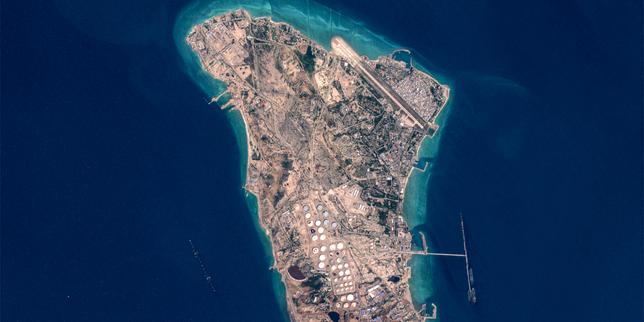
If you’ve been following the regional shifts since 2024, you know the stakes. When Tehran starts talking about island occupations, they’re usually looking at the Greater and Lesser Tunbs or Abu Musa. These small patches of land are tiny. You could walk across some of them in an afternoon. Yet, they control the flow of the world’s most vital oil transit point. If someone moves on those islands, the global economy hits a brick wall.
The Strategy Behind the Warning
Iran’s Revolutionary Guard Corps (IRGC) doesn't make these statements for fun. Brigadier General Alireza Tangsiri, the head of the IRGC Navy, is the one pointing fingers. He specifically mentioned that certain regional states—though he didn't name names—are facilitating this supposed plot. We can read between the lines here. He’s likely looking at the United Arab Emirates or perhaps countries tied to the Abraham Accords.
The timing is what matters most. We’re seeing a massive buildup of naval assets from several Western powers in the nearby waters. Iran feels squeezed. By announcing that they know about a "secret plan," they’re trying to strip away the element of surprise. It’s a classic defensive move. They’re saying, "We see you, and we’re ready to burn the whole neighborhood down if you try it."
What’s Actually at Stake in the Gulf
You might wonder why anyone would fight over a few rocky outcroppings. It’s about the "choke point" logic. The Strait of Hormuz is narrow. If you control the islands of Abu Musa and the Tunbs, you effectively control the shipping lanes. Roughly 20% of the world's liquid petroleum passes through this gap.
Iran has held these islands since 1971, right as the British were packing up and leaving the Gulf. The UAE has claimed them ever since. This isn't a new argument, but it's a dangerous one to revive right now. In a full-scale Middle East war, these islands become unsinkable aircraft carriers. Or, more accurately, unsinkable missile platforms.
The Regional State Factor
Tangsiri’s mention of a "regional state" is the real sting. Iran is trying to shame its neighbors into neutrality. They’re basically telling Saudi Arabia, the UAE, and Qatar that if they allow Western forces to use their bases for an island grab, they'll face the consequences. It’s a high-stakes game of "pick a side."
Usually, these Gulf states try to play both ends. They want the security of the U.S. military but need a working relationship with Tehran to keep their glass skyscrapers from being targeted by drones. Iran is trying to break that balance. They want their neighbors to be too scared to help any "enemies."
Why This Escalation Feels Different
We’ve seen tensions before, like the "Tanker War" of the 1980s. But 2026 is different. The technology is cheaper and more lethal. A swarm of Iranian fast-attack boats or a few dozen "suicide drones" can do more damage now than a destroyer could forty years ago.
The IRGC has been practicing island defense drills for months. They’ve moved long-range missiles and sophisticated radar systems to these rocky outposts. They aren't just camping there. They've turned these islands into fortresses. When they say someone is preparing to "occupy" them, they're signaling that any such attempt would be a bloodbath.
The Western Perspective
From the viewpoint of Washington or London, this looks like paranoia or a pre-emptive excuse for Iranian aggression. The U.S. Fifth Fleet, based in Bahrain, has always maintained that they’re there to keep the lanes open, not to seize territory. But in the eyes of Tehran, any presence is an encroachment.
The risk of a "miscalculation" is at an all-time high. Imagine a stray drone or a nervous radar operator on one of those islands. One mistake leads to a skirmish, and a skirmish leads to a closed Strait. If the Strait closes, your gas prices at home don't just go up—they double overnight.
How to Read the Rhetoric
Don't take every word Tangsiri says as literal gospel. He’s a commander, but he’s also a politician in a uniform. His job is to keep his troops motivated and his enemies guessing. However, ignore the core message at your own peril. Iran is feeling vulnerable. A vulnerable Iran is a dangerous Iran.
They’re obsessed with sovereignty. They view the Persian Gulf as their backyard, and they’re tired of seeing foreign flags on the horizon. This latest warning is a "no trespassing" sign written in the boldest ink possible.
If you’re watching the markets or the news, keep your eyes on the maritime insurance rates in the Gulf. That’s the real "fear index." If those rates start to spike, it means the big shipping companies think Iran’s warnings are more than just talk. You should probably think so too.
Watch the naval movements near the Strait of Hormuz over the next 48 hours. If Iran begins unannounced "snap" drills near Abu Musa, the risk of a kinetic clash moves from "possible" to "likely." Keep a close eye on official statements from the UAE ministry of foreign affairs; their silence or their pushback will tell you exactly how much truth sits behind the IRGC's accusations.