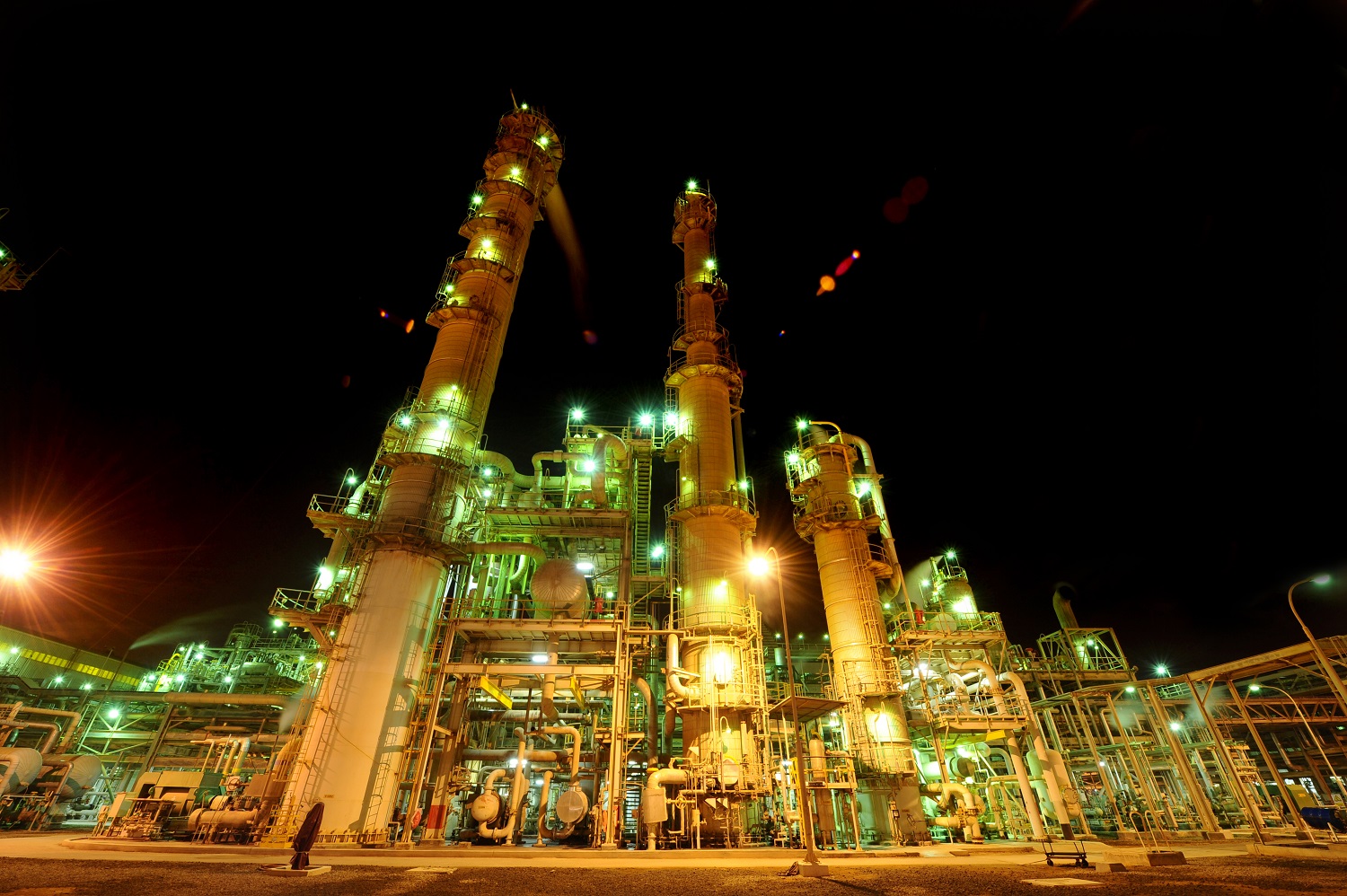
The smoke rising over Tehran and the charred remains of the South Pars gas fields tell a story of tactical devastation, but they do not tell the story of the war. On February 28, 2026, the United States and Israel launched Operation Epic Fury, a campaign designed around the "Five Ring" theory of strategic paralysis. The logic was clinical: decapitate the leadership, blind the sensors, and the Iranian state would collapse like a house of cards.
Weeks into the conflict, the house is still standing.
Western analysts often mistake the destruction of hardware for the defeat of a nation. While President Trump may claim that Iran has "no navy and no air force," the reality on the ground is far more complex. Iran has spent two decades preparing for exactly this scenario—a high-intensity conflict against a technologically superior foe. They aren't playing the same game as the Pentagon, and they aren't trying to win a conventional battle. They are trying to outlast a system.
The Decentralized Ghost
The most significant miscalculation of the current campaign is the belief that killing the head kills the beast. When the Supreme Leader and senior IRGC commanders were eliminated in the opening salvos, the "Mosaic Defense" doctrine was triggered. This isn't just a military plan; it is a fundamental restructuring of power.
Authority has devolved to Provincial Stability Councils. Under the National Disaster Management Law of 2019, Iran effectively pre-shredded its own hierarchy. Each province now operates as an autonomous cell with its own command, its own Basij paramilitary units, and its own stockpiles. You cannot decapitate a ghost.
The swift appointment of Mojtaba Khamenei as the new Supreme Leader was a signal of continuity, not desperation. By closing ranks, the clerical and military elite signaled to the population—and to their own security apparatus—that the state remains a functioning entity. For a defection to occur, an officer needs to know there is a safe place to go and a side that is winning. Right now, the IRGC sees no such alternative.
The Calculus of Precise Mass
We are witnessing the first true war of "Precise Mass." This is the transition from expensive, exquisite platforms to cheap, expendable swarms.
- The Cost Asymmetry: A single Patriot PAC-3 interceptor costs roughly $4 million. An Iranian-designed Shahed-136 drone costs about $20,000.
- The Math of Attrition: To achieve a 90% intercept rate against a swarm of 100 drones, a defender must spend $400 million to stop $2 million worth of flying lawnmowers.
Iran is losing its conventional navy, but it is winning the war of inventories. By forcing the U.S. and its Gulf allies to deplete their limited stocks of high-end interceptors, Tehran is creating a "defensive gap." Once those magazines are empty, the more lethal ballistic missiles—the Fattah-1 and Haj Qassem—will find their targets with far less resistance.
This isn't just about blowing things up. It is about the unit economics of warfare. If Iran can sustain a production rate of thousands of drones a year—aided by technical pipelines from Russia—they can essentially "price out" the American umbrella.
The Global Chokepoint Paradox
The closure of the Strait of Hormuz is often discussed as a "threat," but in 2026, it is a lived reality. This narrow waterway carries 20% of the world’s oil and a massive portion of its liquefied natural gas (LNG).
When the insurance premiums for tankers skyrocketed, the global economy felt the heart attack immediately. Brent Crude jumped from $70 to $110 per barrel in a matter of days. In the United States, gasoline prices have surged, complicating an already precarious inflation outlook.
The paradox is that while the U.S. is "winning" on the battlefield, the American consumer is losing at the pump. This creates a political ticking clock for Washington that does not exist for Tehran. Iran’s economy was already sanctioned to the bone; they have much less to lose from a global recession than a sitting U.S. President facing an electorate.
The Missing Political Endgame
War is the continuation of politics by other means, but "Epic Fury" appears to be all means and no politics.
The coalition lacks a coherent architecture for political warfare. There is no "government-in-waiting" that holds legitimacy inside Iran. Messaging to exile groups in Paris or Washington does nothing to move the needle in the working-class neighborhoods of Mashhad or Isfahan.
Furthermore, the campaign has failed to exploit the natural friction between the IRGC and the Artesh (the conventional military). The Artesh has historically been the more nationalist, less ideological branch. A sophisticated strategy would have sought to drive a wedge between these two institutions, offering the Artesh a role in a post-war settlement. Instead, the broad nature of the strikes has forced both into a defensive marriage of necessity.
The Intelligence Ecosystem
Iran is not fighting alone. While no Russian or Chinese boots are on the ground, the intelligence pipeline remains open. Satellite data, electronic warfare support, and "gray zone" logistics keep the IRGC’s targeting systems active.
This transforms the conflict from a regional skirmish into a node of a much larger global friction. The longer the war drags on, the more it serves the interests of Moscow and Beijing by pinning down American resources, depleting U.S. munitions, and driving a wedge between Washington and its European allies who are more vulnerable to energy shocks.
The battlefield is a distraction. The real war is being fought in the factories of Shiraz, the boardrooms of global insurance giants, and the decentralized command centers hidden in the Zagros Mountains. If the objective was to remove a threat and stabilize the region, the current path is achieving the exact opposite.
Military superiority is a fact. Strategic victory is an illusion.
Would you like me to analyze the specific impact of the Hormuz closure on East Asian energy markets?