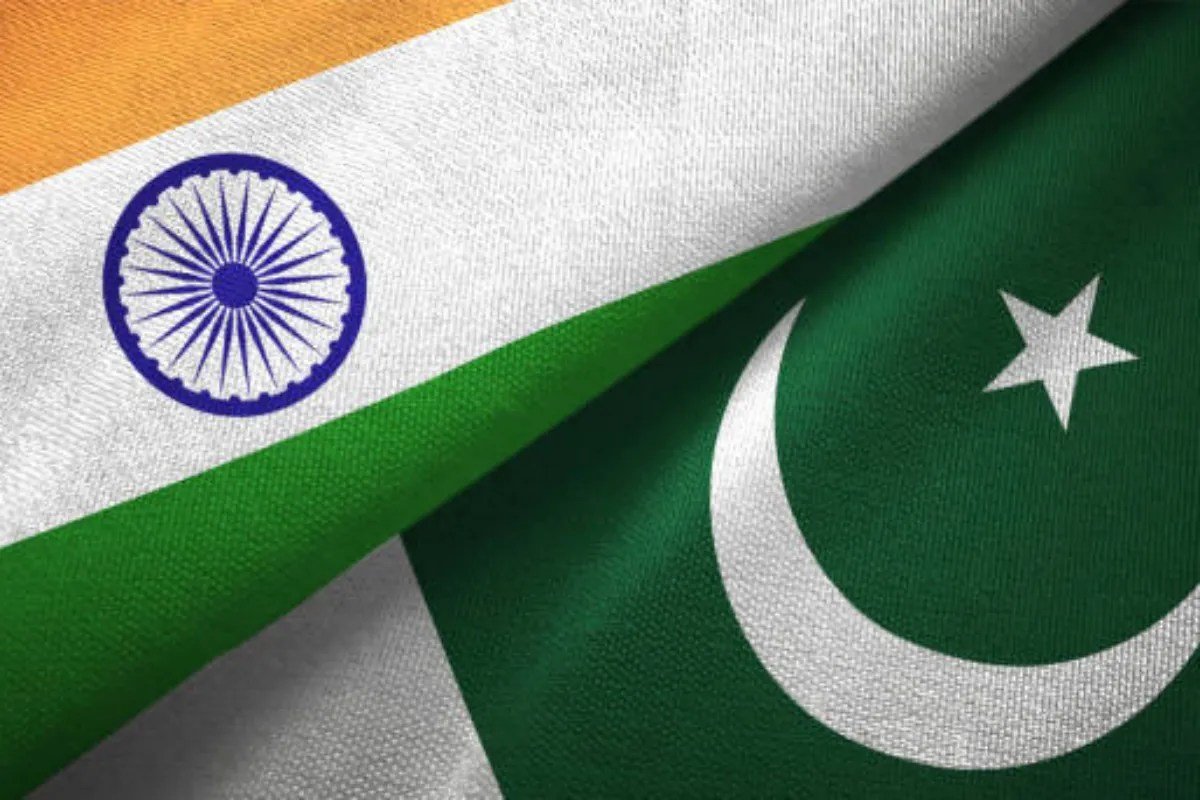
The border between India and Pakistan is often called the most dangerous place on earth. It’s a catchy headline, but it misses the point. If you look at the last two decades, neither New Delhi nor Islamabad has shown a genuine appetite for a full-scale conventional war. They can’t afford it. Their economies can’t handle it. Their nuclear doctrines forbid it. Yet, the tension stays at a boiling point because a third party keeps stirring the pot.
Terrorist groups operating from Pakistani soil aren't just attacking India. They’re actively sabotaging any chance of a diplomatic breakthrough. Every time a prime minister reaches out for a handshake, a blast happens. It’s a cycle that has repeated since the 1990s. The real story isn't about two nations wanting to destroy each other. It’s about how non-state actors have hijacked the foreign policy of an entire subcontinent.
The Cost of Conflict is Too High
Let's talk money and survival. India is currently chasing a multi-trillion dollar economic dream. You don't get to be a global manufacturing hub by fighting a 1940s-style ground war every ten years. For India, war is a distraction it doesn't want. It’s an expensive detour that would scare off foreign investors and drain the treasury.
On the flip side, Pakistan’s economy has been on life support for years. Frequent IMF bailouts and soaring inflation mean the country literally cannot sustain a prolonged conflict. The Pakistani leadership knows this. Even the most hawkish generals understand that a total war would lead to internal collapse. So, if both sides know war is a losing game, why is the rhetoric so sharp?
The answer lies in the "bleeding by a thousand cuts" strategy. While the official governments might want stability, the shadow players—groups like Lashkar-e-Taiba (LeT) and Jaish-e-Mohammed (JeM)—thrive on chaos. They aren't interested in trade routes or cricket matches. They exist to ensure the fire never goes out.
How Terrorists Dictate the Timing
It’s almost predictable now. Look at the history of the last 25 years.
- 1999: Prime Minister Atal Bihari Vajpayee takes a bus to Lahore. It was a massive leap of faith. Within months, the Kargil War broke out.
- 2008: Manmohan Singh’s government was making progress on back-channel talks. Then came 26/11. Mumbai was under siege, and the peace process was dead in the water.
- 2015: Narendra Modi makes a surprise stop in Lahore to meet Nawaz Sharif. Weeks later, the Pathankot airbase is attacked.
This isn't a coincidence. It’s a veto. Every time a civilian government in Pakistan tries to move toward normalcy, these groups strike. They know exactly which buttons to push to trigger a military response from India. They want India to retaliate because it justifies their existence and keeps the Pakistani public rallied around a "defense" mindset.
The Nuclear Umbrella Paradox
The presence of nuclear weapons has changed the rules. In the old days, a major terrorist attack might have led to tanks crossing the border. Now, there’s a "nuclear ceiling." India has had to get creative with how it punishes provocations without triggering a mushroom cloud.
The 2016 "Surgical Strikes" and the 2019 Balakot airstrikes were attempts to find a middle ground. India wanted to show that it would no longer tolerate "business as usual" from terror groups, but it also kept the strikes limited to avoid a total war. It’s a high-stakes game of chicken. The terrorists are betting that India will eventually lose its cool, or that Pakistan will feel forced to escalate to save face.
The Internal Pakistani Struggle
We often talk about Pakistan as a single entity, but it’s not. There’s a constant tug-of-war between the civilian leadership, the military (GHQ in Rawalpindi), and the intelligence services.
Some parts of the Pakistani establishment have historically viewed these terror groups as "strategic assets." They thought they could use them to keep India busy in Kashmir without ever starting a real war. That plan backfired. Those same groups have often turned their guns on Pakistan itself. The Tehrik-i-Taliban Pakistan (TTP) is a prime example.
By allowing a climate where "good terrorists" are tolerated, the state has lost its grip. These groups now have their own agendas. They don't take orders from a central command anymore. They operate to keep the "India threat" alive because if there is peace, they become irrelevant. They lose their funding, their recruits, and their power.
Why Domestic Politics Matters
You can't ignore the voters. In India, there's massive public pressure on the government to "do something" after an attack. No leader can afford to look weak. In Pakistan, the "Kashmir issue" is baked into the national identity. Admitting that terror groups are the main problem is seen by many as a betrayal of the cause.
This creates a trap. Even if leaders want to de-escalate, they are looking over their shoulders at their own citizens. Terrorists exploit this perfectly. They know a single bomb in a crowded market can force the hands of two nuclear-armed leaders, regardless of what those leaders actually want.
Breaking the Cycle
True peace isn't just about signing a treaty. It's about the systematic dismantling of the infrastructure that allows these groups to function. As long as there are training camps and "launch pads" near the Line of Control, the threat of war remains.
India has shifted its strategy toward international isolation. Instead of just threatening military action, New Delhi uses the Financial Action Task Force (FATF) and global diplomacy to squeeze the funding of these groups. It's a slower process, but it hits where it hurts.
The reality is that India and Pakistan are stuck in a room with a live grenade. Neither wants it to go off, but there’s a third person in the corner trying to pull the pin. Until that person is removed, the standoff continues.
If you're following the geopolitical shifts in South Asia, look past the shouting matches on news channels. Pay attention to the movements of specific outfits like the Resistance Front (TRF) or revamped versions of older groups. Their activity levels are the best barometer for whether the region is moving toward a genuine thaw or another inevitable flare-up. Watch the FATF compliance reports and the border ceasefire stability. Those are the only metrics that actually matter in this long game.