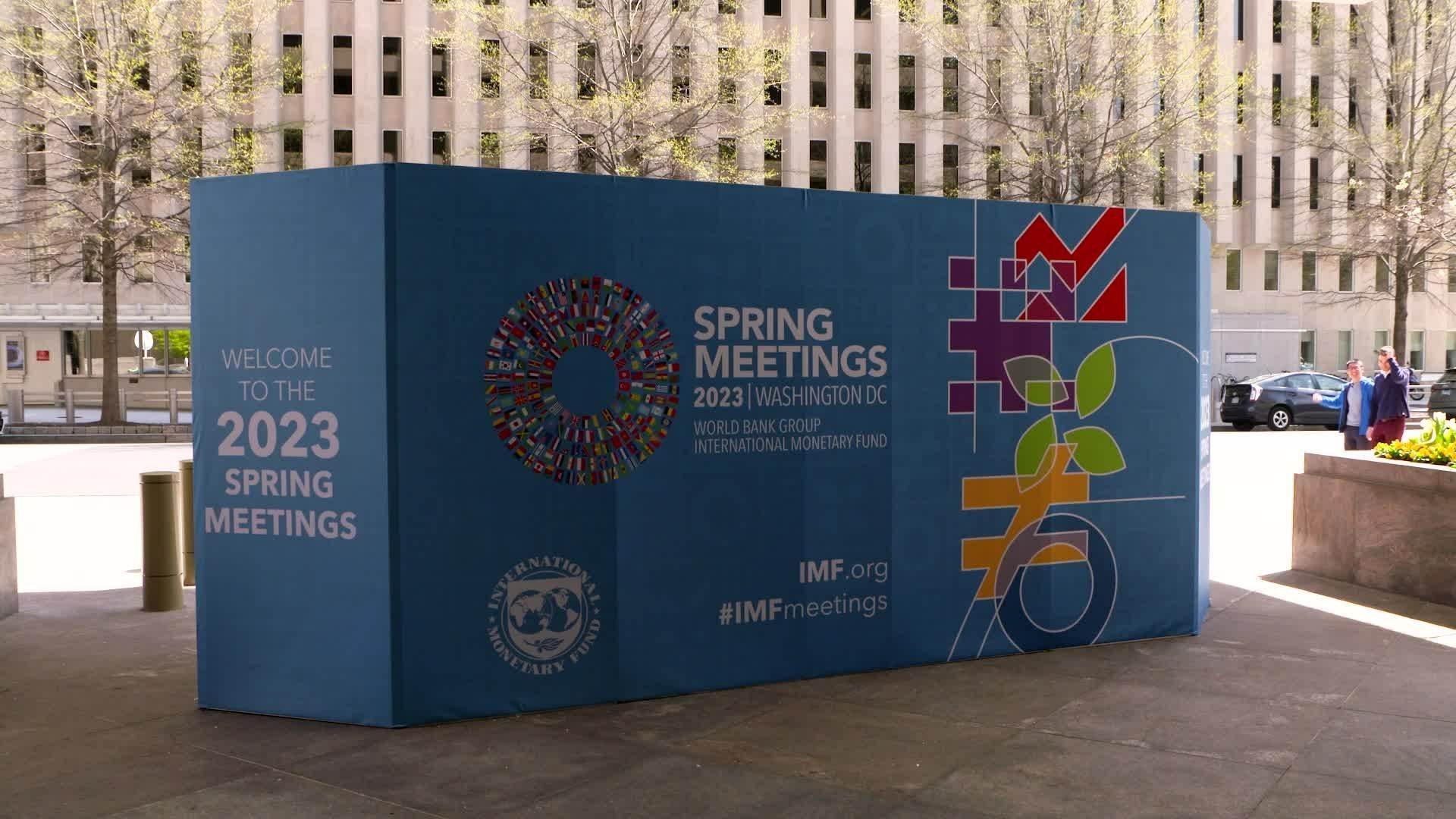
The world’s financial elite are currently huddled in Washington, DC, sipping lukewarm coffee and trading panicked whispers about "geopolitical headwinds" and "fiscal sustainability." They call it the IMF-World Bank Spring Meetings. I call it a high-stakes support group for people who have lost control of the global economy.
The standard narrative—the one you’ll read in every vanilla financial outlet—is that these "chiefs" are gathering to save us from the fallout of Middle Eastern conflict and sluggish growth. It’s a comforting lie. It suggests there is a hand on the tiller.
The reality? These meetings are a performance. They are a desperate attempt to maintain the illusion of relevance in a world that has moved past the post-WWII institutional order. If you’re looking to these bureaucrats for a roadmap to the next decade of wealth creation, you’re looking in the rearview mirror of a crashed car.
The Myth of Regional Conflict as an Economic Boogeyman
Every time a drone flies in the Middle East, the IMF issues a grim bulletin about "downside risks" to global GDP. It’s the ultimate get-out-of-jail-free card for central bankers who failed to predict the inflation they themselves ignited.
They want you to believe that high energy prices and supply chain hiccups are external shocks. They aren’t. They are the predictable consequences of a decades-long policy of hollowed-out domestic production and a pathetic reliance on just-in-time logistics.
Let’s look at the data. During the peak of the 20th-century oil shocks, the correlation between energy costs and long-term GDP growth was stark. Today, the West is significantly more energy-efficient per unit of GDP. When the IMF warns that "conflict threatens the recovery," they are distracting you from the fact that the "recovery" was already a fragile, debt-fueled mirage.
I’ve spent twenty years watching these committees operate. They don't fear war because of its human cost; they fear war because it forces them to admit that their mathematical models for "global stability" cannot account for human nature or tribal history. They are trying to solve 2,000-year-old grievances with 2-year-old fiscal spreadsheets. It doesn't work.
The Growth Obsession is a Death Spiral
The "finance chiefs" are obsessed with a 3% growth target. Why? Because the entire global debt apparatus is a Ponzi scheme that requires constant expansion just to pay the interest on previous borrowings.
The IMF "growth fears" are actually "debt-servicing fears."
Most "People Also Ask" queries focus on when interest rates will drop or when "normalcy" returns. They are asking the wrong question. The real question is: Why do we believe a bunch of unelected economists can—or should—engineer a specific growth rate?
True economic vitality doesn't come from a communiqué issued in a DC ballroom. It comes from creative destruction. By propping up "zombie" economies and keeping interest rates artificially manipulated to "foster" (a word they love, and I hate) stability, the IMF is actually preventing the next great leap forward. They are the enemies of innovation because innovation is inherently unstable.
Debt Sustainability is an Oxymoron
Listen to the rhetoric coming out of the spring meet. You’ll hear a lot about "helping emerging markets manage debt loads."
Translation: We are going to lend them more money to pay off the money we already lent them, provided they gut their local industries to satisfy our "structural adjustment" checklists.
I have seen countries sold down the river by these packages. The IMF acts like a payday lender with a better PR firm. They claim to provide a safety net, but they usually provide a golden straitjacket.
If we were serious about global finance, we would talk about sovereign bankruptcy. We would let nations fail, let the creditors take the haircut, and allow the local economy to rebuild on a realistic basis. But the "chiefs" can’t allow that. It would hurt the balance sheets of the very banks that fund their lifestyles.
The BRICS Pivot they Won't Acknowledge
While the IMF discusses "global cooperation," the reality is a fracturing world. The rise of the BRICS+ (Brazil, Russia, India, China, South Africa, and the new invitees) isn't just a trade bloc; it’s an explicit rejection of the Washington Consensus.
The IMF is terrified of this. They won't say it in the official press releases, but the shift toward non-dollar settlements is the single greatest threat to the "stability" they claim to protect. When Saudi Arabia starts discussing oil sales in Yuan, the IMF’s "tools" become useless.
The spring meetings are essentially a group of people arguing about how to rearrange the deck chairs on the Titanic, while a fleet of faster, nimbler ships is already sailing away in a different direction.
Your Action Plan for a Post-IMF World
Stop waiting for the "global outlook" to improve before you make your move. These institutions are lagging indicators. By the time the IMF says "the risks have abated," the opportunity has already been priced out by the market.
- Hedge Against The Dollar: Not because the dollar is "dying" tomorrow, but because its role as the undisputed global ledger is being diluted. Diversify into hard assets and jurisdictions that aren't begging for an IMF bailout.
- Ignore "Growth" Headlines: Look for margin. Growth is a vanity metric used by politicians. Margin is what keeps your business or portfolio alive when the "geopolitical headwinds" actually hit.
- Bet on Locality: The era of seamless globalism is over. The winners of the next decade will be those who control local supply chains, local energy, and local talent.
The IMF is a relic. It is a ghost of a 1944 agreement trying to haunt a 2026 reality. They don't have the answers because they don't even understand the questions anymore. They are gathered in Washington to talk to each other. You should be busy building something that doesn't need their permission to exist.
The world isn't ending because the IMF is worried; the world is finally waking up from the sedative of centralized financial planning. Stop listening to the "chiefs" and start watching the capital. The capital has already left the building.