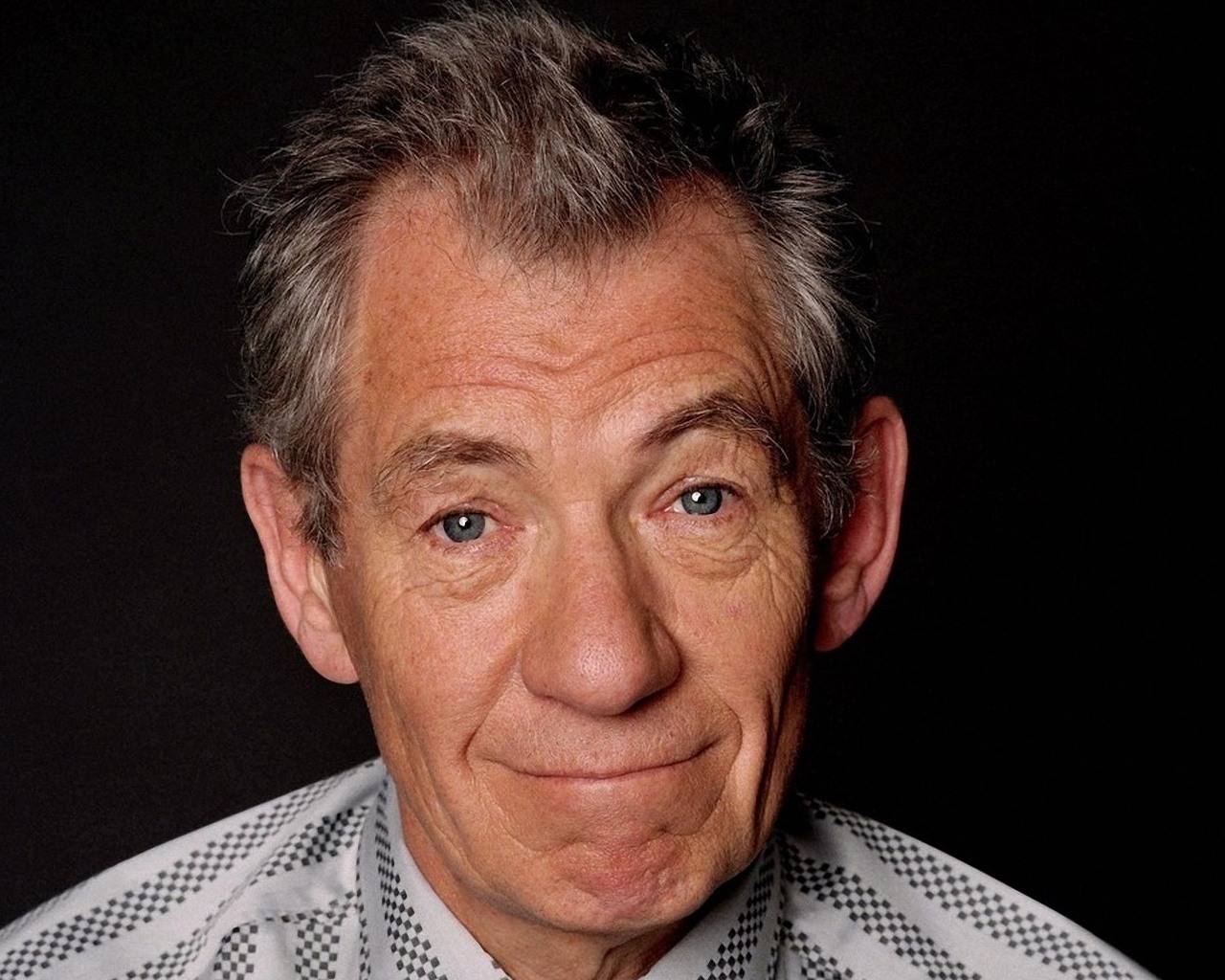
The curtain rises on a performance that feels less like a play and more like a public soul-searching. In his latest turn in The Christophers, Ian McKellen has abandoned the booming theatricality that defined his middle years for something uncomfortably quiet. For decades, the British stage has been dominated by a specific brand of lionization, where the actor becomes a monument. But at 86, McKellen is systematically dismantling his own pedestal.
The industry is currently obsessed with "vulnerability," a word tossed around by press agents until it loses all meaning. Most actors perform vulnerability; they wear it like a costume. McKellen, however, is doing something different in this production. He is presenting a study of diminishment that feels dangerously real to anyone who has watched a master realize their physical tools are finally, inevitably, beginning to fail.
The Architecture of a Late Career Pivot
The Christophers is not a grand epic. It is a tight, claustrophobic drama that demands an actor stay inward. In the past, McKellen’s power came from his ability to project across the stalls of the Old Vic, using a voice that could slice through the thickest orchestral swell. Now, he operates in the frequencies of a whisper. This isn't just a stylistic choice; it is a tactical survival mechanism for an actor who has survived his peers.
The play itself centers on a man wrestling with the fragments of his own identity, a theme that mirrors the current state of British theater. We are seeing a transition away from the "Great Man" era of acting. Men like Olivier and Gielgud occupied the center of the stage with a gravitational pull that sucked the air out of the room. McKellen was the last of that lineage. By turning inward, he is signaling the end of that specific type of theatrical dominance.
He is no longer playing to the rafters. He is playing to the person in the front row who can see the slight tremor in his hands.
Why Quiet Matters More Than Noise
Most veteran actors fall into the trap of caricature. They become "National Treasures," a title that usually serves as a polite way of saying they are no longer expected to do anything challenging. They show up, deliver the lines in that familiar cadence, and collect their lifetime achievement awards.
McKellen is resisting that gravitational pull toward being a mascot. In The Christophers, he avoids the easy applause lines. The technical execution of his performance relies on a heavy use of silence. In modern production, silence is often feared; directors fill it with soundscapes or lighting cues because they don't trust the audience's attention span.
The Mechanics of the Inward Turn
To understand why this performance works, one has to look at the physical economy of his acting. McKellen has stripped away the flourishes. There are no grand sweeps of the arm or dramatic pauses intended to signal "Importance." Instead, he uses:
- Micro-expressions that convey a lifetime of regret without a single syllable.
- Controlled breathwork that makes the audience lean in, physically engaging with the space.
- Spatial awareness that emphasizes his character’s isolation within the set.
This is a masterclass in reduction. It is the theatrical equivalent of a painter moving from massive oils to small, sharp charcoals.
The Economic Reality of the Aging Star
There is a cold business reality behind these "delicate" late-career turns. The insurance costs for a touring production led by an octogenarian are astronomical. When McKellen suffered a fall during Player Kings earlier this year, the industry held its breath. It wasn't just concern for a beloved figure; it was a realization of how fragile the "Star Vehicle" model has become.
Producing a show like The Christophers is a gamble. It relies entirely on the magnetism of a single name to fill seats, yet the performance itself is designed to be small and fragile. If McKellen isn't "on," the whole structure collapses. This creates a tension between the marketing—which sells the "Spellbinding Icon"—and the reality of the performance, which is about the loss of that very iconography.
Critics often miss this tension. They focus on the "magic" of the theater while ignoring the logistics of keeping a man in his late eighties on a rigorous performance schedule. The brilliance of his current work lies in how he has integrated that physical uncertainty into the character itself. He is using his own mortality as a prop.
The Myth of the National Treasure
We treat our elder actors like heritage sites. We want them to remain unchanged, providing a link to a perceived golden age of the RSC and the West End. But that desire for nostalgia is toxic to real art. McKellen seems aware of this trap.
Throughout his career, he has been a shapeshifter—from the radicalism of his early Shakespearean work to the global saturation of Lord of the Rings. He knows how to manage a brand. But in The Christophers, the brand is being sacrificed for the sake of the work. He is playing a man who is being forgotten, and he does so with a lack of vanity that is genuinely jarring.
There are no "Gandalf moments" here. There is no booming authority. There is only a man in a room, trying to make sense of what remains when the lights go down.
A Shift in the Theatrical Landscape
The success of this inward-facing performance suggests a shift in what audiences want from the stage. We are living in an era of high-definition scrutiny. In the age of the smartphone, we are used to seeing every pore and every twitch. The broad strokes of the old theater feel increasingly dishonest.
McKellen is adapting to this. He is bringing the intimacy of a close-up to the stage. This requires a level of focus that is exhausting. It is much easier to shout a monologue than it is to sit in silence and hold a room’s attention through sheer presence.
The younger generation of actors should be paying attention, but not for the reasons usually cited in glowing reviews. They shouldn't be looking at how he acts, but at what he is willing to give up. He is giving up the safety of his persona. He is giving up the armor of his "National Treasure" status.
The Brutal Truth About Late Style
In music and art, "Late Style" refers to the work produced in the final years of a creator's life—work that is often characterized by a rejection of polish and an embrace of the essential. McKellen has reached his Late Style.
It is a period of work that doesn't care about pleasing the audience in the traditional sense. It doesn't care about being "spellbinding" in the way a magician is spellbinding. It is about the truth of the body and the mind as they settle into the final act.
If The Christophers feels different, it's because it is a rejection of the theater as spectacle. It is an admission that the grand gestures are over. For an actor who spent a lifetime being larger than life, the most radical thing he could do was finally become the same size as everyone else.
The power of this performance isn't in what McKellen finds when he turns inward. It’s in his willingness to show us that he’s looking.