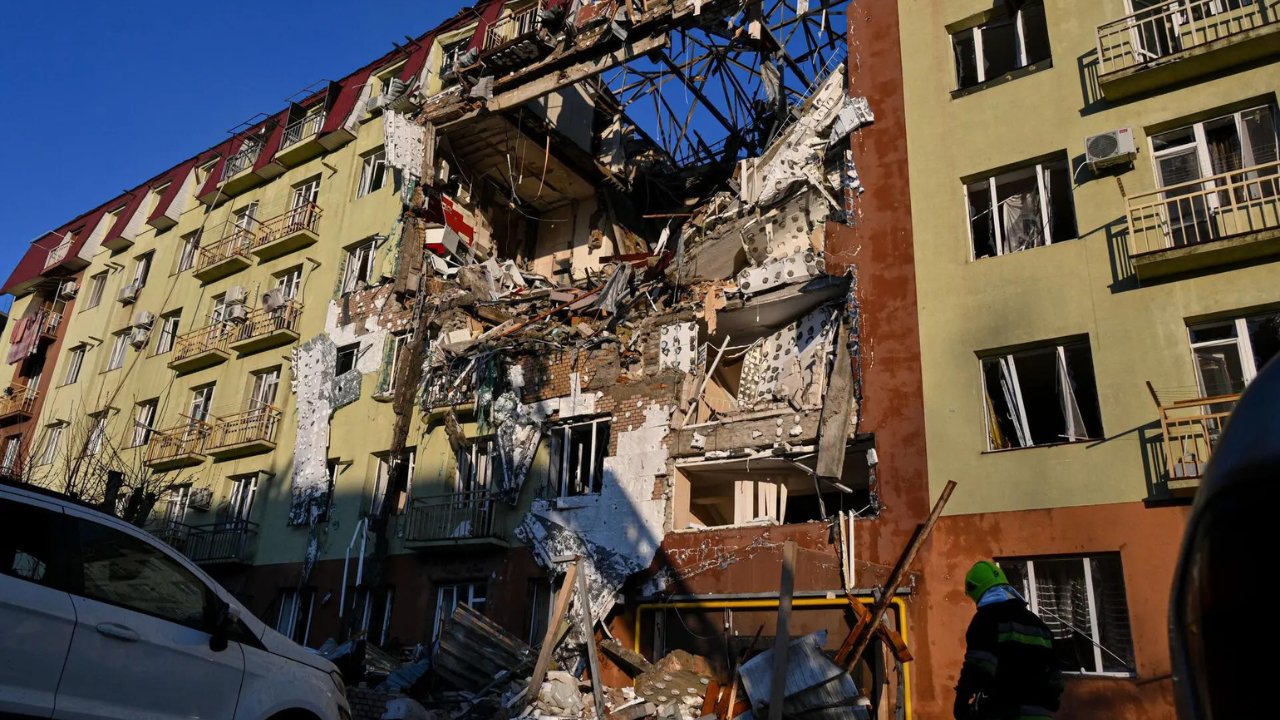
The black smoke rising from Odesa’s port facilities on the eve of the Orthodox Easter serves as a grim rebuttal to the diplomatic talk of a ceasefire. Two people are dead, several more are injured, and the structural integrity of Ukraine’s primary maritime gateway is once again under fire. While officials in international capitals discussed the possibility of a temporary pause in hostilities to honor the religious holiday, Moscow sent a swarm of Shahed drones to clarify its position. The strikes were not a tactical error. They were a deliberate application of pressure at a moment when the world expected a softening of the front lines.
This pattern of holiday escalations has become a hallmark of the conflict. In the early hours of Saturday, Odesa’s air defenses engaged multiple targets, but the sheer volume of the loitering munitions ensured that some would find their mark. Residential areas were clipped, but the primary focus remained on the logistics hubs that keep the Ukrainian economy breathing. By hitting Odesa now, the Kremlin signals that no date on the calendar offers sanctuary from the grinding attrition of its "special military operation." For another view, check out: this related article.
The Mechanics of the Holiday Strike
Military planners often use the psychological weight of holidays to maximize the impact of an attack. It is a cynical but effective strategy. When a population prepares for a period of rest or spiritual reflection, the sudden intrusion of kinetic violence carries a heavier weight than a mid-week skirmish. These drone strikes were timed to coincide with the arrival of the proposed ceasefire window, effectively killing the initiative before the ink could dry on any formal agreement.
The drones used in the attack, largely identified as the Iranian-designed Geran-2 variants, are inexpensive to produce but expensive to intercept. Ukraine is forced to expend high-end surface-to-air missiles to down "lawnmower" drones that cost a fraction of the interceptor’s price tag. This economic imbalance is the core of the Russian strategy in Odesa. They are not just trying to destroy buildings; they are trying to bankrupt the Ukrainian defense budget one drone at a time. Further insight on this trend has been provided by USA Today.
The debris from the recent strikes tells a story of evolving technology. Salvaged components show that these drones are increasingly outfitted with domestic Russian navigation systems and improved warheads. They are becoming more accurate, making the "near misses" in civilian neighborhoods even more suspicious. If the drones can hit a specific warehouse at the port, a strike on a residential block suggests either a calculated terror tactic or a complete disregard for collateral damage. Neither option bodes well for the residents of the Black Sea coast.
Why Ceasefires Fail Before They Begin
The failure of the Easter ceasefire proposal was predictable to anyone who has monitored the last decade of Russo-Ukrainian relations. Since the 2014 Minsk agreements, ceasefires have been used as tactical breathing room rather than steps toward peace. One side uses the lull to reposition armor; the other uses it to rotate exhausted infantry. Neither side trusts the other enough to be the first to stop pulling the trigger.
In this instance, the stakes are tied to the maritime corridor. Odesa is the heart of the global grain trade. By maintaining a constant state of alert in the city, Russia keeps insurance premiums high and shipping companies nervous. A ceasefire, even a 48-hour one, might allow Ukraine to clear backlogs and streamline exports without the threat of a drone diving into a grain silo. For the Kremlin, maintaining the threat is more valuable than any goodwill earned by a temporary truce.
The death of two civilians in this latest raid underscores the human cost of this strategic maneuvering. These weren't soldiers on a frontline trench; they were citizens in a city that has tried to maintain a semblance of normalcy despite the sirens. When a drone hits a home on the eve of a holiday, the message to the survivors is clear: nowhere is safe, and no tradition is sacred.
The Strategy of Forced Attrition
Russia’s focus on Odesa reveals a long-term goal that goes beyond simple territorial acquisition. By targeting the south, they are attempting to turn Ukraine into a landlocked rump state. If Odesa becomes untenable for commercial shipping, the sovereign viability of Ukraine is called into question. The drone strikes are the scalpel used to slowly cut the country’s economic throat.
We are seeing a shift in how these attacks are executed. Rather than single, large-scale waves, the Russian military is opting for "trickle" attacks—small groups of drones launched at staggered intervals. This keeps the air defense crews in a state of permanent exhaustion. It prevents the "all clear" from being sounded and forces people to spend their entire holiday weekend in basement shelters.
The Problem of Air Defense Saturation
Ukraine’s air defense is a patchwork of Soviet-era systems and donated Western technology. It is a logistical nightmare to maintain. Every time a Patriot or IRIS-T battery is fired in Odesa, it is one less missile available to protect the power grid in Kyiv or the troops in the Donbas. The Russian command knows this. They are using the Odesa strikes to pull resources away from the active front lines.
- Cost Efficiency: A single Shahed drone costs approximately $20,000 to $50,000.
- Interceptor Costs: A NASAMS or Patriot missile can cost between $1 million and $4 million per shot.
- Mental Toll: The constant "loitering" of drones creates a specific type of psychological trauma, as the engine's drone can be heard long before the impact.
The reality of the situation is that as long as the production lines in Russia and its partner nations are humming, the drone waves will continue. The proposed Easter ceasefire was a victim of this cold, mathematical reality. You cannot negotiate a pause with a side that views every day of peace as a missed opportunity to degrade your infrastructure.
The International Response and the Reality Gap
Statements from the UN and various European bodies condemning the Odesa strikes follow a familiar, tired script. There is a profound gap between the diplomatic reality in New York or Brussels and the tactical reality on the ground in southern Ukraine. While diplomats argue over the phrasing of "humanitarian windows," the people of Odesa are measuring their lives in the distance between their beds and the nearest reinforced wall.
Western aid packages often arrive with strings attached regarding how and where weapons can be used. This has historically limited Ukraine's ability to strike the launch sites inside Russian territory or occupied Crimea from which these drones originate. Until the source of the strikes is neutralized, Odesa will remain a shooting gallery. The death of these two residents is a direct result of a defensive strategy that is forced to wait for the blow rather than parry it at the start.
The resilience of the city is often touted in news reports, but resilience has its limits. The constant repair of the power grid and the port facilities is a drain on the national spirit. Each strike on the eve of a holiday chips away at the hope that a political solution is possible. The "Easter Truce" was a noble idea that ignored the fundamental nature of the current Russian military doctrine: total pressure, all the time.
Shifting Focus to the South
The intensity of the Odesa strikes suggests a pivot in the Russian high command’s priorities. With the eastern front largely bogged down in a war of inches, the ability to strike deep into the rear and hit economic targets offers a more immediate "win." It is easier to blow up a warehouse in Odesa than it is to capture a fortified village in the Donbas.
This shift puts Odesa in the crosshairs for the foreseeable future. The city is no longer just a port; it is a symbol of Ukrainian defiance and its primary link to the outside world. If the drones can stop the ships, they can win the war without ever having to march infantry into the city center. The two lives lost this weekend are part of a much larger, much darker tally that shows no signs of slowing down for religious observances or international pleas.
The drones are still flying. The sirens in Odesa haven't stopped for the holiday, and they won't stop as long as the strategic value of the port outweighs the diplomatic cost of hitting it. The ceasefire was never going to happen because, in the eyes of the aggressor, a day of peace is a day wasted.