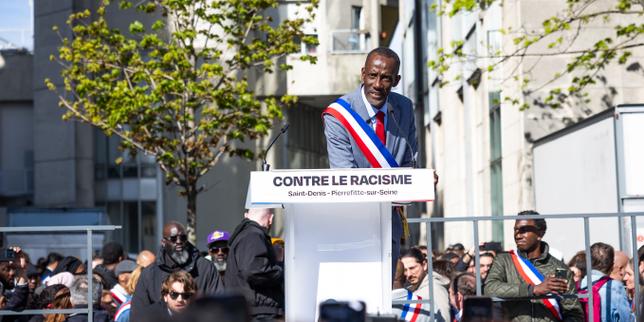
The modern strategy for fighting bigotry is fracturing at the exact moment it needs to hold firm. For decades, the progressive consensus rested on the idea that all forms of prejudice—racism, antisemitism, and xenophobia—were branches of the same poisonous tree. If you fought one, you fought them all. That consensus has evaporated. Today, political movements are increasingly treating these struggles as a zero-sum game, often weaponizing the pain of one group to diminish the suffering of another.
Michel Wieviorka, the veteran French sociologist, recently argued that dissociating the fight against antisemitism from the fight against racism is a strategic and moral disaster. He is right, but the problem goes deeper than a simple lapse in strategy. We are witnessing a fundamental shift in how Western societies define "victimhood" and "oppression." By pulling these struggles apart, activists and politicians are inadvertently creating a hierarchy of hate that serves nobody but the bigots themselves.
The Dangerous Myth of Distinct Hatreds
Anti-racism and the fight against antisemitism are increasingly treated as separate silos with different sets of rules. This is not an accident. It is a byproduct of a political environment that demands binary choices. In many activist circles, antisemitism is viewed as a "distraction" from systemic racism or, worse, a tool of the powerful. Conversely, some defenders against antisemitic rhetoric distance themselves from broader racial justice movements, fearing that their specific concerns will be swallowed by a more general, and sometimes hostile, agenda.
The data suggests this divorce is happening during a period of unprecedented volatility. In France, the Ministry of the Interior reported a staggering 1,000% increase in antisemitic acts in the weeks following October 7, 2023. Simultaneously, incidents of anti-Muslim and general racist abuse have remained at sustained, elevated levels. Despite the numbers showing a rising tide that lifts all boats of hatred, the organizations meant to counter these trends are speaking different languages.
When we stop seeing the connection between the dehumanization of a North African immigrant and the targeting of a Jewish student, we lose the ability to defend the universal values that protect both. Racism is generally understood through the lens of exclusion—keeping the "other" down or out. Antisemitism often operates through a different, more conspiratorial logic, portraying the target as an elusive, manipulative force "above." While the mechanics differ, the psychological root is the same: the rejection of a common humanity.
Why Political Polarization Demands a Hierarchy
Politicians find the "unified front" model inconvenient because it prevents them from scoring points against their opponents. If a leader condemns antisemitism but remains silent on police brutality, they are playing to a specific base. If they march against Islamophobia but stumble when asked to define the boundaries of anti-Jewish rhetoric, they are doing the same.
This selective outrage has turned the fight against hate into a partisan identity marker. On the far right, we see a newfound, often superficial "defense" of Jewish communities used primarily as a cudgel against immigrant populations. On the far left, the struggle against racism is sometimes framed in a way that excludes Jews by categorizing them solely as part of a privileged "white" power structure, ignoring thousands of years of persecution and current threats.
Both sides are guilty of instrumentalization. They aren't fighting hate; they are managing it to fit a narrative.
The Identity Trap
Modern identity politics has contributed to this decoupling. By emphasizing the unique lived experience of every subgroup, we have inadvertently made it harder to build coalitions. If every group’s pain is "uniquely incomparable," then shared action becomes impossible.
We see this in the way hate crime statistics are discussed. When the FBI or European equivalents release annual reports, the immediate reaction from pundits is to compare which group "suffered more" this year. This competitive victimhood creates a marketplace where groups vie for resources, media attention, and political protection.
- Antisemitic Incidents (Global Trend): Upward trajectory in nearly every Western democracy since 2018.
- Anti-Black Racism: Remaining the most consistent driver of hate-motivated violence in the United States.
- Anti-Muslim Rhetoric: Surging in correlation with nationalist political rhetoric across the EU.
The Consequences of the Divorce
What happens when these movements stop talking to each other? The first casualty is the credibility of the institutions themselves. When a human rights organization appears hesitant to condemn a specific type of hate because it doesn't fit its donor profile or political alignment, its authority dissolves.
The second casualty is the safety of the vulnerable. Bigots are rarely specialists. The individual who spray-paints a swastika on a synagogue is frequently the same individual who harasses a woman in a hijab or uses racial slurs on the subway. They operate on a worldview of "purity" and "us versus them." When the opposition to that worldview is fragmented, it becomes easier to pick off groups one by one.
The divorce also creates a massive blind spot for "intersectional" hate. Consider the experience of a Black Jew or a Sephardic Jew from North Africa. In the current siloed landscape, where do they fit? They are often forced to choose a side of their identity to defend, while the other side is ignored or actively attacked by their supposed allies.
The Structural Failure of the Universalist Project
The post-WWII "Universalism" that Wieviorka defends was supposed to be the shield against this fragmentation. It held that the law and society should treat every individual with equal dignity, regardless of their background.
However, that project has hit a wall. Universalism was often used as a mask for "colorblindness," which ignored the very real, specific ways different groups were being marginalized. The reaction to that failure was the rise of hyper-particularism—the silos we see today. We traded a flawed, broad shield for a dozen small, broken daggers.
To fix this, we don't need to return to a version of universalism that ignores differences. We need a "thick" universalism that acknowledges the specific ways antisemitism and racism function while insisting that the moral response must be the same.
A Blueprint for Reintegration
Rebuilding a unified front isn't about being "nice" or finding a middle ground. It is a cold, hard necessity for social survival.
First, we must demand intellectual honesty from political leaders. A politician who condemns one form of bigotry while winking at another should be treated as an arsonist, not a champion. We need to stop rewarding the "our guys vs. their guys" approach to human rights.
Second, the educational apparatus must change. Teaching about the Holocaust in a vacuum, without connecting it to the broader history of European racism and colonialism, makes it seem like a historical anomaly rather than a warning about human potential. Similarly, teaching about the history of racism without addressing the persistence of antisemitism leaves students unprepared for the conspiracy-driven nature of modern white supremacy.
Third, we have to dismantle the "Privilege vs. Oppression" binary that has become the standard lens for social analysis. This binary is too blunt. It fails to account for the way a group can be successful in some societal metrics while still being the target of eliminationist rhetoric and violence.
The struggle is not a zero-sum game. If the Jewish community is less safe, the Black community is less safe. If the immigrant community is being dehumanized, the foundations of the democracy that protects all minorities are rotting.
We are currently operating as if we can save one room of a burning house while letting the others go up in flames. It is a delusion. The fire doesn't care about our political distinctions. It only cares about the fuel we provide through our division. The only way to put it out is to realize that the water—the commitment to universal human dignity—has to be applied to every room at once, without exception and without hesitation.
The path forward requires an uncomfortable level of self-reflection from everyone involved. It requires the activist to ask why they feel a "but" coming on when they condemn a specific act of hate. It requires the institutional leader to ask if their silence is a matter of principle or a matter of keeping the board of directors happy. Most of all, it requires a rejection of the idea that some victims are more "politically useful" than others. Until that happens, the fracture will only widen, and the only people winning will be the ones holding the matches.


