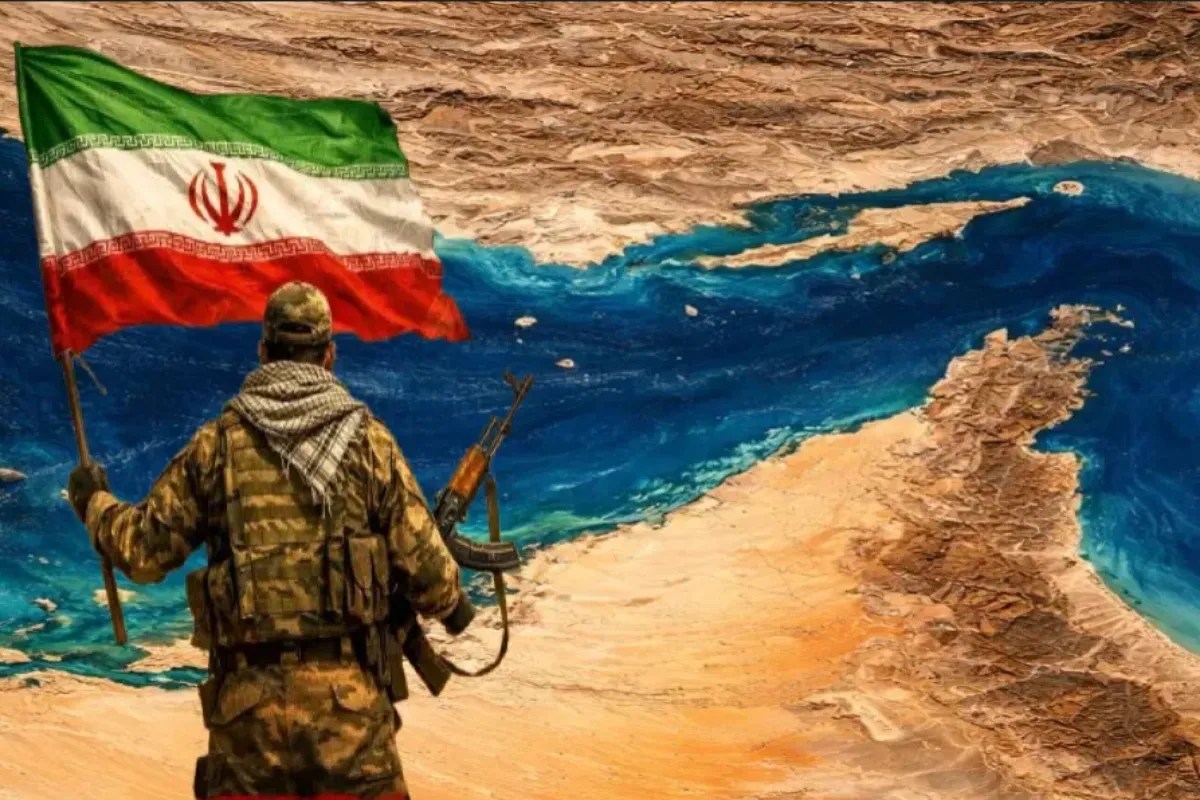
A heavy silence usually blankets the Persian Gulf at three in the morning, broken only by the rhythmic slap of salt water against steel hulls. But for the men aboard the "ghost" tankers, there is no such thing as quiet. There is only the low, vibrating hum of pumps transferring millions of barrels of crude oil under the cover of a moonless sky. No lights. No transponders. Just the smell of raw earth and the knowledge that every drop being moved is a calculated middle finger to the global financial order.
While headlines scream about the escalating fires of war across the Middle East, a different kind of fire is burning in Iran’s treasury. It is a slow, steady, and incredibly lucrative blaze. Despite the tightening noose of international sanctions and the constant threat of a regional explosion, Iran isn't just surviving. It is thriving in the shadows. To understand how a nation under siege manages to rake in roughly 1.3 thousand crore rupees every single day, you have to look past the missiles and into the dark veins of the global energy market.
The Invisible Fleet
Consider a man we will call Reza. He doesn't exist on any official manifest, but he is the heartbeat of this operation. Reza sits in a nondescript office, perhaps in Dubai or Kuala Lumpur, watching digital blips on a screen that represent millions of dollars in transit. His job is the Great Erasure. He ensures that oil pumped from the Khuzestan province loses its identity before it reaches a refinery in Shandong.
This is the "Ghost Fleet." It is a massive, aging armada of tankers that sail with their Automatic Identification Systems (AIS) switched off. They are the phantoms of the high seas. When an Iranian tanker meets a middleman’s vessel in the middle of the ocean, they perform a ship-to-ship transfer. It is a dangerous, delicate dance of heavy machinery. By the time that oil reaches its final destination, the paperwork says it originated in Malaysia or Oman. The trail is gone. The profit, however, remains.
The sheer scale of this shadow economy is staggering. We often think of sanctions as a brick wall. In reality, they are more like a sieve. If the holes are large enough, the liquid gold will always find a way through. Currently, Iran is exporting oil at levels not seen since the 2018 pull-out from the nuclear deal. They are moving approximately 1.5 million barrels a day. At current market prices, that translates to an astronomical daily income that fuels everything from domestic subsidies to sophisticated military hardware.
The Chinese Connection
The math of this survival is simple, yet the geopolitics are tangled. Iran has found a willing, massive, and largely indifferent partner in China. For independent Chinese refineries—often called "teapots"—Iranian oil is a godsend. It comes at a steep discount, sometimes 10 to 15 dollars below the global benchmark. For a refinery operating on thin margins, that discount is the difference between closing their doors and expansion.
This creates a symbiotic relationship that Washington struggles to break. If the U.S. sanctions the Chinese banks involved, they risk a systemic collapse of global trade. If they seize the tankers, they risk an environmental disaster or a military retaliation in the Strait of Hormuz. Iran knows this. They have mastered the art of "maximum pressure" by applying their own version of it to the world's supply lines.
But this isn't just about spreadsheets and geopolitical chess. There is a visceral, human cost to this wealth.
The Iranian people live in a strange duality. On one hand, the state television broadcasts images of a resilient economy, bolstered by these oil billions. On the other hand, the average person in Tehran watches the price of meat and medicine skyrocket. The "oil money" doesn't always trickle down to the kitchen table. It stays in the hands of the elite, the military apparatus, and the shadowy intermediaries who facilitate the trades.
Risk as a Currency
To trade in Iranian oil is to trade in risk. Every captain of a ghost tanker knows that one mechanical failure or one aggressive patrol could mean the end. Yet, the rewards are too high to ignore. When you are earning 1.3 thousand crore rupees a day, you can afford to lose a ship here and there. You can afford to pay the massive insurance premiums required for "untracked" cargo. You can afford to build a parallel universe of finance that doesn't use the dollar.
This parallel universe is perhaps the most significant outcome of the conflict. By forcing Iran out of the light, the West has inadvertently helped them build a sophisticated, alternative financial architecture. They use barter systems, gold, and local currencies to bypass the SWIFT banking system. They have turned evasion into a science.
Imagine the tension in a boardroom in Tehran when a new round of sanctions is announced. There is no panic. There is only a weary, practiced adjustment of the dials. They have been doing this for forty years. They are the world’s leading experts in the economics of defiance.
The war, ironically, provides the perfect cover. As the world watches the borders of Lebanon or the skies over Isfahan, the tankers keep moving. Conflict creates volatility, and volatility drives up oil prices. Every time a missile is fired, the value of the oil sitting in those ghost tankers potentially increases. Iran has found a way to make the chaos of its surroundings work in its financial favor.
The Leak in the Tank
However, maintaining a shadow empire is exhausting. The infrastructure of Iran’s oil fields is aging. They need Western technology to extract oil more efficiently, technology they cannot easily smuggle. The fields are maturing, and without massive reinvestment, the flow will eventually slow to a trickle, no matter how many ghost ships they have.
There is also the matter of the discount. Selling oil for 15% less than your competitors is a winning strategy for volume, but it’s a losing strategy for long-term sovereign wealth. Iran is essentially selling its future at a clearance price to keep its present-day machinery running. It is the economic equivalent of burning your furniture to keep the house warm. It works for a while, but eventually, you run out of chairs.
The invisible stakes are found in the eyes of the young Iranian engineer who sees the billions flowing out and the opportunities at home drying up. They are found in the rust on the hull of a thirty-year-old tanker carrying millions of gallons of volatile liquid through some of the world’s most sensitive ecological zones.
We look at the figure—1.3 thousand crore—and see a victory for a sanctioned nation. But look closer. That money is the price of isolation. It is the cost of being a pariah. It is a massive sum, yes, but it is earned in the dark, spent in the dark, and serves to maintain a status quo that feels increasingly brittle.
The tankers will continue to sail tonight. Reza will continue to watch his screen. The pumps will continue their rhythmic thrumming in the Gulf. But as the sun rises over the horizon, the gold they carry remains draped in a shadow that no amount of money can truly dispel.
The oil is flowing, the coffers are filling, and yet the air remains thick with the scent of a storm that no amount of wealth can prevent. Reality, like the sea, has a way of catching up to those who try to sail unseen.
Would you like me to analyze the specific impact of these oil revenues on the current regional military spending?