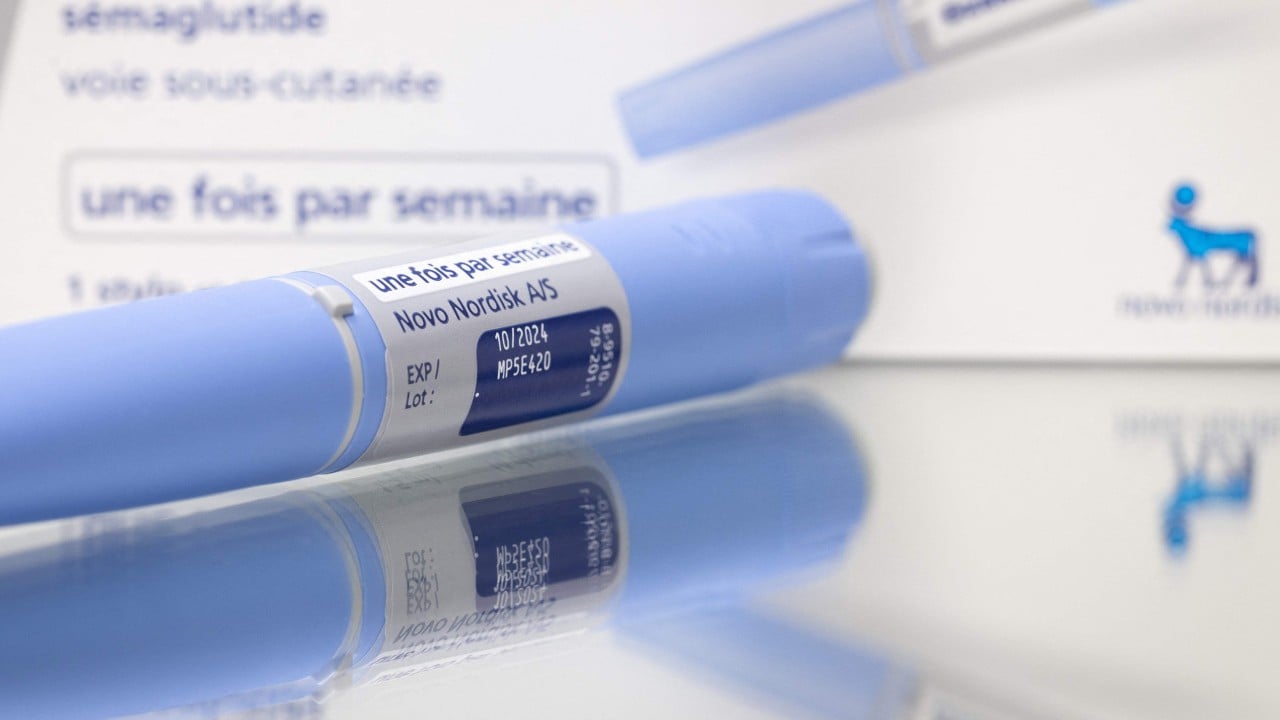
The approaching 2026 expiration of Novo Nordisk’s patent for semaglutide in China represents a tectonic shift in the metabolic drug market, moving from a supply-constrained monopoly to a high-volume, price-compressed commodity environment. While global attention remains fixed on the "duopoly" of Novo Nordisk and Eli Lilly, the domestic Chinese pharmaceutical sector is preparing a massive lateral assault. This transition is governed by three primary forces: the compression of manufacturing costs through localized synthetic biology, the regulatory fast-tracking of bio-betters over simple generics, and the massive scale of the domestic patient pool which demands a lower price floor than Western markets can sustain.
The Semaglutide Patent Cliff and the 2026 Inflection Point
The structural dominance of Ozempic and Wegovy relies on a legal moated period that is rapidly shrinking. In China, the patent for semaglutide is scheduled to expire in 2026, though legal challenges from domestic firms like Huadong Medicine have already attempted to invalidate these protections early. The expiration does not merely invite "copycats"; it triggers a race to satisfy a domestic demand that current global supply chains cannot meet.
Novo Nordisk currently faces a "Production Bottleneck Constraint." Their reliance on complex fill-finish processes and specialized injectable pens limits their ability to capture the full breadth of the Chinese middle class. Chinese competitors are not just looking to replicate the molecule; they are optimizing the delivery and the cost of the peptide synthesis itself.
The Triad of Competitive Advantage for Domestic Players
To understand how Chinese firms will dismantle the current market leader’s position, one must analyze the three distinct competitive pillars they are leveraging.
1. Vertical Integration of Peptide Manufacturing
The cost of GLP-1 (glucagon-like peptide-1) receptor agonists is largely a function of high-purity peptide synthesis. China already hosts some of the world’s largest Contract Development and Manufacturing Organizations (CDMOs), such as WuXi AppTec and Asymchem. These entities have spent a decade perfecting the large-scale production of peptides for Western clients. Domestic drug makers like Innovent Biologics and Jiangsu Hengrui Pharmaceuticals are leveraging this localized infrastructure to bypass the capital expenditure hurdles that often slow down Western biotech firms.
2. The Bio-Better Pivot
A simple generic (biosimilar) must prove bioequivalence to the original. However, several Chinese firms are pursuing "bio-betters"—modified versions of the molecule that offer superior dosing schedules or dual-agonist profiles. For instance, Innovent’s mazdutide (a GLP-1/glucagon dual agonist) targets not just weight loss but also metabolic factors like fatty liver disease, potentially outperforming semaglutide in specific clinical metrics. By positioning their drugs as superior iterations rather than cheap replacements, these firms maintain higher margins while benefiting from the established market awareness created by Novo Nordisk.
3. Fragmented Distribution and Pricing Elasticity
The Chinese healthcare system utilizes a centralized procurement process (VBP - Volume-Based Procurement) that aggressively drives down prices in exchange for massive volume. Global giants often resist these deep discounts to protect their global price floors (preventing "gray market" re-importation to the US or Europe). Domestic firms, focused primarily on the internal market, have no such reservations. They will likely price their GLP-1 offerings at a 40-70% discount compared to the current branded price, effectively locking Novo Nordisk out of the public hospital system and relegating them to the niche, high-end private market.
The Architecture of the GLP-1 Pipeline
The competitive density in the Chinese GLP-1 space is unprecedented. Over 100 clinical trials are currently active for various metabolic treatments. These can be categorized by their molecular mechanism and proximity to market:
Phase III / Pre-registration Contenders:
- Huadong Medicine: Utilizing its subsidiary Jiuyuan Gene Engineering, it has already filed for the first semaglutide biosimilar. Their advantage is "speed-to-market," aiming to be the first available alternative the moment the patent expires.
- Innovent Biologics: Their partnership with Eli Lilly for mazdutide provides them with a sophisticated R&D framework, making them the primary threat in the "premium performance" category.
- Saliogen and CSPC Pharmaceutical: These firms are exploring oral formulations and long-acting versions that could reduce the "Injection Friction" that currently limits patient adherence.
Mechanism Diversification:
The market is moving beyond single-agonist (GLP-1) to multi-receptor agonists. The logic is simple: biological systems are redundant. If you block one pathway, the body often compensates. By targeting GLP-1, GIP (glucose-dependent insulinotropic polypeptide), and Glucagon receptors simultaneously, Chinese firms hope to achieve weight loss percentages exceeding 20-25%, a threshold that currently represents the ceiling for first-generation drugs.
Identifying the Structural Bottlenecks
While the momentum favors domestic disruption, three significant "Friction Points" remain that could preserve Novo Nordisk’s relevance:
The Cold Chain Logistical Barrier
Peptides are thermally unstable. Most GLP-1 drugs require a continuous cold chain from the factory to the patient’s refrigerator. China’s "Tier 3" and "Tier 4" cities lack the consistent refrigerated logistics infrastructure required for mass-market penetration of injectables. Any domestic firm that can stabilize a GLP-1 for room-temperature storage or perfect an oral tablet (which Novo Nordisk is also pursuing with Rybelsus) will gain a massive structural advantage.
The Safety Data Gap
Novo Nordisk and Eli Lilly possess decades of longitudinal safety data. GLP-1s are chronic medications, potentially taken for a lifetime. Chinese domestic firms are operating on compressed timelines. Any unexpected side-effect profile or "Black Swan" event in a domestic trial could trigger a regulatory freeze, allowing the incumbents to re-assert their dominance based on "Trusted Efficacy."
The Raw Material Scarcity
The global shortage of specialized components, such as the micro-needles and glass vials used in delivery pens, creates a "Physical Hardware Constraint." Even if a firm has the chemical capacity to produce the drug, they may be unable to package it. Companies like West Pharmaceutical Services dominate this niche, and domestic Chinese alternatives are still scaling their precision-molding capabilities to meet medical-grade standards.
The Economic Multiplier: Beyond Weight Loss
The strategy for Chinese firms is not merely about "diet drugs." The clinical trend is moving toward "Metabolic Syndromes" as a whole. Data suggests that GLP-1s have a significant impact on:
- Chronic Kidney Disease (CKD)
- Non-Alcoholic Steatohepatitis (NASH)
- Cardiovascular Events (MACE)
By seeking indications for these comorbidities, Chinese firms can get their drugs listed on the National Reimbursement Drug List (NRDL). This is the "Holy Grail" of Chinese pharma strategy. Once a drug is on the NRDL, the volume becomes guaranteed, and the unit cost of production drops via economies of scale, making it nearly impossible for a foreign firm with high overhead to compete on a cost-per-dose basis.
The Competitive Response Function
Novo Nordisk is not passive in this environment. Their counter-strategy involves "Indication Creep" and "Lifecycle Management." By the time their basic semaglutide patent expires, they will have transitioned their marketing focus to "CagriSema" (a combination of semaglutide and cagrilintide) and high-dose oral versions. This creates a moving target.
The domestic firms are playing a game of "Cost and Access," while the global giants are playing a game of "Innovation and Premiumization." This bifurcation will split the Chinese market into a two-tier system: a massive, subsidized public sector dominated by local biosimilars, and a high-margin private sector where the global brand's prestige still commands a premium.
Strategic Deployment for the 2026-2030 Window
The most effective play for institutional investors and pharmaceutical strategists lies in the "Enabling Layer" of this race. As dozens of Chinese firms ramp up production, the demand for high-purity amino acids, specialized bioreactors, and automated inspection systems will surge.
The real winners of the "GLP-1 Wars" in China will likely not be the drug developers themselves—who will face brutal price wars and margin compression—but the domestic CDMOs and upstream suppliers who provide the picks and shovels for this metabolic gold rush. The move is to identify firms with "Platform Versatility"—those whose manufacturing lines can be toggled between different peptide sequences with minimal downtime.
The era of $1,000-a-month weight loss treatments is ending in the East. It is being replaced by a high-efficiency, low-margin industrial complex that will eventually export these low-cost peptides globally, challenging the pricing power of Western pharmaceutical giants in every market they inhabit. Focus on the firms that are currently solving the "Oral Delivery Challenge," as the transition from needles to pills will be the final step in turning GLP-1s from a luxury clinical intervention into a standard public health utility.