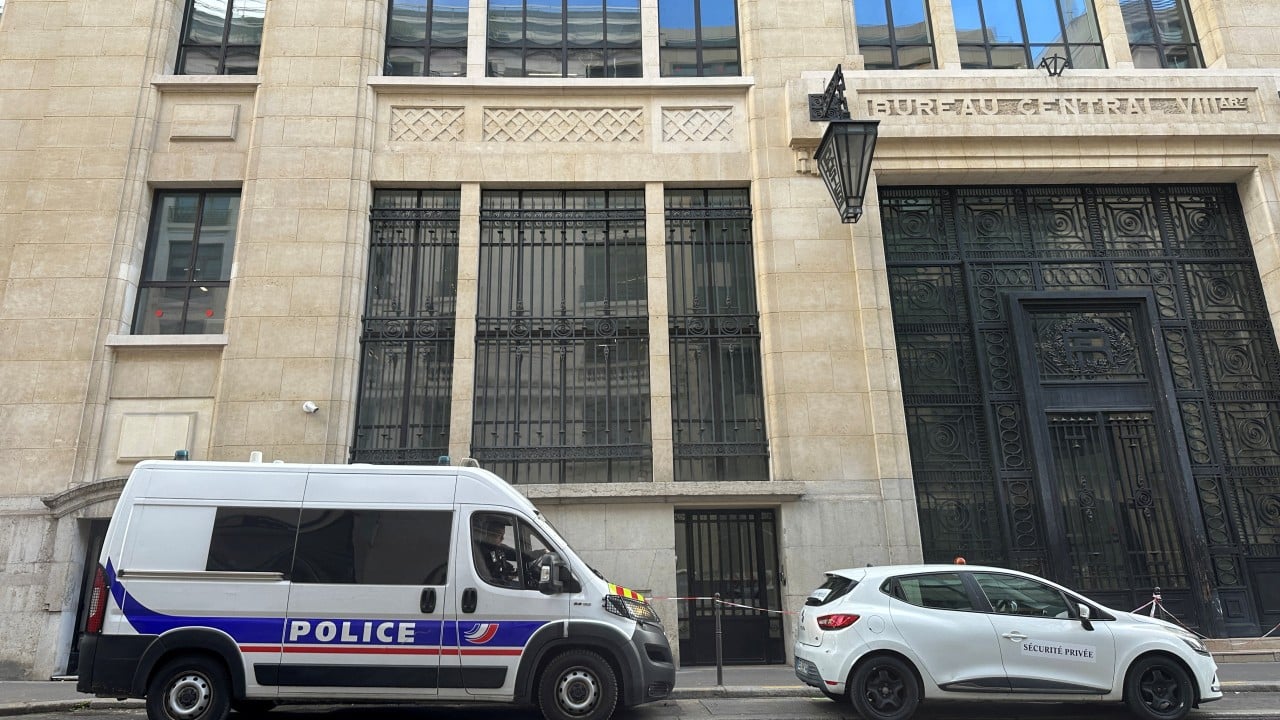
The transition from opportunistic street-level violence to targeted infrastructure disruption marks a critical shift in the European security profile. When French prosecutors opened a formal terror investigation into the attempted attack on a Bank of America office in Paris, they shifted the classification of the event from simple arson to a deliberate strike against the global financial architecture. This incident serves as a diagnostic tool for understanding the current intersection of radicalization and economic warfare. Analyzing this event requires a decomposition of the tactical failure, the symbolic selection of the target, and the systemic vulnerabilities of multinational financial institutions operating in high-tension urban environments.
The Taxonomy of the Target
The selection of Bank of America is not incidental; it represents a specific node in the transatlantic economic circuit. In the logic of asymmetric warfare, a financial institution functions as a "force multiplier" for terror. Attacking a government building signals dissent against a state, but attacking a global bank signals a rejection of the international monetary order.
The choice of a Paris-based American entity creates a dual-threat vector. It forces a synchronized response between French domestic intelligence (DGSI) and American federal agencies. This strain on inter-agency resources is a primary objective of modern non-state actors. The target profile suggests three specific intent markers:
- Economic Signaling: The disruption of capital flows or the perception of insecurity within the banking sector.
- Geopolitical Friction: Exploiting the presence of American capital on French soil to highlight perceived "imperial" overreach.
- Operational Visibility: Using a high-profile brand to ensure immediate global media saturation, regardless of the attack’s physical success.
Tactical Deconstruction of the Incident
The failure of the device or the intervention of security services reveals the technical limitations of the perpetrator while highlighting the robustness of current physical security protocols. In these scenarios, the "Kill Chain" usually breaks at the reconnaissance or delivery phase.
The Delivery Mechanism
The use of incendiary or explosive devices in a high-density urban area like Paris involves a complex cost-benefit analysis for the attacker. The dense surveillance network (CCTV) and high police presence in financial districts increase the probability of detection during the approach. When a "terror probe" is launched, it indicates that the materials used or the method of deployment matched known extremist signatures rather than those of common criminals.
Hardened Infrastructure
Modern financial hubs utilize "layered defense" models.
- The Outer Perimeter: Bollards and reinforced glass designed to mitigate kinetic impact.
- The Sensory Layer: Thermal imaging and motion sensors that identify unauthorized presence outside standard business hours.
- The Internal Bastion: Fire suppression systems and data redundancy protocols that ensure even if the physical shell is damaged, the financial operations remain intact.
The investigation now focuses on the "precursor chemicals" or the digital footprint left during the planning phase. If the attempt involved a sophisticated device, it points toward a networked cell; a crude device suggests a self-radicalized "lone actor" utilizing open-source manuals.
The Economic Implications of Operational Risk
For Bank of America and its peers, the cost of this attack attempt extends beyond physical repairs. It enters the ledger as "Operational Risk," a regulatory category defined by the Basel Accords as the risk of loss resulting from inadequate or failed internal processes, people, and systems, or from external events.
The Insurance Premium Escalation
Terrorism insurance, often governed by specialized pools like GAREAT in France, sees immediate pricing adjustments following such probes. When a "terror" designation is applied, it triggers specific clauses that differ from standard vandalism coverage. This creates a hidden tax on American firms operating in Europe, as the cost of securing personnel and assets rises in direct proportion to the perceived threat level.
The Human Capital Flight Risk
Security incidents in central business districts create a psychological "proximity effect." High-value employees—traders, analysts, and executives—begin to factor personal safety into their career longevity. If an organization cannot guarantee a "sanitized" work environment, the cost of talent acquisition increases to compensate for the perceived risk.
The Jurisdictional Friction of a Terror Probe
The involvement of the Parquet National Antiterroriste (PNAT) changes the legal mechanics of the case. Unlike a standard criminal investigation, a terror probe grants the state expanded powers of surveillance, detention, and international cooperation.
Data Privacy vs. National Security
The investigation likely requires access to encrypted communication logs and cross-border financial transfers. This creates a tension between the European Union’s GDPR (General Data Protection Regulation) and the necessity of counter-terrorism efforts. Banks find themselves in a precarious position: they must cooperate with the state to capture the perpetrators while maintaining the strict data privacy standards expected by their clients.
The "Copycat" Feedback Loop
Law enforcement agencies must balance transparency with the risk of "instructional leakage." Providing too much detail on why the Bank of America attack failed can inadvertently provide a manual for the next attempt. This is why official statements remain strategically vague regarding the specific nature of the device or the point of failure.
The Asymmetry of Modern Conflict
We are witnessing the "weaponization of the everyday." In this framework, the attacker does not need to destroy the bank; they only need to prove that the bank is reachable.
- The Cost Asymmetry: The attacker spends €500 on materials and planning; the state and the corporation spend €5,000,000 on investigation, reinforced security, and lost productivity.
- The Logic of Persistence: Success for the perpetrator is defined by the duration of the news cycle and the subsequent increase in friction for the target’s operations.
The move toward "soft target" hardening in the financial sector is a direct response to this asymmetry. This includes moving back-office operations to decentralized, non-descript locations while maintaining only a "prestige" presence in city centers.
Strategic Assessment of the Threat Environment
The Bank of America incident is a precursor to a more volatile security environment in the lead-up to major European political shifts. The convergence of domestic social unrest and foreign-sponsored destabilization efforts means that financial institutions must view themselves as legitimate political targets, not just commercial entities.
The internal logic of the investigation will likely lead to one of two conclusions: either a botched attempt by an amateur motivated by global grievances, or a probing action by a sophisticated group testing the response times of French elite units. If it is the latter, this event was not an end in itself, but a data-gathering exercise.
Institutions must now move beyond reactive security and toward predictive risk modeling. This involves integrating "social sentiment analysis" with physical security protocols. Monitoring the online rhetoric surrounding specific corporate brands can provide an early warning system for physical threats. The bank is no longer just a vault; it is a symbol, and in the current geopolitical climate, symbols are the primary currency of conflict.
The immediate requirement for multinational firms is the decoupling of "Brand Presence" from "Operational Vulnerability." This entails a radical redesign of the urban office—not as a transparent, welcoming space, but as a fortified, resilient node that can operate autonomously under siege conditions. The Paris attempt confirms that the distinction between "business risk" and "national security" has permanently dissolved.