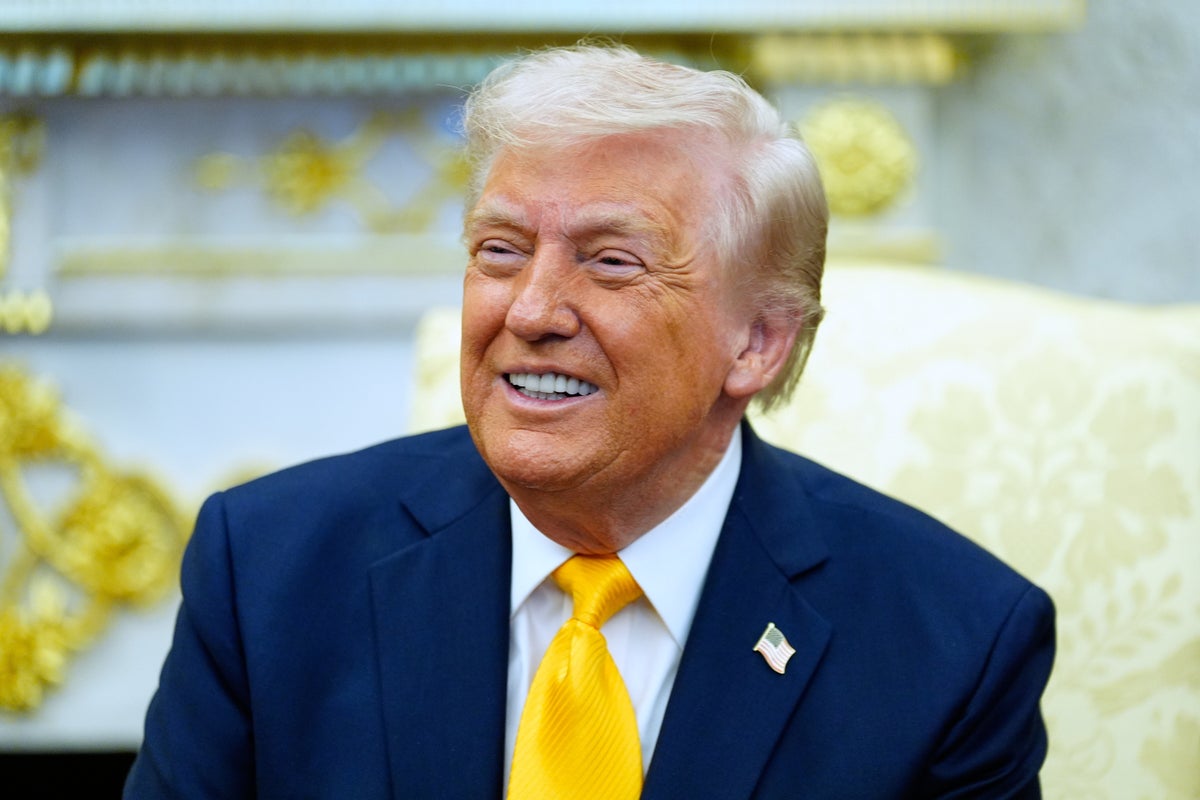
The current volatility in global energy markets is not a byproduct of simple supply-demand imbalances but a direct function of three intersecting vectors: the erosion of the Atlanticist security architecture, the shifting tactical calculus of the Iranian Revolutionary Guard Corps (IRGC), and the domestic political imperatives of a US election cycle. When Donald Trump characterizes NATO allies as "cowards," he is not merely engaging in rhetorical flourish; he is signaling a fundamental shift in the American security guarantee that has historically suppressed the "war premium" in Brent crude pricing. To understand the current escalation, one must move beyond headlines and quantify the mechanisms of regional destabilization and their subsequent impact on global liquidity.
The Geopolitical Risk Premium and the Strait of Hormuz Bottleneck
The primary driver of high oil prices during periods of US-Iran tension is the perceived threat to the Strait of Hormuz, a chokepoint through which approximately 20% of the world's total petroleum liquids consumption passes daily. The market applies a risk premium based on the probability of a "kinetic event" that interrupts this flow.
This premium functions according to a specific logic of escalation:
- Harassment Phase: IRGC fast-attack craft engage in non-lethal maneuvering around commercial tankers. The market absorbs this as "noise," leading to minor fluctuations ($1–$2 per barrel).
- Seizure and Sabotage Phase: The use of limpet mines or the detention of foreign-flagged vessels. This triggers a structural shift in insurance premiums (Hull and Machinery/War Risk), adding a fixed cost to every barrel shipped from the Persian Gulf.
- Kinetic Interdiction: Active blockage or missile strikes on energy infrastructure. This scenario projects a total removal of 20 million barrels per day (bpd) from the global market, a deficit that neither the US Strategic Petroleum Reserve (SPR) nor OPEC+ spare capacity can bridge in the short term.
The current price floor is being maintained because the market has moved from Phase 1 to the edge of Phase 2. The uncertainty regarding US retaliatory posture—exacerbated by internal political friction—prevents the "normalization" of prices.
The NATO Variance and the Burden Sharing Calculation
Trump’s critique of NATO members as "cowards" targets the divergence in threat perception between Washington and Brussels. From a purely analytical standpoint, this friction creates a security vacuum that Iran and its proxies are incentivized to exploit.
The "NATO Gap" can be defined by the following variables:
- Defense Spending Asymmetry: While the 2% GDP threshold is the public metric, the more critical variable is "Out-of-Area" operational capability. If European allies lack the naval assets to participate in Operation Prosperity Guardian or similar maritime security missions, the entire financial and military burden falls on the US Navy.
- Energy Dependency Inverse: European economies are more sensitive to Middle Eastern supply disruptions than the now-energy-independent United States. This creates a paradox where the party with the most to lose (Europe) has the least capacity to secure the supply line, while the party with the most capacity (the US) is increasingly hesitant to act as the global guarantor.
When the US executive branch publicly undermines the mutual defense treaty, it informs Tehran that a localized strike against US interests or allies may not trigger a unified Western response. This degrades the concept of "Integrated Deterrence," a cornerstone of modern military strategy, and replaces it with a fragmented, reactionary model.
The Iranian Logic of Asymmetric Escalation
Iran’s strategy is not to win a conventional war against the United States, which it recognizes as an impossibility. Instead, it employs a strategy of "Calculated Friction." This framework aims to maximize the political cost for US leaders while remaining just below the threshold of an all-out military confrontation.
The Iranian tactical toolkit involves:
- Proxy Calibration: Utilizing the "Axis of Resistance" (Hezbollah, Houthis, and various PMFs in Iraq) to strike US assets. This provides Tehran with plausible deniability and forces the US into a "Whack-a-Mole" defensive posture that is both expensive and politically draining.
- The Nuclear Hedge: Every increase in regional tension is used as leverage in the ongoing nuclear program. By accelerating enrichment during periods of US domestic instability, Iran forces Washington to choose between military intervention and diplomatic concessions.
- Economic War by Proxy: By enabling Houthi attacks on Red Sea shipping, Iran can effectively impose a "tax" on global trade without firing a shot from its own territory. This rerouting of ships around the Cape of Good Hope adds 10–14 days to transit times, increasing fuel consumption and tightening the global tanker supply, which indirectly supports high oil prices—a vital outcome for an Iranian economy under sanctions.
Domestic US Politics as a Volatility Multiplier
The intersection of foreign policy and the US electoral calendar creates a "Deterrence Decay." In an election year, the incumbent administration is wary of any action that could lead to a spike in retail gasoline prices, as there is a historical correlation between pump prices and voter sentiment. Conversely, the opposition utilizes perceived foreign policy weakness to attack the administration's competence.
This creates a strategic paralysis:
- The Escalation Trap: If the US responds forcefully to Iranian provocations, oil prices spike due to war fears, hurting the incumbent at the polls.
- The Credibility Trap: If the US does not respond, it signals weakness, encouraging further provocations and eventually leading to a higher risk premium anyway.
Trump’s comments leverage this paralysis. By attacking NATO, he is signaling a "Return to Isolationism" or "Transactional Realism." For global markets, this means the era of the "Pax Americana" in the Persian Gulf is being priced out, and a new, more expensive, and less predictable security model is being priced in.
Quantitative Impact on Global Energy Flows
To move beyond the rhetoric, we must look at the data points that define the current market state. Global spare capacity is currently concentrated in a few hands—primarily Saudi Arabia and the UAE. However, their willingness to deploy this capacity is contingent on their own security guarantees from the US.
The "Security-Supply Exchange" is currently broken. If the US signals a retreat from NATO or a pivot away from Middle Eastern security commitments, OPEC+ has little incentive to lower prices to bail out Western economies. Instead, they shift toward a "Value over Volume" strategy, which prioritizes high per-barrel revenue to fund their own domestic transformations and defense requirements.
Furthermore, the SPR (Strategic Petroleum Reserve) is at its lowest level since the early 1980s. This reduces the US government's "Macro-Hedge" against a supply shock. In previous decades, the SPR served as a psychological and physical buffer that could be deployed to blunt the impact of Iranian threats. Today, that buffer is significantly thinner, leaving the global market more exposed to the "Harassment Phase" of IRGC operations.
The Cost Function of Regional Instability
The financial impact of this geopolitical friction is not limited to the price of a barrel of crude. It ripples through the global economy via several transmission mechanisms:
- Freight Rates: Container and tanker rates have seen 100%–200% increases on specific routes due to the Red Sea crisis.
- Insurance Premiums: War risk insurance for vessels transiting the Gulf of Aden has moved from 0.07% to over 1% of the vessel's value in a matter of months.
- Capital Expenditure (CapEx) Diversion: Uncertainty regarding long-term regional stability leads to a "Wait and See" approach by major oil companies, slowing down the development of new production capacity and ensuring that the supply side remains tight for the foreseeable future.
Structural Realignment of Global Alliances
The "Cowardice" label applied to NATO members highlights a growing rift in the Western alliance regarding the "Rules-Based International Order." If the US moves toward a model where security is a paid service rather than a shared value, the logic of global trade changes.
We are seeing the emergence of a "Bifurcated Security Environment":
- Tier 1 Zones: Areas with direct US strategic interests or those paying for protection, where trade remains relatively fluid.
- Tier 2 Zones: Contested waters and regions where the security guarantee is ambiguous, and trade is subject to constant disruption and high costs.
Iran thrives in the ambiguity of Tier 2. Their strategic depth is built on the ability to operate in the gray zones of international law and military engagement. The more the US and NATO bicker over the "check," the more room Iran has to maneuver.
Strategic Forecast and Market Positioning
The most probable path forward involves a period of "Sustained Friction" rather than a decisive military resolution. Neither the US nor Iran seeks a total war, but both are committed to a high-stakes game of brinkmanship that will keep the geopolitical risk premium firmly embedded in the energy market.
Investors and policy analysts should expect:
- Elevated Volatility Floors: Oil is unlikely to return to pre-2022 levels as long as the security of the Strait of Hormuz is in question and the US-NATO relationship remains strained.
- Increased Militarization of Trade: Merchant shipping will increasingly require naval escorts, or we will see a rise in the use of private maritime security companies, further increasing the cost of global commerce.
- The Rise of Non-Aligned Energy Corridors: Nations like India and China will continue to bypass Western-led security and sanction frameworks to secure their own energy needs, further eroding the effectiveness of US economic statecraft.
The strategic play for global actors is no longer to wait for a return to stability but to build systems resilient to a permanent state of disorder. This requires diversifying supply chains away from chokepoints, investing in domestic energy security (both fossil and renewable), and recognizing that the cost of "the peace" has officially risen. The verbal attacks on NATO are not just campaign rhetoric; they are the early warning signs of a world where the security of the global commons is no longer a given, but a commodity to be negotiated.
The most critical metric to watch over the next 12 months is not the rhetoric from the campaign trail, but the "Escalation-to-Response" ratio in the Persian Gulf. If Iran increases its level of harassment and the US response remains purely defensive or rhetorical, the risk premium will transition from a temporary spike to a permanent structural feature of the global economy. Organizations must hedge against a $90–$110 Brent environment as the "new normal" for the duration of this geopolitical realignment.
Would you like me to analyze the specific impact of these maritime security costs on the Consumer Price Index (CPI) of major European economies?