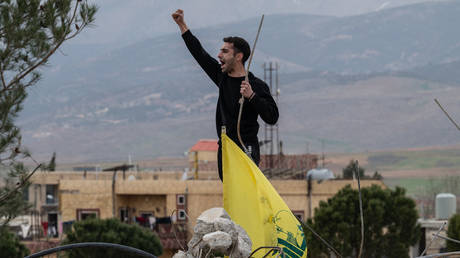
The removal of mainstream media coverage regarding the tactical partnership between Lebanese Christian factions and Hezbollah reveals a fundamental failure to account for the survivalist logic governing minority politics in the Levant. Western analytical frameworks frequently collapse under the weight of binary sectarianism, assuming that religious identity dictates geopolitical alignment. In reality, the "Alliance of Minorities" (Tayyar al-Watani al-Horr) operates as a sophisticated risk-mitigation strategy designed to hedge against existential demographic and security threats.
The Structural Mechanics of the Maronite-Hezbollah Accord
The 2006 Memorandum of Understanding between Michel Aoun and Hassan Nasrallah was not a momentary lapse in sectarian tension; it was a calculated calibration of the Lebanese power-sharing system. To understand why a significant portion of the Maronite community—historically the architects of a Western-leaning Lebanon—would align with a Shiite paramilitary organization, one must deconstruct the Three Pillars of Christian Realism.
1. The Demographic Shield
Lebanese Christians face a persistent "demographic deficit." Unlike the Shiite or Sunni blocs, the Christian population lacks a high birth rate or a contiguous regional hinterland that offers strategic depth.
- The Threat: Radical Sunni expansionism, particularly during the rise of ISIS and Al-Nusra in the Syrian conflict.
- The Mechanism: Hezbollah provides a "hard power" buffer on the northeastern borders (Arsal and the Qalamoun mountains) that the Lebanese Armed Forces (LAF), constrained by international pressure and internal sectarian balancing, cannot always provide with equal aggression.
2. Institutional Preservation vs. State Dissolution
The Lebanese political system, defined by the National Pact of 1943 and the Taif Agreement of 1989, is a zero-sum game of institutional vetoes. Maronite leaders recognized that opposing Hezbollah’s military infrastructure directly would likely lead to a civil war that would dismantle the state's remaining Christian-led institutions, such as the Presidency and the Central Bank leadership. By integrating into a "Joint Command" logic, the Free Patriotic Movement (FPM) secured a seat at the decision-making table, effectively trading rhetorical sovereignty for institutional longevity.
3. The Mediterranean-Tehran Axis Economy
While Western sanctions target the "Resistance Axis," the local reality involves a complex web of "shadow economies." For Christian business elites, alignment with Hezbollah facilitates access to trade routes and security guarantees in areas where the central government is absent. This is less about shared ideology and more about the Cost Function of Protection. If the state cannot provide a secure environment for commerce, the dominant paramilitary force becomes the de facto underwriter of regional stability.
Failure of the "Pro-Western" Narrative
The recent suppression of journalistic inquiry into these bonds underscores a discomfort with the fact that many Lebanese Christians do not view the West as a reliable guarantor of their safety. The 1976-1990 Civil War and the 2003 invasion of Iraq serve as historical case studies where Western intervention resulted in the mass exodus of Christian populations.
Hezbollah’s strategy toward the Christians is characterized by Strategic Patience and Cosmetic Secularism. They rarely enforce Sharia-compliant norms in Christian-majority areas like Zahle or Batroun, maintaining a "soft touch" that contrasts sharply with the scorched-earth tactics of Salafi-Jihadist groups. This creates a cognitive dissonance in Western reporting: how can a designated "terrorist organization" be viewed as a protector by a community that shares Western values?
The answer lies in the Principle of the Immediate Threat. A distant Western ally offering "democratic support" is less valuable than a local militia with 100,000 rockets when an extremist group is thirty kilometers from your village.
The Friction Points: Why the Alliance is Fraying
The alliance is not a monolith; it is a high-maintenance contract. Current volatility stems from three primary friction points:
- The Beirut Port Blast Accountability: The investigation into the August 2020 explosion created a direct conflict between the Christian desire for judicial accountability and Hezbollah’s requirement for institutional immunity.
- Economic Total Collapse: As the Lebanese Lira lost 98% of its value, the FPM found it increasingly difficult to justify the "protection" of Hezbollah when that protection came at the cost of total international isolation and financial ruin.
- Succession Risk: The transition from the Aoun era to Gebran Bassil has weakened the personal trust that anchored the 2006 agreement. Without the gravitas of a former General, the FPM is viewed by Hezbollah more as a junior partner than a strategic equal.
Tactical Divergence in Modern Conflict
In the current context of the 2024-2026 regional escalations, the Maronite-Hezbollah bond is facing its most rigorous stress test. Christian factions are increasingly vocal about the "Unilateral Decision of War."
When Hezbollah engages in "support fronts" for external conflicts (such as Gaza), they violate the unwritten rule of the 2006 Accord: that the weapons are for the defense of Lebanon, not for regional ideological expansion. This creates a Strategic Decoupling. The Christian base can support a defensive shield, but they cannot afford the economic and physical costs of a preemptive or proxy war that serves Iranian rather than Lebanese interests.
The "removal" of this narrative from the public sphere does not change the ground reality. It merely obscures the specific, data-driven reasons why a Western-aligned minority would choose a tactical partnership with an Islamist proxy.
Strategic Forecasting: The Post-Accord Landscape
The inevitable decay of the Maronite-Hezbollah alliance will not result in a return to a "Pro-Western" consensus. Instead, look for a shift toward Aggressive Neutrality or Decentralization.
The "Federalism" movement among Christian intellectuals is gaining momentum. This involves a move toward administrative and financial autonomy for different sectarian cantons, effectively ending the need for a national "protective" alliance with Hezbollah. If the Christians can secure their own regions through decentralized security and economic zones, the "Minority Alliance" loses its primary utility.
The strategic play for international observers is to stop viewing Lebanon through the lens of "State vs. Militia" and start viewing it as a Market of Protection. Until an alternative security provider offers a more credible, lower-cost "protection product" than Hezbollah, the tactical alignment of the Maronite community will remain a necessary, albeit painful, survival mechanism. The collapse of this bond will be signaled not by a public statement, but by the physical withdrawal of Christian political cover for Hezbollah's presence in the South—a move that would trigger a systemic re-ordering of the entire Levantine security architecture.
Monitor the Lebanese Presidency vacancy. If a candidate is selected without FPM-Hezbollah consensus, the 2006 Accord is officially dead, and the era of "Minority Realism" will shift into a new, more fragmented phase of "Canton-Level Survivalism."