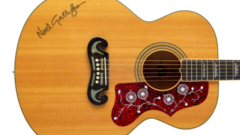
The 1960s laminated plastic Epiphone guitar, autographed by both Noel and Liam Gallagher, is more than a piece of musical equipment. It is a financial instrument. As it hits the auction block, the estimated price tag isn't just paying for wood and wire; it is a speculative bet on the enduring cultural capital of Oasis. While the headlines focus on the "Wonderwall" connection, the real story lies in the calculated inflation of the rock-and-roll memorabilia market and the desperate hunt for tangible assets in a devalued music economy.
Collectors expect this specific instrument to fetch well into the six-figure range. This isn't an anomaly. We are witnessing a massive transfer of wealth from traditional investment portfolios into the dusty cases of instruments that defined the nineties. The guitar in question was a workhorse, a tool used during the era when (What's the Story) Morning Glory? turned a group of Manchester lads into a global conglomerate. Now, that tool is being sold to the highest bidder, serving as a reminder that in the modern era, the artifacts of the past often carry more value than the output of the present. You might also find this similar story interesting: The McFadden Protocol and the Mechanics of Pseudonymous Intellectual Property.
The Myth of the Wonderwall Axe
Every auction house loves a narrative. They need a hook to snag the wealthy hobbyist who wants to own a piece of "history." By labeling this the "Wonderwall" guitar, the sellers are tapping into a specific vein of 1995 sentimentality. But let's be clear about the mechanics of rock history. These bands went through gear like water. The idea that a single guitar is responsible for the "sound" of an era is a romanticized fiction designed to drive up premiums.
The value here isn't in the electronics. If you played this guitar through a standard stack, it would sound like any other mid-tier Epiphone from that production run. The value is the ink. The signatures of the Gallagher brothers represent a rare moment of unity between two men whose public relationship is defined by litigation and vitriol. This isn't just a guitar; it’s a peace treaty written in Sharpie. As reported in detailed articles by Rolling Stone, the effects are widespread.
Investors are banking on the fact that Oasis will never truly go away. Even as the brothers remain at each other's throats, their catalog continues to generate hundreds of millions of streams. This constant digital presence acts as a floor for the value of their physical relics. As long as "Wonderwall" plays in every pub from London to Manila, the price of this guitar will likely never drop. It is a hedge against inflation disguised as a piece of stage-worn timber.
Why the Memorabilia Market is Overheating
We have to look at the broader financial context. In a world where digital assets can vanish with a server crash, physical objects with a pedigree offer a sense of security. High-net-worth individuals are moving away from traditional stocks and into "passion assets." These include vintage watches, rare Ferraris, and, increasingly, guitars with a verified paper trail.
The entry of institutional money into this space has changed the rules. It used to be that a fan would buy a guitar to display in their home. Today, the buyer is just as likely to be a private equity fund or a specialized memorabilia scout. They aren't looking for a connection to the music. They are looking for an ROI. They know that the supply of "authentic Oasis gear" is finite, while the demand from aging Gen Xers with disposable income is at an all-time high.
- Scarcity: There are only so many instruments Noel used during the peak years.
- Condition: Unlike many instruments from that era, this one has been preserved as a trophy rather than a touring tool.
- Verification: The provenance is ironclad, which is the only thing that matters when the gavel drops.
This creates a vacuum where the actual music becomes secondary to the object. We are seeing a "Birkin-ification" of rock and roll. The guitar is a status symbol, a Veblen good that signals both wealth and a specific type of cultural literacy.
The Gallagher Premium
There is a specific volatility associated with Oasis. Unlike the Beatles or the Rolling Stones, whose legacies are settled and sanitized, the Gallaghers are still active, still vocal, and still capable of shifting their own market value with a single tweet or a surprise reunion. If a reunion tour were announced tomorrow, the value of this auction item would triple instantly. If they never speak again, the "tragedy" of the split keeps the legend alive.
This "Gallagher Premium" is what separates this auction from a standard vintage sale. You are buying into the drama. You are buying a piece of the friction that fueled the greatest British rock band of the last thirty years. When you strip away the marketing, the buyer is paying for the tension. They want to own a piece of the lightning that Noel captured and Liam channeled, even if that lightning has long since moved on to other venues.
The Danger of the Bubble
Every analyst worth their salt knows that markets like this can't expand forever. There is a ceiling to what a piece of laminated wood is worth, regardless of who signed it. We saw a similar explosion in the comic book market in the nineties and the sports card market in the early 2000s. Both eventually corrected, leaving late-entry "investors" holding worthless paper.
The risk with Britpop memorabilia is that it relies entirely on the nostalgia of a specific demographic. What happens in twenty years when the primary buyers are no longer in their peak earning years? Will a twenty-five-year-old in 2045 care about a guitar signed by two brothers from Manchester? Or will they view it as an ancient relic of a mono-culture they don't recognize?
Authenticity is also a mounting problem. As the prices for these items climb into the millions, the incentive for sophisticated forgeries increases. We have already seen "stage-used" guitars hit the market that were actually back-ups that never left the rack. The Oasis guitar currently up for bid has avoided these pitfalls so far, but the shadow of the fake hangs over the entire industry. One high-profile scandal involving a forged signature could tank the entire category overnight.
The Technical Reality vs the Marketing Hype
Let's talk about the Epiphone itself. To a purist, an Epiphone is the budget version of a Gibson. In the early nineties, Noel Gallagher famously played these because they were accessible and had a specific, bright jangle that suited the Britpop wall-of-sound. He wasn't playing them because they were the finest instruments ever crafted; he was playing them because they were what he had.
There is a delicious irony in a "budget" guitar being sold for the price of a luxury home. It goes against the very ethos of the music it helped create. Britpop was supposed to be the music of the street, the sound of the working class taking over the charts. Now, the tools of that revolution are being traded in high-end auction houses like fine art or stolen antiquities.
The guitar is a 1960s model, which does give it some inherent vintage value. The construction is solid, featuring a mahogany body and the signature slim-taper neck that made those eras of Epiphones playable. But without the signatures, this is a $5,000 instrument on a good day. The remaining $150,000+ is pure social construction. It is a price tag built on memories of Knebworth and the smell of stale beer in a Wembley crowd.
The Logistics of the Sale
The auction process is a choreographed performance. The house will start with a low estimate to generate "momentum." They want a bidding war. They want the headlines to scream about "record-breaking prices." This creates a feedback loop that benefits the auction house through commissions and the seller through the final hammer price.
For the serious collector, the acquisition is only the beginning. Then comes the cost of insurance, climate-controlled storage, and the inevitable legal fees to ensure the provenance remains undisputed. It is an expensive hobby that requires more than just a love for "Supersonic." It requires a team of advisors.
- Buyer's Premium: Usually 20-25% on top of the hammer price.
- Provenance Research: Essential for maintaining the item's future resale value.
- Security: High-value items require specialized physical protection.
This isn't about music anymore. It's about asset management.
The Cultural Cost of Commercialization
When we turn instruments into museum pieces, we lose something essential. Guitars are meant to be played. They are meant to be scratched, dented, and put through the ringer of a live show. By locking this "Wonderwall" guitar behind glass, we are effectively retiring it. It will never again contribute to a song. It will never again be plugged into a distorted Marshall stack.
This is the final stage of the rock-and-roll lifecycle. First, there is the raw energy of the creation. Then, the commercial success. Finally, the curation. We are currently in the curation phase of Britpop. We are cataloging the remains and assigning them a dollar value. It is an efficient process, but it is also a sterile one.
The Gallagher brothers likely don't care. They have moved on. Noel has his High Flying Birds; Liam has his solo career and his parka empire. To them, this guitar is just a ghost from a past life. To the auction house, it's a commission. To the buyer, it's a trophy. But to the fan who remembers hearing those chords for the first time on a tinny radio in 1995, it's a reminder that even the most rebellious moments eventually get appraised, tagged, and sold to the man in the suit.
Owning the guitar won't bring back the nineties. It won't heal the rift between the brothers. It won't make the buyer a better songwriter. It will only sit there, a silent witness to a time when guitar music felt like the only thing that mattered. If you have the money, buy it. Just don't pretend you're buying anything other than a very expensive piece of history that has already said everything it has to say.