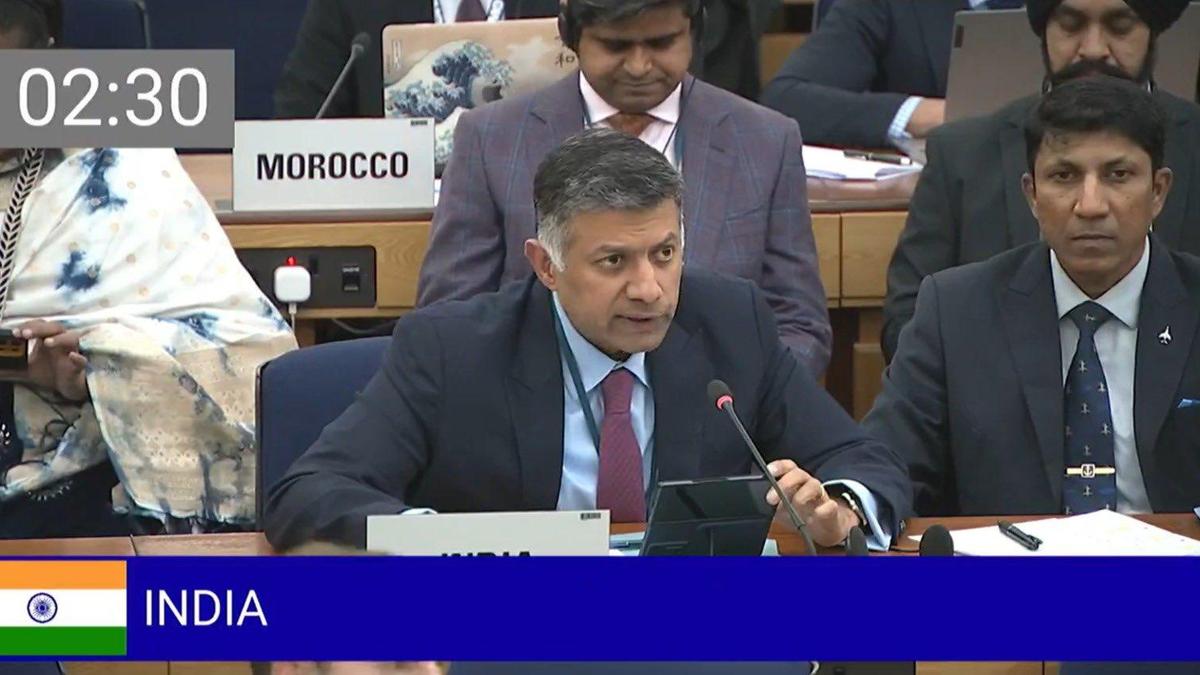
Ceremony is the greatest sedative of the modern world. We watch a man in a suit receive a hand-calligraphed scroll, listen to some platitudes about "strengthening ties," and nod along as if something of substance actually occurred.
The recent awarding of the Freedom of the City of London to High Commissioner Vikram Doraiswami is being treated by the press as a landmark moment for India-UK relations. It isn't. It’s a gilded distraction. While the media celebrates the "honor," they are ignoring the reality: we are using medieval pageantry to mask a stagnant trade relationship and a crumbling diplomatic framework that hasn't seen a fresh idea since the 1990s.
The Illusion of Influence
Most people hear "Freedom of the City" and think it carries weight. It doesn't. Historically, it meant you could herd sheep across London Bridge without paying a toll. Today, it’s a vanity metric. It’s the diplomatic equivalent of a "Participant" trophy.
If you look at the list of past recipients, it’s a chaotic mix of actual world-shapers and people who happened to be in the room when the City of London Corporation needed a PR win. Awarding it to a High Commissioner is the safest, least imaginative move possible. It’s the ultimate bureaucratic back-scratch.
The "lazy consensus" here is that these honors "grease the wheels" of international business. I’ve spent twenty years watching these wheels spin in circles. You don’t get a Free Trade Agreement (FTA) because someone got a scroll. You get an FTA because of cold, hard concessions on visas, whiskey tariffs, and data localization.
The India-UK Trade Myth
The narrative surrounding Doraiswami’s award is that it signals a "new era" of bilateral cooperation. Let’s look at the data the press won't touch.
The UK and India have been "on the verge" of a trade deal for years. We’ve missed more deadlines than a failing grad student. By celebrating these symbolic gestures, we provide a release valve for political pressure. It allows leaders to point to a photo-op instead of answering why the 14th round of negotiations looks exactly like the 4th.
- The Visa Stumbling Block: The UK wants India to open its legal and financial services sectors. India wants easier visa access for its professionals.
- The Whiskey Problem: British Scotch remains hamstrung by massive Indian tariffs.
- The Manufacturing Gap: India’s "Make in India" initiative is fundamentally protectionist—the exact opposite of the "Global Britain" fantasy.
Doraiswami is a brilliant diplomat, arguably one of the best India has sent to London. But giving him the Freedom of the City is like giving a Five-Star General a commemorative plate instead of more troops. It’s an insult disguised as an honor. It acknowledges his presence while ignoring his policy goals.
The Guild System is Holding London Back
The City of London Corporation is an anomaly. It is a private government operating within a public one. While it claims to be the vanguard of global finance, its obsession with these ceremonies reveals a deeper insecurity.
By clinging to these archaic traditions, the City signals that it is more interested in its history than its utility. In a world where Singapore, Dubai, and New York are eating London’s lunch in fintech and green energy, the City is busy worrying about who gets to wear a ceremonial robe.
Imagine a scenario where the City of London Corporation diverted the millions of pounds spent on "traditional" outreach and pageantry into a direct seed fund for bilateral tech startups between Bengaluru and London. That would be a "Freedom" worth having. Instead, we get a photo of a scroll.
Why We Keep Falling for the Pageantry
Psychologically, these awards serve a specific purpose: they create a false sense of momentum.
- Status Quo Bias: It is easier to maintain a tradition than to innovate a new form of diplomatic engagement.
- The Halo Effect: Because the ceremony happens in a historic building with famous people, we assume the underlying relationship is healthy.
- The Ghost of Empire: Both sides enjoy the nostalgia. For Britain, it’s a reminder of a time when it sat at the center of the world. For India, there is a quiet, subversive pride in having its representatives honored in the very heart of the former colonial power.
But nostalgia is not a strategy. It’s a debt.
Stop Asking "Is This Good for Relations?"
When you see "People Also Ask" queries like "What are the benefits of the Freedom of the City?" or "How does this help India-UK ties?", the answer is usually a list of fluff.
The honest answer? It doesn't help.
If you want to actually improve ties, you stop the ceremonies and start the friction. Real progress comes from the "uncomfortable" meetings—the ones where people walk out frustrated because they are actually fighting over things that matter. These award ceremonies are too comfortable. No one ever walked out of a Freedom of the City ceremony having solved a double-taxation issue.
The Actionable Pivot
If you are a business leader or a policy wonk watching this, ignore the headlines about Doraiswami’s "honor." Instead, look at the Joint Economic and Trade Committee (JETCO) minutes. Look at the specific movements in the Services Trade Council.
That is where the power lies. The rest is just high-end theater for people who like to see their names in the social diary.
We need to stop treating diplomatic appointments like celebrity sightings. We should demand that our "honors" be tied to specific, measurable outcomes. You want the Freedom of the City? Close the deal on professional qualification recognition. You want the scroll? Lower the tariff on medical devices.
Until then, these awards are just paper. And paper is a poor foundation for a global partnership.
The City of London isn't "honoring" India by giving out these awards. It’s stalling. It’s time we stopped clapping for the performance and started demanding a result.
The sheep aren't crossing the bridge anymore. It's time the City caught up.


