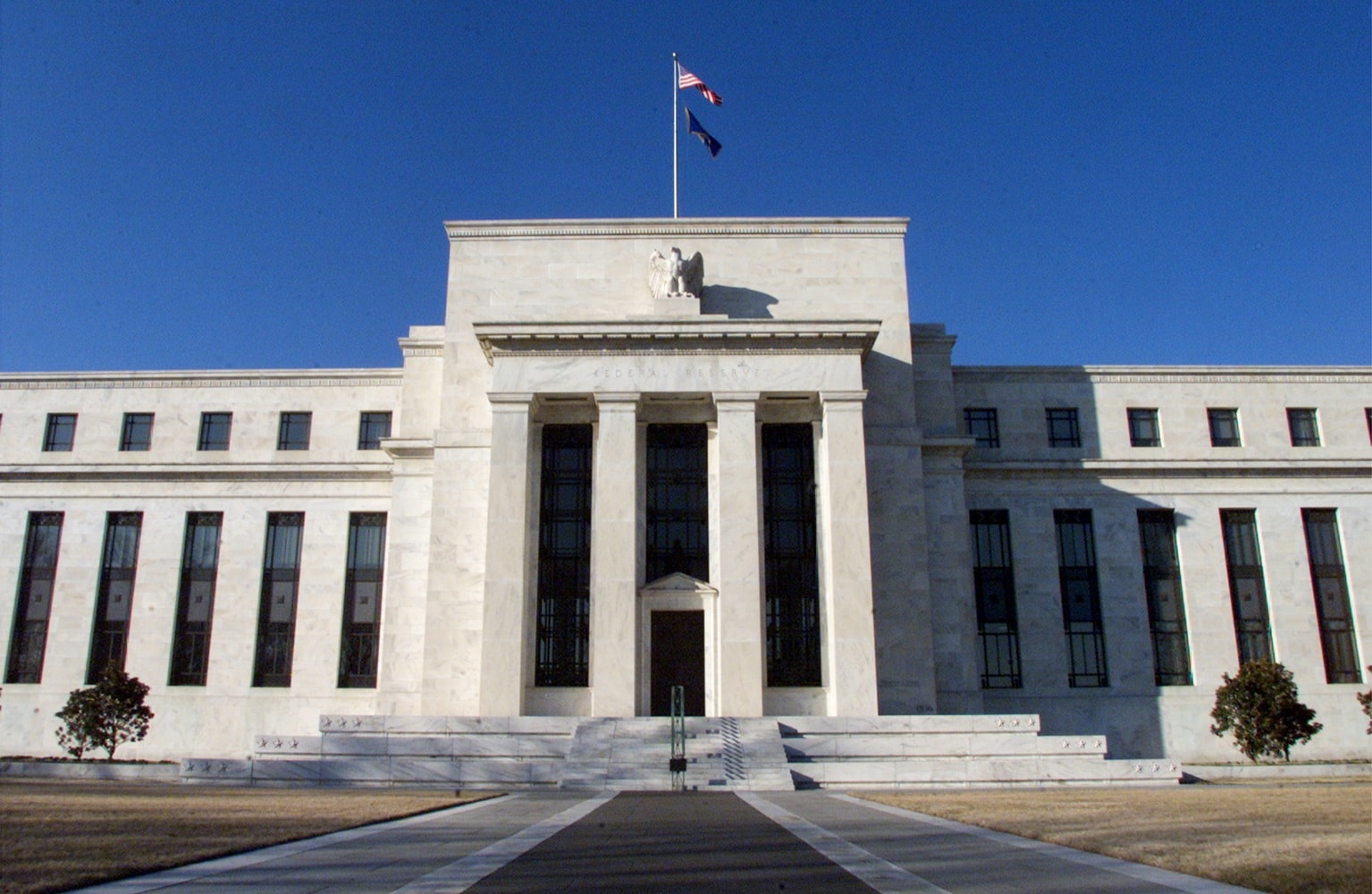
The Federal Reserve has decided to keep the federal funds rate locked between 5.25% and 5.50%. While the headlines focus on the central bank projecting a single, solitary rate cut by the end of 2024, the real story is the box the FOMC has painted itself into. Jerome Powell and his colleagues are no longer just fighting inflation; they are fighting the ghost of their own delayed reactions from three years ago. By holding steady, the Fed is betting that the current restrictive stance will eventually break the back of sticky service inflation without snapping the spine of the labor market. It is a high-stakes gamble with a diminishing margin for error.
The "Dot Plot"—that infamous collection of anonymous projections from Fed officials—shifted dramatically in June. Previously, the consensus leaned toward three cuts this year. Now, the median expectation has withered to just one. This isn't just a minor adjustment in timing. It represents a fundamental admission that the "last mile" of bringing inflation down to the 2% target is proving far more grueling than the initial descent.
The Mirage of Soft Landing Statistics
Washington loves a clean narrative. The current one suggests we are gliding toward a soft landing where inflation vanishes and nobody loses their job. But if you look beneath the surface of the Consumer Price Index (CPI), the foundation of that narrative looks shaky.
Shelter costs and insurance premiums are not responding to high interest rates the way traditional economic models suggest. When the Fed raises rates, it usually cools the housing market. Instead, we have a supply "lock-in" effect. Homeowners with 3% mortgages refuse to sell, keeping inventory low and prices high. The Fed’s primary tool for cooling the economy is actually keeping one of the largest components of inflation—housing—artificially inflated.
The central bank is using a blunt instrument to perform surgery on a very specific set of problems. High rates are crushing small businesses that rely on floating-rate debt, while massive corporations that locked in long-term low rates during the pandemic remain unscathed. This creates a two-tier economy. One side feels a recession already; the other is still spending like it’s 2021.
The Labor Market Fiction
Powell often cites "labor market resilience" as his justification for keeping rates high. It sounds responsible. If everyone has a job, why rush to lower rates? However, the headline unemployment rate masks a growing trend of "underemployment" and a shift toward part-time work.
Full-time jobs are being replaced by part-time positions at an alarming rate. When a white-collar professional is laid off and takes two retail jobs to cover a mortgage, the Bureau of Labor Statistics sees a net gain in employment. The Fed sees "strength." The reality is a degradation of consumer purchasing power.
We are seeing a divergence between the "Establishment Survey," which counts jobs, and the "Household Survey," which counts people. The former looks great; the latter looks like an economy in stagnation. By relying on lagging indicators like the unemployment rate, the Fed risks keeping the brakes on until the engine has already stalled. Historically, once unemployment starts to rise significantly, it doesn't stop at a comfortable level. It cascades.
The Silent Threat of the Fiscal Deficit
There is a giant elephant in the room that the Fed rarely discusses in detail: the U.S. federal deficit. The government is currently spending money at a rate usually reserved for deep recessions or world wars. This massive fiscal injection is counteracting the Fed's monetary tightening.
Imagine the Fed trying to empty a bathtub (the economy) by pulling the plug (higher rates), while the Treasury Department is filling it with a firehose (deficit spending). This is why inflation remains stubborn despite the highest rates in twenty years. The Fed is essentially taxing the private sector through high borrowing costs to offset the government’s refusal to balance its books.
The interest expense on the national debt has now surpassed the defense budget. This creates a feedback loop. High rates mean the government must pay more to service its debt, which requires more borrowing, which puts more money into the system, which keeps inflation high. The Fed is no longer the only pilot in the cockpit; they are fighting for control against a fiscal policy that refuses to yield.
The Problem with 2 Percent
Why 2%? There is no mathematical law that says 2% is the "correct" inflation rate for a modern economy. It was a target popularized by New Zealand in the late 1980s and adopted by the world as a psychological anchor.
By clinging to this arbitrary number, the Fed is forcing the economy to endure prolonged pain for a marginal gain. If inflation sits at 2.8% and the economy is stable, the Fed's insistence on hitting 2.0% could be the very thing that triggers a needless downturn. They are protecting their "credibility" at the expense of the average worker's solvency.
The Wealth Gap Widens Under "Higher for Longer"
Quantitative Easing (QE) was criticized for making the rich richer by inflating asset prices. "Higher for longer" is doing something similar but more subtle. High interest rates are a transfer of wealth from debtors to savers.
Who are the debtors? Young people with student loans, first-time homebuyers, and small business owners. Who are the savers? Institutional investors and the wealthy with significant cash reserves. While a family struggles to finance a car at 9% interest, a billionaire is earning 5.4% on their cash with zero risk. The Fed’s current policy is a massive windfall for the rentier class.
The Geopolitical Inflation Variable
The Fed’s models largely ignore things they cannot control, such as global supply chains and geopolitical shifts. We are moving away from an era of cheap globalized labor and toward "friend-shoring" and regional trade blocs. This shift is inherently inflationary.
Energy costs are also being driven by factors far beyond the reach of the federal funds rate. Transitioning the global energy grid and dealing with conflicts in the Middle East and Eastern Europe keep commodity prices volatile. The Fed can reduce the demand for coffee or cars, but it cannot make oil cheaper or fix a broken shipping lane in the Red Sea.
By attempting to solve global, structural inflation with domestic interest rates, the Fed is using an outdated playbook for a new reality.
The Risk of the "Hard Break"
Central banks rarely achieve the "soft landing" they promise. Usually, they hike until something breaks. In 2023, we saw a glimpse of this with the collapse of Silicon Valley Bank. The Fed patched that hole with emergency liquidity, but the underlying pressure remains.
Commercial real estate (CRE) is the next potential fracture point. Trillions of dollars in CRE loans need to be refinanced in the next 24 months. These loans were signed when rates were near zero. At 5.5%, many of these properties are no longer viable. If regional banks start failing because their office building loans go bust, the Fed will be forced to cut rates—not because they hit their 2% target, but because the financial system is imploding.
Waiting for the "perfect" moment to cut is a luxury the Fed might not have. If they wait until inflation is exactly 2%, they will likely have overshot the mark, leading to a spike in defaults and a sharp contraction in credit.
The reality of 2024 is that the Fed is no longer leading the market; it is reacting to it. The shift from three projected cuts to one isn't a sign of strength or "data-dependent" wisdom. It is a sign of a central bank that is perpetually behind the curve, trying to manage a complex, multi-polar economic crisis with a single, aging lever.
Watch the credit spreads and the delinquency rates on credit cards. Those are the true indicators of when the "Higher for Longer" strategy reaches its breaking point.