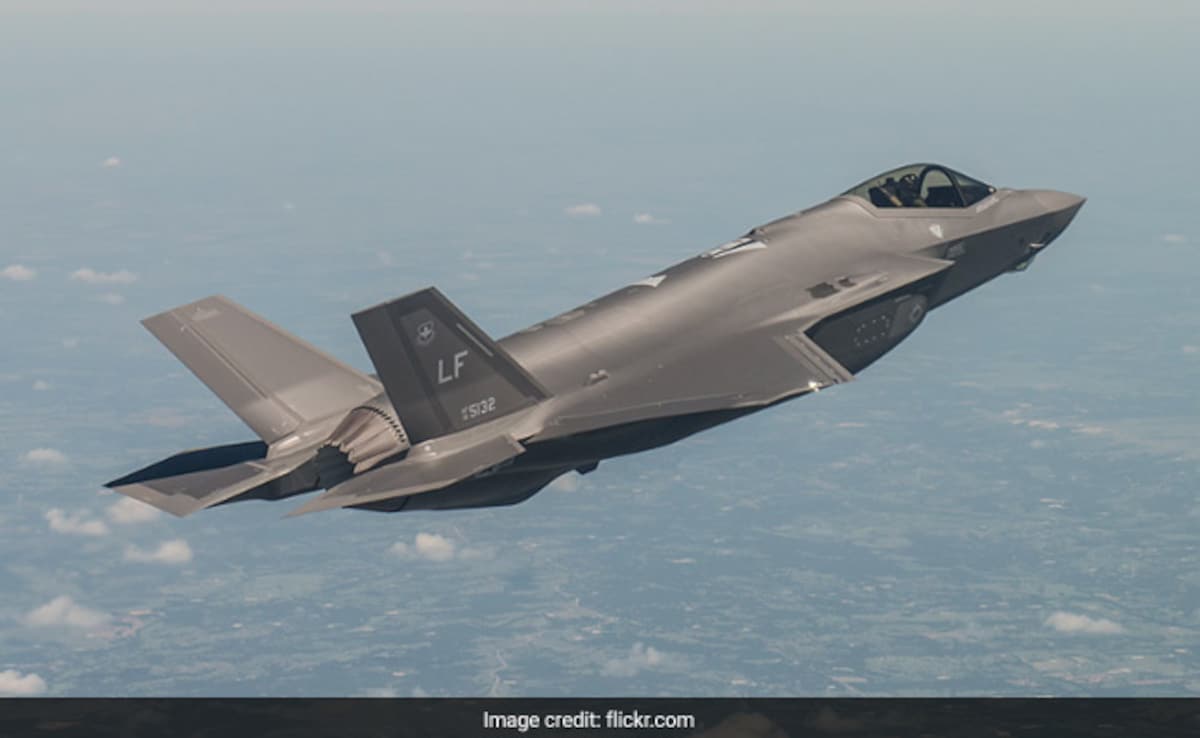
The F-35 Lightning II was sold as an invisible ghost, a billion-dollar insurance policy against any air defense on the planet. But the recent chaos over the Middle East has pulled back the curtain. We’ve seen reports of an American F-35 making an emergency landing after being clipped by Iranian fire, and satellite imagery from Israel’s Nevatim Airbase showing craters where stealth jets sleep.
It’s time to stop pretending stealth is an "invincibility" button. It’s a specialized tool with very specific, very human weaknesses. Iran didn't need to reinvent physics to find those chinks in the armor; they just used the F-35’s own design philosophy against it.
The Myth of Total Invisibility
Stealth isn't about being invisible. It’s about being "delayed." The goal is to make the radar cross-section (RCS) so small that by the time an enemy radar sees the jet, it’s already too late to fire. But here's the kicker: the F-35 is optimized to hide from X-band radars—the high-frequency stuff used for precision targeting.
Iran, like Russia and China, uses a "system of systems" approach. They employ long-wavelength VHF and L-band radars. These don't provide the "sharp" image needed to guide a missile, but they can definitely tell that something is in the sky. Once those low-frequency eyes spot a "blob" in the air, they can cue other sensors.
When you combine this with passive sensors—infrared search and track (IRST) systems—the F-35 starts to look a lot less like a ghost. IRST doesn't emit any signals. It just sits there and looks for heat. Since the F-35 has a massive engine pumping out 43,000 pounds of thrust, it leaves a thermal footprint you could see from space. You can't hide heat from physics.
Ground Zero is the Real Weak Point
The most sophisticated jet in history is just a very expensive paperweight when it’s sitting on the tarmac. This is the "armour chink" Iran exploited during Operation True Promise II. You don't need to out-stealth an F-35 in the air if you can just drop a ballistic missile on its hangar.
- The Nevatim Strike: At least 32 Iranian missiles targeted Nevatim Airbase. Satellite photos confirmed hits on taxiways and, more importantly, aircraft shelters.
- The Maintenance Tail: The F-35 requires an absurd amount of maintenance. For every hour it flies, it needs hours of specialized care to keep its radar-absorbent material (RAM) intact.
- Fragile Logistics: If a missile hits the climate-controlled hangar or the specialized diagnostic computers, that F-35 isn't going anywhere.
We saw this play out in real-time. Even if the missiles didn't turn every jet into scrap metal, they turned the base into a construction site. A stealth jet that can't take off because the runway is full of craters is just as useless as one that’s been shot down.
Software Stagnation and the TR-3 Mess
While the physical airframe gets all the glory, the real brain of the F-35 is the Technology Refresh 3 (TR-3) software suite. It’s supposed to be the backbone for the Block 4 modernization, giving the jet the processing power to handle modern threats.
The problem? It’s a mess.
Pentagon reports from early 2026 admit the software has been "unusable" for long stretches. This isn't just a bug in a video game; it means the jet's sensors can't talk to each other correctly. If the pilot has to manually reset mission systems mid-flight—which has actually happened—the "stealth" advantage vanishes. You're too busy rebooting your computer to notice the missile lock.
Adversaries like Iran know this. They don't need to beat the jet's hardware; they just need to clutter the environment with enough electronic "noise" to overwhelm the F-35's struggling processors. When the software lags, the "sensor fusion" that makes the F-35 special becomes its biggest liability.
The Supersonic Speed Trap
Speed is life in a dogfight, but the F-35 is surprisingly sluggish compared to the F-15 or the Russian Su-35. It tops out at Mach 1.6, and it can't stay there for long. Prolonged supersonic flight actually damages the stealth coating on the tail and back of the aircraft.
This creates a tactical dilemma. If an F-35 pilot needs to bug out fast, they risk stripping off their "invisibility" cloak for the next mission. Iran’s layered air defenses capitalize on this. By forcing the F-35 to maneuver or use its afterburners to escape a trap, they degrade the very technology that makes the jet valuable.
Why the "Air Power" Argument is Changing
The March 2026 incident where an F-35 took damage over Iran proves that "low observability" isn't a suit of armor. It’s more like a camouflage net. If someone walks up and pokes you while you're hiding, the net doesn't stop the bruise.
The F-35 is still an incredible machine, but the era of "set it and forget it" air superiority is over. Iran has shown that a mix of "dumb" ballistic missiles, "smart" IRST sensors, and "cheap" electronic warfare can make life very difficult for a $100 million jet.
If you're tracking this, look closely at the "Block 4" upgrade schedule. That’s the real battlefield. If Lockheed Martin can't stabilize the software and the Air Force can't protect the bases where these jets live, the "stealth" era might end before it even fully begins. Stop looking at the RCS charts and start looking at the hangar roofs—that's where the next war will be won or lost.
Check the latest GAO reports on F-35 sustainment costs if you want to see the real "chink" in the program—the price tag. It’s hard to win a war when you’re too afraid to lose a single plane because you can't afford to replace it.

