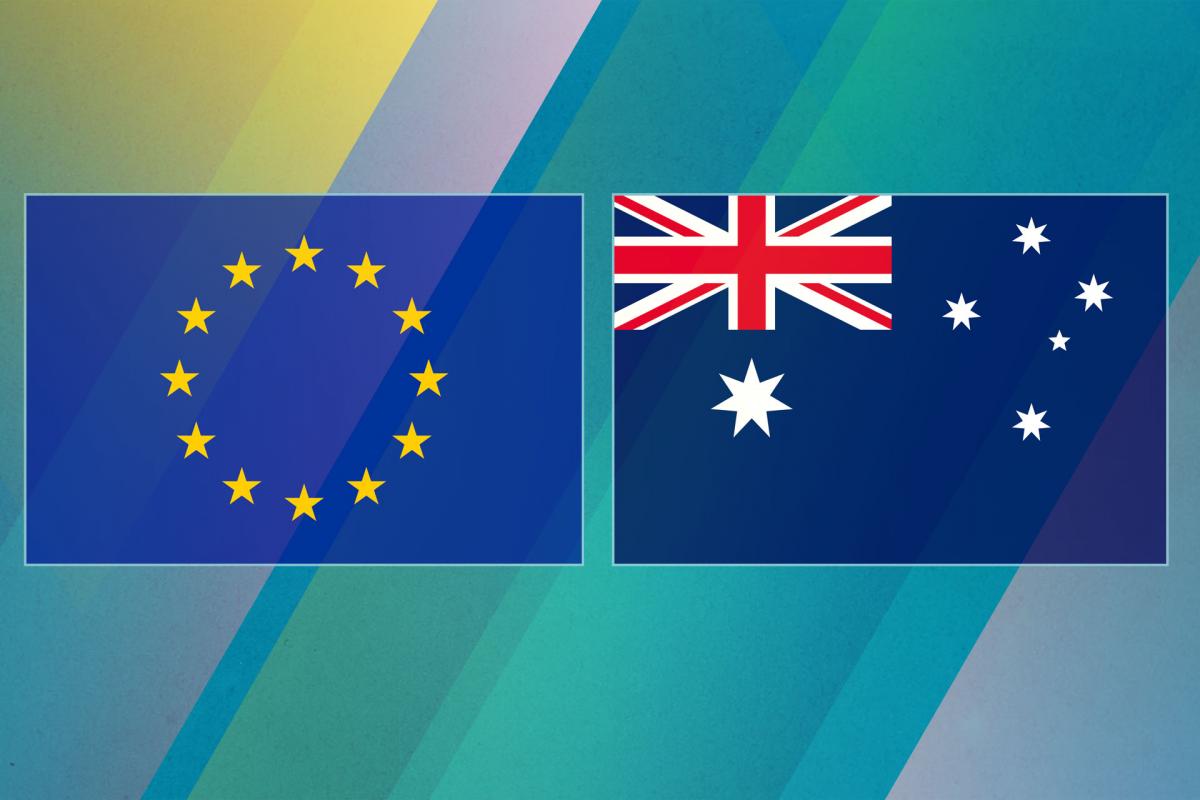
Geopolitics is often a theater of the absurd, but the recent celebration surrounding the "landmark" trade agreement between the European Union and Australia takes the prize for the most expensive piece of fiction written this year. While mainstream analysts scramble to frame this as a strategic "hedge" against a volatile United States, they are missing the glaring reality. This isn't a hedge. It is a desperate, bureaucratic pivot that ignores the fundamental laws of economic gravity.
The consensus is lazy. It suggests that by signing a few thousand pages of legalese, two distant entities can magically offset the tectonic shifts of the global superpower struggle. It assumes that "diversification" is a button you can press. It isn't.
The Myth of the American Hedge
Let’s dismantle the primary delusion first: the idea that the EU can replace the U.S. security and economic umbrella with a series of bilateral deals in the Southern Hemisphere. Washington remains the world's largest consumer market and its primary security guarantor. Australia and the EU are both "demand-side" actors in the global security market. You cannot build a stable house by leaning two ladders against each other if neither is bolted to the ground.
I have spent fifteen years in rooms where these treaties are drafted. I have seen negotiators toast to "shared values" while knowing full well that the shipping costs alone make the "shared economy" a pipe dream. When you strip away the press releases, what you have is a deal that attempts to solve a 21st-century supply chain crisis with 19th-century colonial trade logic.
Agriculture The Hill Where Trade Dies
The most hilarious aspect of the "successful" negotiation is the claim that it addresses agricultural parity. It doesn't. The EU’s Common Agricultural Policy (CAP) is a protectionist fortress designed to keep French farmers from burning down Brussels. Australia, conversely, is an agricultural powerhouse built on scale and efficiency.
The "nuance" the competitor missed? This deal is actually a defeat for Australian farmers.
The EU has successfully used "Geographical Indications" (GIs) as a non-tariff barrier. They’ve essentially told Australian producers they can’t use names like "Prosecco" or "Feta," even if the product is superior and the heritage of the farmers is European. Australia traded away its branding rights for a marginal increase in beef and sheep meat quotas that will likely be eaten alive by EU environmental regulations and "Carbon Border Adjustment Mechanisms."
Imagine a scenario where a tech company is told it can sell its software in a new market, but it isn’t allowed to call it "software" because a legacy firm in that market trademarked the word in 1974. That is the "win" Australia just secured.
The Critical Minerals Trap
The "strategic" part of this deal—the focus on critical minerals—is where the logic truly falls apart. The EU wants Australian lithium, cobalt, and rare earths to power its green transition. They want to "de-risk" from China.
Here is the brutal truth: China owns the processing.
Australia can dig the rocks out of the ground, but it lacks the mid-stream infrastructure to refine them at scale. The EU lacks it too. Unless this trade deal included a $500 billion investment in chemical refineries—which it didn’t—the raw ore will still likely head to Chinese-controlled entities or be processed at costs that make European EVs even more uncompetitive than they already are.
We are seeing a repeat of the solar panel debacle. Europe sets the targets, Australia provides the dirt, and the value-add still happens in the East or requires American subsidies to be viable.
The Distance Tax is Real
Economists talk about the "Gravity Model of International Trade." It’s simple: trade is proportional to the size of economies and inversely proportional to the distance between them.
Brussels and Canberra are 16,000 kilometers apart.
- Shipping costs: Rising.
- Carbon footprint: Massive.
- Time to market: Slow.
To suggest that this deal "hedges" against U.S. risks is to ignore that the U.S. and the EU share a North Atlantic basin. Australia is an island at the edge of the world. Expecting a trade deal to overcome the physical reality of the planet is peak bureaucratic hubris.
De-risking is Just Re-risking
The EU calls it "de-risking." I call it "re-risking." By tying its supply chain to a country that is effectively the "front line" of any potential conflict in the Indo-Pacific, the EU isn't finding a safe haven. It is moving its eggs from a volatile American basket to a basket sitting on a fault line.
If a conflict erupts in the South China Sea, those "secured" minerals aren't moving an inch. The trade routes will be blocked, and the paper treaty will be worth exactly the cost of the ink.
The Regulatory Imperialism of Brussels
The EU doesn't export products as much as it exports regulations. This deal is a vehicle for "The Brussels Effect." It forces Australian companies to adopt European standards on ESG, labor, and digital privacy.
For a mid-sized Australian firm, the compliance costs of entering the EU market under this new deal often exceed the profit margins gained from the reduced tariffs. This isn't an "opening" of a market; it's the extension of a regulatory empire. I have watched firms in Singapore and Vietnam walk away from "free trade" deals with Europe because the paperwork was more expensive than the 5% tariff they were trying to avoid.
Why the "People Also Ask" Sections are Wrong
When people ask, "Will the EU-Australia deal lower prices?" the answer is a flat no. The supply chain complexity and the "green" mandates baked into the text ensure that any savings from tariff reductions are swallowed by compliance and logistics.
When they ask, "Does this make Australia less dependent on China?" the answer is equally grim. Australia’s economy is a giant quarry for the Chinese industrial machine. A trade deal with a declining, aging European population that wants to buy fewer things—not more—cannot replace the sheer volume of Chinese demand.
The Professional’s Playbook
If you are an executive or an investor looking at this deal, stop reading the headlines about "sovereignty" and "strategic autonomy." Look at the annexes.
- Ignore the Tariffs: Look at the Technical Barriers to Trade (TBT). That is where the real costs are hidden.
- Watch the Shipping Lanes: If you aren't hedging your freight costs, the "free trade" gains are a hallucination.
- Audit the "Origin": Rules of Origin in this deal are notoriously complex. If 40% of your component parts come from a third party (like China or the U.S.), you might find you don't qualify for the "deal" at all.
This agreement is a political victory and an economic rounding error. It serves the egos of leaders who want to appear relevant in a world that is rapidly bifurcating between Washington and Beijing. For everyone else, it’s just more paperwork for a party that ended twenty years ago.
Go look at your logistics ledger. Calculate the cost of moving a ton of freight to Rotterdam versus Los Angeles. Then tell me again how this deal is a "game-changer" for your bottom line. It’s time to stop pretending that ink on a page can replace physical proximity and industrial capacity.
Stop buying the narrative that trade deals are about trade. They are about signaling. And right now, the signal is a desperate cry for relevance from two entities that are realizing they are no longer the ones making the rules.