The quiet of a suburban Tuesday morning is a specific kind of silence. It is the sound of a toaster popping, the low hum of a refrigerator, and the distant bark of a neighbor's dog. It is a predictable, safe frequency. But at 8:15 AM on a stretch of asphalt in a town that expected nothing but the mundane, that silence was shattered by the scream of twisting metal and the sickening thud of kinetic energy meeting human frailty.
A thirteen-year-old boy is not supposed to be a headline.
He is supposed to be a nuisance. He is supposed to be the kid who leaves his muddy shoes in the hallway, the one who forgets his math homework, the one who spends too many hours arguing about video games. At thirteen, the world is a series of "not yet" moments. You are not yet a man. You are not yet a driver. You are not yet aware of how thin the line is between a normal morning and a lifetime of grief.
That line evaporated in an instant.
The Weight of Metal and Momentum
Physics does not care about potential. It does not care about the middle school dance next month or the Mother’s Day card tucked into a backpack. When two vehicles collide, the math is cold and absolute.
Consider the force required to stop a moving vehicle. $F = ma$. Force equals mass times acceleration. When that acceleration drops to zero in a fraction of a second, the energy has to go somewhere. Usually, it goes into the frame of the car. Sometimes, it goes into the body of a child sitting in the backseat, or crossing the street, or simply existing in the wrong coordinate of space-time.
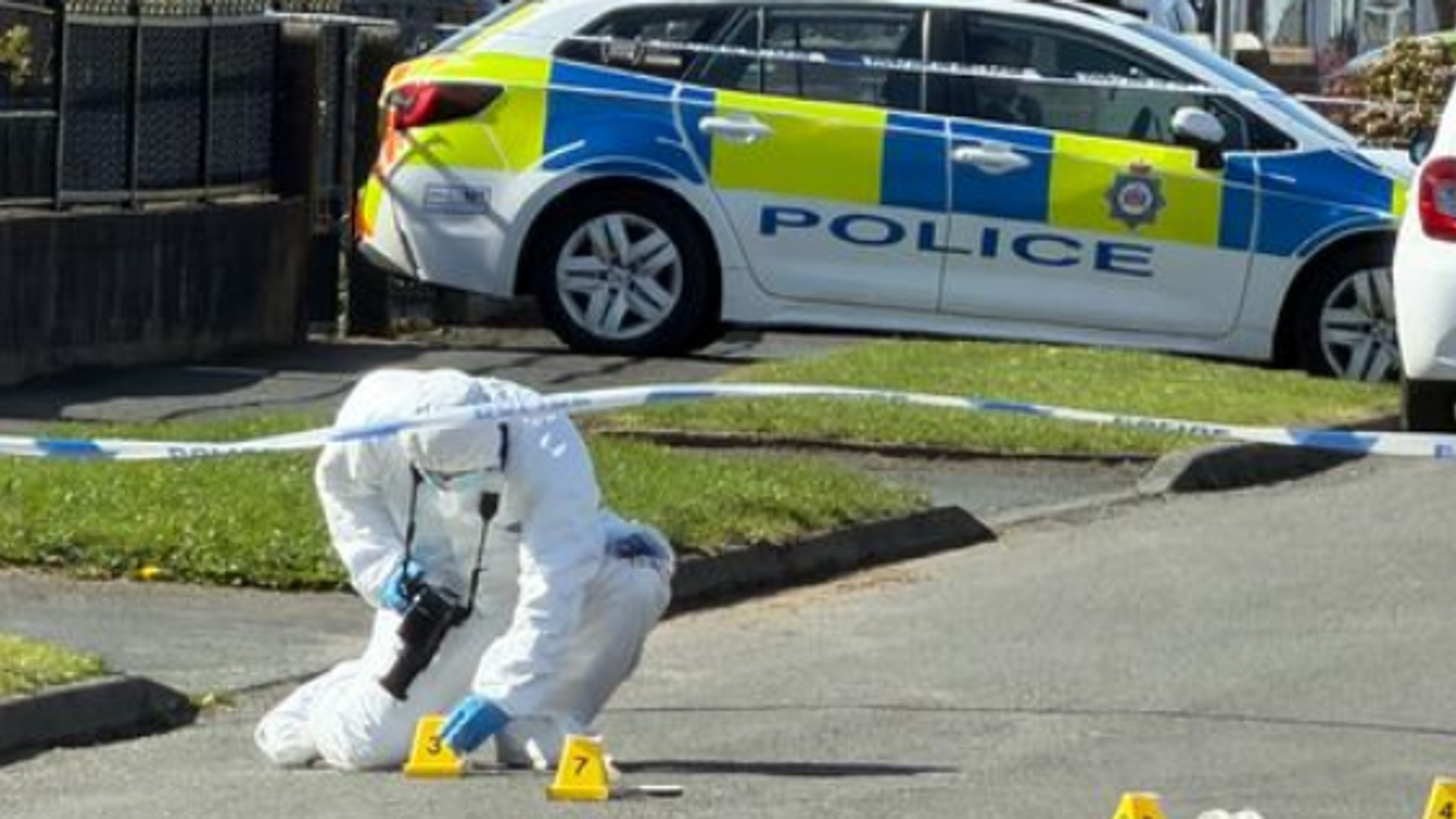
In this instance, the aftermath was a chaotic tableau of flashing blue lights and the smell of burnt rubber. Emergency responders move with a practiced, grim efficiency. They have seen this before, yet the sight of a crumpled bicycle or a shattered passenger window never truly becomes routine. They worked. They fought. But some gaps are too wide to bridge. The boy died, and with him, a several decades of future history vanished.
The Shadow of Accountability
While the sirens were still echoing, the machinery of the law began to turn. Police didn't just find a wreckage; they found a reason to stay.
Two people are now in custody.
In the immediate wake of a tragedy, we often look for a monster. We want someone to blame because the alternative—that life is fragile and random—is too terrifying to bear. The legal system provides a framework for this hunger. Arrests are made. Charges are filed. We read terms like "dangerous driving" or "negligence" and we nod, satisfied that the gears of justice are grinding.
But what does an arrest actually do for the empty chair at the breakfast table?
It provides a narrative. It tells us that this wasn't just a "bad thing" that happened; it was a "wrong thing" that was done. There is a profound difference. If it was just a bad thing, it could happen to any of us at any time. If it was a wrong thing, we can distance ourselves from it. We can say, "I wouldn't have done that. I'm safe. My kids are safe." It is a protective lie we tell ourselves to keep driving.
The Invisible Ripples
Grief is not a single event. It is a long, slow decay of the world as you knew it.
Imagine the boy's bedroom. It is a museum now. The posters on the wall are historical artifacts. The half-finished bag of chips on the nightstand is a relic. His parents will eventually have to walk into that room. They will have to decide what to do with his laundry. Do you wash the shirt that still smells like him, or do you leave it until the scent fades into the smell of dust and stagnant air?
The school will have an assembly. There will be flowers at the base of a tree near the crash site. His friends will experience their first taste of the permanent. Up until now, "forever" was just a word used in songs. Now, it is the length of time they will go without seeing him in the hallway.
They will look at the two people arrested and feel a white-hot flash of anger. That anger is a gift. It is a distraction from the hollow ache of the loss. But eventually, the anger will cool, the court dates will pass, and the headlines will find a new tragedy to feast upon. The family will be left with the silence.
The Mechanics of a Mistake
We often talk about car accidents as if they are inevitable, like rain or the changing of the seasons. We use the word "accident" to soften the blow, as if to say no one meant for this to happen.
But modern road safety experts are moving away from that word. They prefer "collision." An accident suggests fate. A collision suggests a series of choices, mechanical failures, or environmental factors that could have been different.
Was it a split-second distraction? A phone vibrating in a cupholder? A decision to take a corner too fast because the light was turning yellow? Or was it something more systemic—a road designed for speed rather than safety, a vehicle with blind spots the size of a human life?
The two individuals facing charges are now part of this boy’s legacy, whether they like it or not. Their lives are also shattered, albeit in a different way. They are the cautionary tales in a society that treats a two-ton vehicle like a living room on wheels. We have become so comfortable with the lethality of our transportation that we forget we are piloting high-speed projectiles.
The Cost of Moving On
As the community grapples with the loss, the focus inevitably shifts to "healing."
This is a polite word for learning how to carry a heavy weight without collapsing. You don't "get over" the death of a thirteen-year-old. You just build a life around the hole he left behind.
The legal proceedings will offer a sense of closure to the public, a period at the end of a very dark sentence. There will be talk of new safety measures, perhaps a lower speed limit or a new set of traffic lights. These are the physical manifestations of our guilt. We build things to convince ourselves we can prevent the unpreventable.
But tonight, in one house, the lights will stay on late. A mother will look at a phone that isn't ringing. A father will stare at a driveway where a bike should be lying on its side.
The two arrests are a footnote in the story of a life that was supposed to be a novel but ended as a poem. The facts of the case are simple: a car, a boy, a crash, an arrest. The truth of the case is much harder to swallow. It is the realization that we are all just one Tuesday morning away from a silence that never ends.
The boy was thirteen. He had three years until he could drive, five years until he could vote, and a lifetime of mistakes he never got the chance to make.
Instead, he is a memory, and the rest of us are just left watching the traffic.
Would you like me to research the specific legal precedents for juvenile-related vehicular manslaughter to provide more context on the potential outcomes for the two individuals in custody?