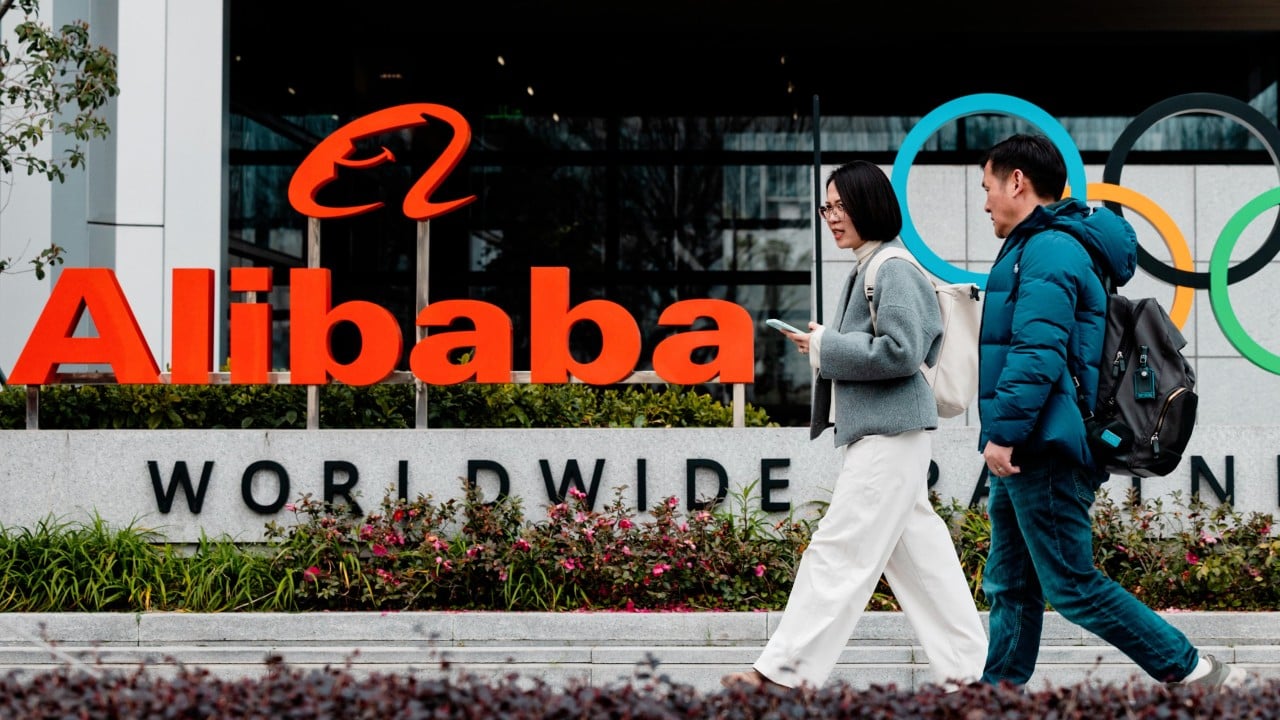
The server room is never truly silent. It is a high-pitched, metallic thrum that vibrates in your molars. For years, this was the sound of storage—a digital warehouse where the world kept its old photos and spreadsheets. But lately, the pitch has shifted. It is becoming a frantic, hungry sort of noise. It is the sound of thinking.
In the glass-and-steel corridors of Hangzhou, the architects of Alibaba Cloud are betting everything on that sound. They are moving away from being a simple landlord of data and toward becoming the primary cognitive engine for a new era. Analysts are watching the ticker tape, predicting a surge in growth. They talk about "AI-driven demand" and "margin expansion" through "public cloud adoption."
Those are cold words for a very hot reality.
Behind the numbers lies a massive pivot in how we value the air we breathe online. Alibaba is raising its prices. It is tightening the belt on low-margin project work. It is, essentially, telling the world that if you want to use the most sophisticated brain on the planet, you have to pay the premium.
The Architect and the Algorithm
Imagine a developer named Chen.
Ten years ago, Chen used the cloud to host a simple e-commerce site. It was cheap. It was a commodity. He paid for space, much like one pays for a locker at a train station. Today, Chen isn't just looking for a locker. He is trying to build a logistics system that predicts a monsoon in Southeast Asia and reroutes a million packages before the first raindrop hits the pavement.
To do that, he needs more than space. He needs the massive, specialized processing power that only a handful of companies on earth can provide.
Alibaba knows this. They have seen the shift in their own ledgers. For a long time, the company chased every contract available, including "hybrid" setups where they helped government agencies or old-school manufacturers set up their own private servers. It was grueling, low-profit work. It was digital construction labor.
Now, the mandate has changed. The company is pivoting toward the public cloud—the vast, shared brain where everyone plugs in. This is where the AI lives. This is where the proprietary large language models, like Tongyi Qianwen, reside. By focusing here, Alibaba isn't just selling a service; they are selling the future of intelligence itself.
Analysts from firms like Morgan Stanley and Goldman Sachs are nodding in unison. They see the revenue growth accelerating toward double digits again. But the growth isn't coming from doing more of the same. It is coming from doing less of the trivial and more of the essential.
The Invisible Toll of Intelligence
When a company like Alibaba raises its service charges, the instinctual reaction is to flinch. We have been conditioned to believe that technology should always get cheaper. Moore’s Law promised us more for less.
But AI breaks that promise.
Artificial Intelligence is a resource hog. It consumes electricity at a rate that would make a small city blush. It requires specialized chips that are currently the most sought-after objects in the global supply chain. When Alibaba Cloud moves to increase its fees, they aren't just being greedy. They are pricing the scarcity of the future.
The shift is structural. By phasing out the low-margin "project" based revenue—the stuff that required teams of engineers to go on-site and hold a client's hand—Alibaba is clearing the decks. They are betting that the demand for AI will be so high that they no longer need to beg for business. The business will come to them, and it will bring its own credit card.
Consider the ripple effect. If you are a small startup in Shenzhen, the cost of entry just went up. But the quality of the tools you can access has also spiked. You are no longer renting a screwdriver; you are renting a robotic factory. The stakes have been raised for everyone.
The Friction of Transition
This transition isn't a clean line on a graph. It is a messy, grinding process.
For the last several quarters, Alibaba’s cloud revenue looked sluggish. To an outsider, it seemed like the giant was stumbling. In reality, it was shedding skin. You cannot grow a new limb while you are still carrying the weight of the old one. They had to walk away from contracts that didn't make sense in an AI-first world.
That period of shedding is almost over.
The analysts are pointing toward a "re-acceleration." This is financial speak for "the engine finally caught fire." As more companies integrate AI into their daily operations, they become hooked on the cloud. You don't just "finish" an AI project. You keep feeding it. You keep refining it. You keep paying for the compute power.
It is a recurring revenue model that would make a landlord envious.
But there is a human cost to this efficiency. The "project-based" work that Alibaba is abandoning used to support thousands of middle-tier IT roles. Those people were the bridge between the old world and the new. Now, as the system becomes more automated and centralized in the public cloud, that bridge is being dismantled. The intelligence is moving to the center, and the periphery is getting colder.
The Geopolitical Ghost in the Machine
We cannot talk about the growth of a Chinese cloud giant without acknowledging the invisible pressure of the room. The global chip shortage and export restrictions are the walls of the maze.
Alibaba is navigating a reality where they cannot always get the hardware they want. This has forced a different kind of innovation: efficiency. If you cannot get ten more chips, you must make the one chip you have ten times smarter.
This scarcity is actually driving the growth the analysts are so excited about. Because Alibaba has to optimize its internal software to wring every drop of power out of its hardware, its proprietary AI services become more valuable. They are offering a level of optimization that a smaller player simply couldn't engineer.
The "AI push" isn't just a marketing slogan. It is a survival strategy.
By integrating their own AI models directly into the cloud infrastructure, they are creating an ecosystem that is very hard to leave. If your entire business logic is built on Alibaba’s specific AI frameworks, moving to a competitor isn't just a matter of moving files. It’s a lobotomy.
The Weight of the Digital Sky
We often think of the cloud as something ethereal—weightless, invisible, floating above us.
It is anything but.
It is thousands of tons of copper and silicon. It is billions of gallons of water used to cool the heat of a quadrillion calculations. As Alibaba Cloud accelerates, the physical footprint of our digital lives expands.
The higher service charges are a reminder that the "magic" of AI has a literal price. We are moving out of the era of the free internet and into the era of the expensive oracle. We are paying for the privilege of being understood by our machines.
The analysts see a "buy" signal. They see a company that has successfully navigated a brutal pivot and is now ready to reap the rewards of a more disciplined, tech-heavy portfolio. They see the numbers climbing back toward the sun.
But look closer at the people using these systems. Look at the small business owner who can suddenly compete with a multinational because she has access to the same AI tools. Look at the researcher who can sequence a genome in an afternoon instead of a decade.
The true story isn't the percentage of growth. It is the shifting of the tectonic plates of human capability.
Alibaba is no longer just a store or a bank or a server farm. It is becoming a utility of the mind. And like the electric companies of the 20th century, they are realizing that when you control the flow of the most vital resource in the world, you don't have to worry about the price of the copper. You just have to make sure the lights stay on.
The hum in the server room grows louder. It is no longer just a vibration; it is a pulse.


