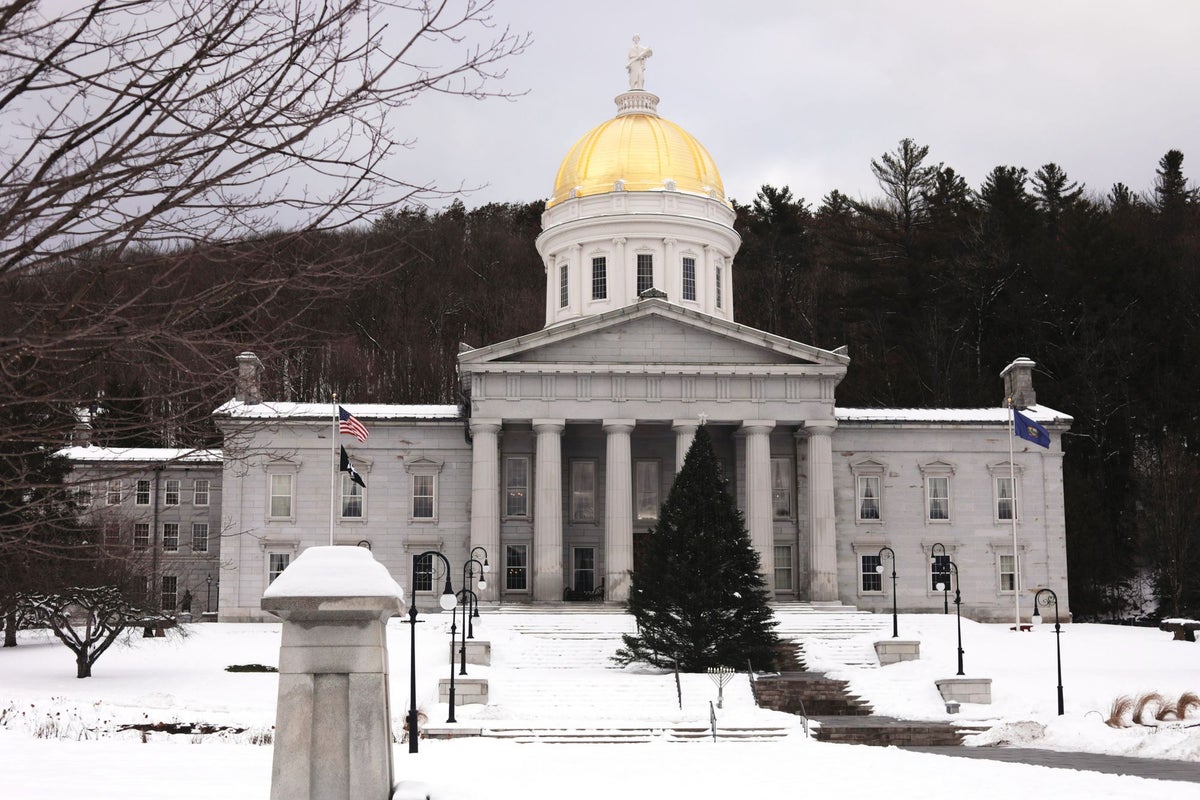
The desk in a governor’s office is usually heavy, mahogany, and scarred by decades of pens signing bills that change the lives of millions. It is a seat of power built for someone with a mortgage, a graying temple, and perhaps a few regrets. It is not traditionally sized for someone who still has to ask for permission to use the restroom between second and third period.
Yet, in a small corner of the American political map, the traditional image of a statesman is being dismantled by a boy who hasn't yet sat for his SATs. Ethan Sonneborn is fourteen. He likes basketball, he worries about his grades, and he is officially running for Governor of Vermont.
The paperwork is filed. The name is on the ballot. This isn't a classroom simulation or a mock trial held in a gymnasium under buzzing fluorescent lights. This is a real bid for the highest executive office in the state. While his peers are navigating the social hierarchies of the cafeteria, Ethan is navigating the complexities of healthcare reform and environmental policy.
How does a middle schooler find himself in a stump speech? The answer lies in a quirk of the Vermont Constitution, a document written by founders who likely never imagined a world of social media and 24-hour news cycles. To run for governor in Vermont, you don't need to be thirty-five. You don't even need to be eighteen. You simply need to have lived in the state for four years.
Ethan has lived there for fourteen. He is, by the letter of the law, more than qualified.
The Weight of the Podium
Walking into a town hall meeting as a teenager is an exercise in enduring the "polite smile." It’s that specific expression adults wear when they think something is cute but ultimately inconsequential. You see it at piano recitals and science fairs. But when Ethan speaks, the smile usually fades, replaced by a look of genuine, albeit startled, realization.
He isn't talking about longer recess or better vending machine options. He is talking about the disenfranchisement of a generation.
Consider a hypothetical voter named Sarah. She’s fifty-two, works two jobs, and has lost faith in the "system" as a vague, monolithic entity that takes her taxes and gives back very little. She walks into a campaign event expecting a gimmick. Instead, she hears a kid explain that the decisions made today regarding carbon emissions and economic infrastructure won't just affect his retirement—they will define his entire adult life.
There is a visceral, almost painful honesty in that perspective. For a career politician, a four-year term is a milestone on a resume. For a fourteen-year-old, four years is the distance between being a child and being an adult. The stakes aren't theoretical. They are his future.
The room grows quiet when he points out that he belongs to the only demographic that has to live with the consequences of legislation for the next seventy years, yet remains the only demographic without a vote. He isn't just running for office; he’s staging a peaceful protest against the idea that wisdom is strictly a byproduct of age.
The Mechanics of a Miniature Campaign
The logistics of a fourteen-year-old’s campaign are equal parts inspiring and logistical nightmares. There is no massive war chest. There are no high-priced consultants whispering in his ear or focus-grouping his tie choice.
Instead, there are car rides driven by his parents because he doesn't have a driver's license. There are interviews conducted after homework is finished. There is a grassroots energy that feels less like a political machine and more like a community project.
Critics often point to "experience" as the missing ingredient. They argue that a governor needs to understand the intricate dance of the state legislature, the nuances of the budget, and the grit required for high-stakes negotiation. They aren't wrong. The job is grueling. It requires a level of emotional labor and technical knowledge that would break many seasoned professionals.
But Ethan’s counter-argument is a sharp one: If "experience" has led to the current state of political gridlock and systemic apathy, perhaps experience is being overvalued. He represents a brand of idealism that hasn't been sanded down by decades of "that’s just how it’s done."
He is a walking, talking glitch in the matrix of American bureaucracy.
The Invisible Barrier
There is a quiet tension that follows Ethan. It’s the sound of an old guard shifting uncomfortably in their seats. If a fourteen-year-old can stand on a stage and hold his own against a sitting governor or a seasoned challenger, it forces a difficult question: What, exactly, are we paying the adults for?
If he can articulate a platform, defend a policy, and mobilize a base, the traditional barriers to entry start to look less like safeguards and more like gatekeeping.
We often treat the youth as a "future" resource. We tell them they are the leaders of tomorrow. We give them awards for community service and then tell them to wait their turn when it comes to actual power. Ethan is refusing to wait. He is operating on the radical notion that "tomorrow" is arriving too fast to stay on the sidelines.
Imagine the dinner table at the Sonneborn house. It’s a scene played out in millions of homes—parents asking about school, the clink of silverware. But here, the conversation might veer into the implications of a specific tax incentive or the legal hurdles of a constitutional amendment.
There is a specific kind of bravery in being the youngest person in every room you enter. It requires a thick skin to handle the jokes, the condescension, and the inevitable "where are your parents?" glares. It takes a certain kind of iron will to look at a ballot with your name on it and realize that, win or lose, you have already changed the conversation.
The November Reality
When the leaves turn and the Vermont air grows sharp with the coming winter, voters will head to the polls. They will see the names of people who have spent lifetimes in the public eye. And they will see Ethan.
For some, a vote for him will be a protest. A middle finger to the status quo. For others, it will be a genuine endorsement of a fresh perspective. But for the most part, his presence on the ballot serves as a mirror.
It asks us what we value in our leaders. Do we value the polished veneer of experience, even if it comes with the baggage of cynicism? Or do we value the raw, unvarnished hope of someone who actually has to live in the world we are currently building?
The campaign trail is dusty, long, and often thankless. It is paved with handshakes that don't always lead to votes and questions that don't always have easy answers. Ethan Sonneborn is walking that path in sneakers.
He might not end up in the governor’s chair this time. He might go back to being a student, worrying about his midterms and who to sit with at lunch. But the image of a fourteen-year-old standing at a podium, demanding a seat at the table, is not something that can be easily forgotten.
He has already won the most important battle: he has proven that the gates are not as heavy as they look, provided someone is brave enough to push.
The sun sets over the Vermont hills, casting long shadows across the small towns and quiet farms. Somewhere in a quiet house, a teenager is looking over a speech, crossing out words, and refining an argument. He isn't just doing his homework. He is preparing for a job interview with the entire state.
The ballot box is a heavy thing. It carries the weight of history and the hopes of the present. This November, it will also carry the audacity of a boy who decided that being "too young" was a matter of opinion, not a matter of fact.
Whether he wins or loses is almost secondary to the fact that he is there at all. He is a reminder that the political landscape is not a fixed map, but a living, breathing thing that can be reshaped by anyone with the courage to step onto the field.
The bell rings. School is out. The campaign continues.
Would you like me to look into the specific constitutional history that allowed this candidacy to happen, or perhaps explore other unusual political requirements in different states?