Md Maruf Hossain did not die on a battlefield. He was not wearing a uniform, nor was he holding a rifle, nor had he ever cast a vote in the elections of the nations currently trading fire across the Middle East. Maruf was a migrant worker from Bangladesh, one of the millions of invisible threads holding together the infrastructure of the United Arab Emirates. He was in Fujairah, a place of salt air and shipping lanes, working to send money back to a village that likely felt a world away from the hypersonic trajectories of Iranian missiles or the high-altitude interceptions of Israeli defense systems.
Then the world tightened.
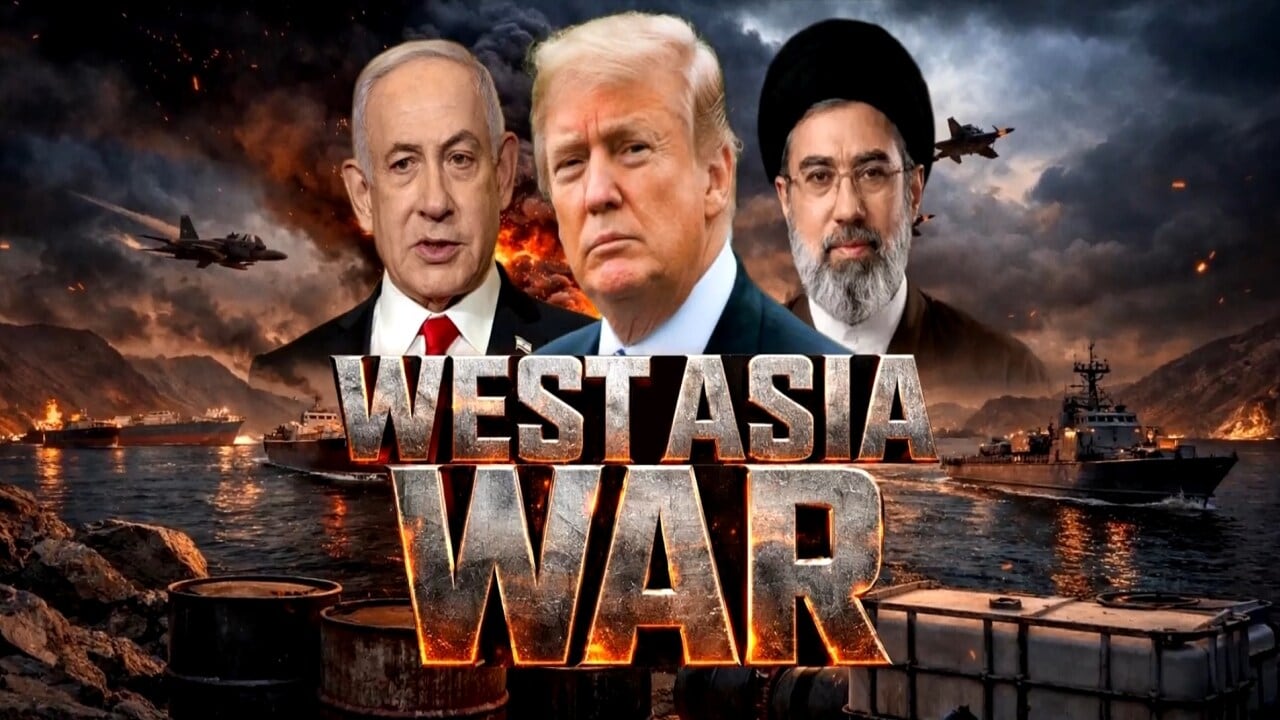
When we talk about geopolitical escalation, we use words like "strategic," "proportional," and "deterrence." We track the arc of a drone or the range of a ballistic missile. We analyze the mapped coordinates of an airbase or a refinery. But the true map of war isn't drawn in sand and ink. It is drawn in the shattered hopes of a family in Dhaka waiting for a phone call that will now never come. The death of a Bangladeshi national in the UAE, caught in the widening ripples of the Iran-Israel-US conflict, is the most honest headline we have. It reminds us that there are no spectators in modern warfare. Only participants and victims.
The mechanics of this conflict are often described as a chess match, but that analogy is too clean. Chess has rules. Chess stays on the board. This is more like a stone thrown into a dark pond; you can see the splash, but you cannot predict where the ripples will stop or who they will drown.
The Geography of Collateral
Fujairah sits on the eastern coast of the UAE, a strategic lung for the region that allows oil to bypass the volatile Strait of Hormuz. It is a place of transit. For years, the tension between Tehran and Jerusalem remained a "shadow war," fought in the digital dark of cyberattacks or through the precise, cold calculations of intelligence agencies. But shadows have a way of lengthening when the sun goes down.
As the US increases its footprint to bolster Israeli defenses and Iran maneuvers its regional proxies, the physical space between these powers has evaporated. The sky over the Gulf is no longer just a path for commerce; it is a pressurized corridor of potential kinetic energy.
Imagine a young man like Maruf. He wakes up before the heat becomes a physical weight. He thinks about the exchange rate. He thinks about the roof back home or the tuition for a sibling. He is a ghost in the machinery of global energy. To him, the news alerts on his phone about "unprecedented escalations" are background noise—until the noise becomes a roar. Whether it was debris from an interception or a stray strike, the result is the same. A life ended for a cause he did not choose, in a conflict he did not start.
The Invisible Stakes
We often get the story of war completely backward. We focus on the "why" of the leaders and the "how" of the weaponry, but we ignore the "who" of the fallout. The death in Fujairah is a flashing red light on the dashboard of global stability. It signals that the "safe zones" are shrinking.
When a missile is launched from Iranian soil toward Israel, or when the US Navy intercepts a drone swarm in the Red Sea, the technology involved is staggering. We are told these systems are precise. We are told they are surgical. But "surgical" is a comforting lie we tell ourselves to make the violence palatable. There is no such thing as a clean explosion. Every piece of shrapnel has to land somewhere. Every failed interceptor falls back to earth.
The regional stakes are not just about the price of a barrel of Brent crude or the sovereignty of borders. The stakes are the human lives that exist in the friction points between these powers. The UAE, Qatar, and Jordan have spent decades trying to build a future that is insulated from the ancient grievances of their neighbors. They have built glass cities and global hubs. But glass is fragile.
Consider the psychological toll on the millions of expatriates who make up the backbone of the Gulf. They are the builders, the drivers, the nurses, and the engineers. They come from India, Pakistan, the Philippines, and Bangladesh. They are the literal human energy that keeps the region functioning. When the sky begins to fall, they are the ones with the least protection. They do not have bunkers. They do not have private jets. They have only the hope that the giants above them will stop swinging.
The Myth of the Limited War
There is a dangerous seduction in the phrase "limited conflict." It suggests a volume knob that can be turned up or down at will. The US and Israel speak of "degrading capabilities," while Iran speaks of "defending dignity." Both sides act as if they can control the fire they have lit.
But war is a living thing. It has its own momentum.
The death of a foreign worker in a third-party country like the UAE is a symptom of a war that has already outgrown its boundaries. It tells us that the deterrents have failed. If the goal of military posturing is to keep the peace, then every civilian death is a ledger entry in the column of failure.
The complexity is dizzying. You have the Iron Dome and the Arrow system in Israel, the THAAD batteries deployed by the US, and the sheer volume of the Iranian drone program. On paper, it is a technical marvel of physics and engineering. In reality, it is a rain of fire over a crowded neighborhood.
I remember talking to a man who had fled a different conflict years ago. He told me that you never hear the one that gets you. You only hear the ones that miss. For the people living in the crosshairs of this three-way standoff, the air has become heavy with the sound of things missing—until, eventually, something doesn't.
The Human Currency
Why does the death of one Bangladeshi man in Fujairah matter in the grand narrative of the US, Israel, and Iran?
It matters because it strips away the abstraction. It forces us to look at the human currency being spent to fund these geopolitical ambitions. We are currently witnessing a global shift where the "periphery" is being dragged into the center of the storm. The UAE has attempted to maintain a delicate balancing act, normalizing relations with Israel through the Abraham Accords while keeping a cautious, diplomatic channel open with Iran. They want to be a neutral ground for business.
But you cannot be neutral in a storm.
The death on the ground in Fujairah is a message to the world: the buffer zones are gone. The luxury of distance is a relic of the past. In an age of long-range drones and regional proxies, every port is a target and every worker is a potential casualty.
The facts of the "live updates" will tell you about the number of launches, the diplomatic statements from Washington, and the warnings from Tehran. They will tell you that the Bangladeshi government is working to repatriate a body. These are the dry bones of the story.
The marrow, however, is the terrifying randomness of it all. It is the realization that a man can leave his home in search of a better life, follow all the rules, stay out of the fray, and still be erased by a conflict happening hundreds of miles away.
The Cost of Looking Away
We have become accustomed to the "Live Update" ticker. It scrolls across our screens, a never-ending stream of micro-doses of tragedy. We see a name, a location, and a cause of death, and then we move on to the next headline. We have developed a high tolerance for the "incidental."
But there is nothing incidental about a father or a son being killed while he works.
If we accept the death of Maruf Hossain as a mere footnote in the saga of the Iran-Israel war, we are conceding that some lives are simply the cost of doing business in the modern world. We are agreeing that the "strategic interests" of powerful nations outweigh the simple, profound right of an individual to exist in peace.
The tension between the US, Israel, and Iran is often framed as a struggle for the future of the Middle East. But what kind of future is being built when the foundation is laid in the blood of those who have no stake in the fight?
The real problem isn't just the missiles. It is the disconnection. It is the way we have allowed our leaders to talk about war as if it were a laboratory experiment. We talk about "testing" systems and "demonstrating" resolve. We forget that the laboratory is full of people.
Consider what happens next for the family in Bangladesh. There will be a period of shock, then a period of mourning, and then a long, crushing period of poverty. The economic engine of their lives has been dismantled by a piece of metal falling from a sky they will never see. This is the true "game-changer"—not a new weapon system, but the total erosion of the idea that any place is safe.
The world is watching the skies, waiting for the next flash of light. We argue about who started it, who will end it, and who is winning. We look at maps and we look at screens. But perhaps we should look down.
We should look at the dust of Fujairah. We should look at the quiet, empty room in a labor camp. We should look at the heavy silence in a village in Bangladesh.
The war is not just between governments. It is a war against the ordinary. It is a war against the person who just wanted to earn a living. And as long as we treat these deaths as "updates" rather than "indictments," the ripples will only continue to grow, moving silently across the water until they reach us all.
In the end, Maruf Hossain did not die for a flag or a faith or a frontier. He died because the world has become a place where the distance between a decision in a war room and a tragedy in a shipyard is zero. The shrapnel is no longer distant. It is here. It is everywhere.