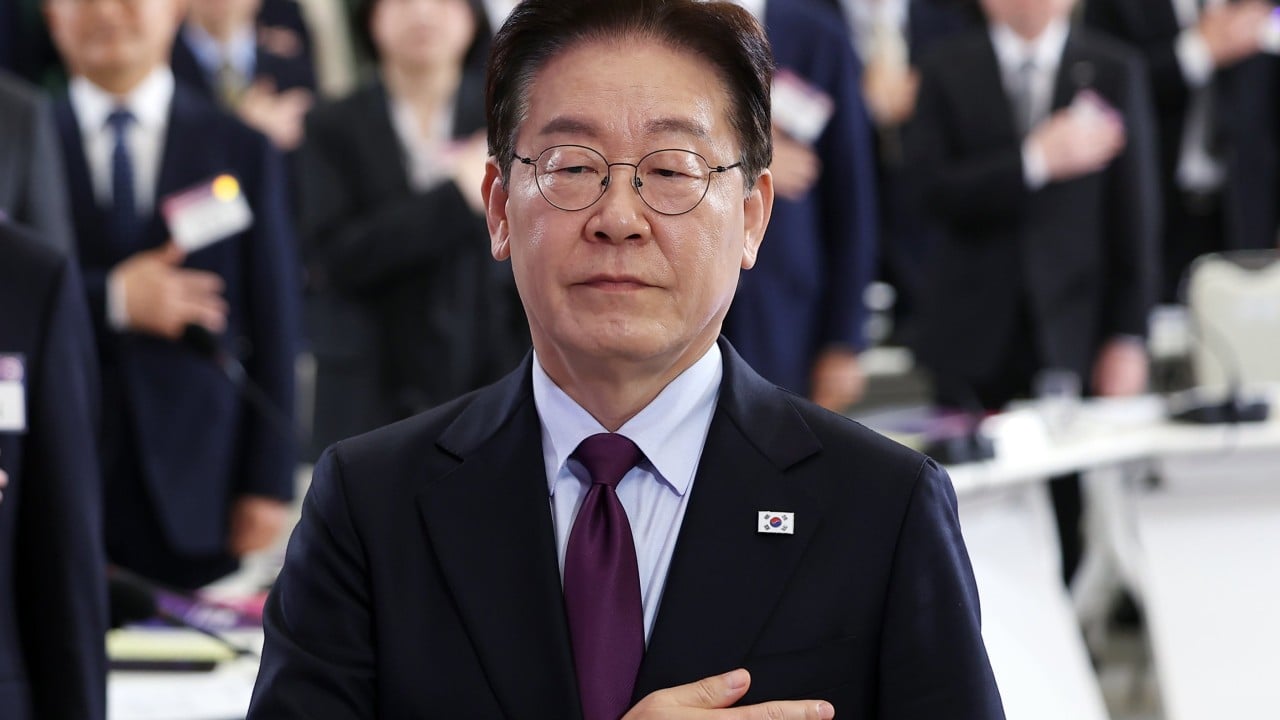
Diplomacy is usually a game of shadows and whispers. In Seoul, that game just ended. President Lee Jae-myung didn't just step out of line; he deleted the line entirely. By comparing Israeli military actions in Gaza to the Holocaust on a platform as chaotic as X, Lee has signaled that South Korea is no longer interested in being the "pragmatic middle power" that minds its own business and counts its semiconductor chips.
The lazy consensus among analysts is that this is a "diplomatic disaster" or a momentary lapse in judgment. They are wrong. This isn't a mistake. It is a deliberate, high-stakes pivot. Seoul is trading its quiet, lucrative partnership with Israel for a seat at the head of the "Global Moral Authority" table. It is a gamble that ignores decades of defense integration for the sake of ideological purity and domestic polling.
The Myth of the Accidental Spat
Most commentators are fixated on the fact that the video Lee shared was old or "misinterpreted." They think if he just corrects the record, things go back to normal. That ignores the mechanical reality of how state policy is being rewritten in 2026.
For sixty-four years, South Korea played the "quiet student" in Middle Eastern affairs. It traded cars and electronics for oil and security tech. It stayed silent at the UN when Israel was criticized to protect its Free Trade Agreement (FTA) and its access to Israeli drone technology. That era died this week.
Lee’s insistence on "universal human rights" as the core of South Korean foreign policy isn't a fluffy sentiment. It is a hard pivot toward the Global South. By attacking Israel—a key Western ally—Seoul is auditioning for a leadership role among nations that feel the current international order is rigged. I have watched governments burn bridges before, but rarely with this much public relish. This isn't about one video; it's about South Korea deciding it has outgrown its need for Israeli approval.
The Defense Dependency Trap
The "smart" money says South Korea can't afford to lose Israel because of defense cooperation. It’s a compelling argument until you look at the data. South Korea is now the world’s fastest-growing arms exporter. The K2 Black Panther tank and the K9 Thunder howitzer are conquering European and Middle Eastern markets.
In the past, Seoul relied on Israeli avionics and missile defense components to make its hardware "world-class." But the student has become the master. Imagine a scenario where South Korea decides it no longer needs to import ELM-2032 radars because its own domestic iterations have reached parity. That is the subtext here. Lee’s boldness suggests he believes South Korea is now "defense-independent" enough to tell Jerusalem to take a hike.
Is it a risk? Absolutely. Israeli cyber-intelligence and drone tech are still years ahead in specific niches. If Seoul loses access to these "black box" technologies, its defense edge against North Korea could blunt. But the administration is betting that the political capital gained in the Arab world—specifically with Saudi Arabia and the UAE—is worth the trade-off.
The Semiconductor Cold War
The most overlooked casualty in this row isn't a diplomatic cable; it's the silicon supply chain. Israel is a quiet powerhouse in semiconductor design and equipment. Intel’s major fabs and R&D centers in Israel are integral to the global ecosystem that keeps Samsung and SK Hynix running.
The "business as usual" crowd thinks trade is insulated from politics. It isn't. When you compare a nation's military to the architects of the Holocaust, you aren't just starting a "row." You are creating a toxic environment for corporate collaboration.
- Supply Chain Volatility: If Israeli firms stop prioritizing Korean orders, the lead times for specialized manufacturing sensors could explode.
- R&D Stagnation: Joint ventures in AI and cybersecurity are now radioactive. No Israeli CEO is going to sign a high-profile MOU with a Korean firm while the Blue House is tweeting Holocaust comparisons.
Why the "Human Rights" Defense is a Smoke Screen
The Blue House claims this is about "universal values." That’s a convenient narrative for a leader who needs to energize a progressive base. Domestically, Lee is facing pressure on economic fronts. A loud, "moral" fight with a distant country is a classic distraction. It’s "Ethical Signaling" used as a shield against domestic criticism.
The irony is thick. Seoul preaches universal rights regarding Gaza while maintaining a remarkably "pragmatic" (read: silent) stance on other regional human rights crises when they involve major trade partners like China. The inconsistency is the point. This isn't a moral crusade; it's a rebranding exercise. South Korea wants to be seen as the "Sweden of Asia"—the moral conscience of the continent—even if it means sabotaging a 64-year-old friendship.
The New Alignment
We are witnessing the end of the "Economic Animal" phase of South Korean history. For decades, the country’s only ideology was growth. Now, it wants prestige. It wants to lead the G20 and ASEAN not just with money, but with "values."
But values are expensive. The cost of this specific value is a strategic blind spot in the Middle East. Israel has long been Korea’s unofficial bridge to Middle Eastern intelligence and high-tech weaponry. By burning that bridge, Lee is leaving South Korea isolated in a region where it has billions in construction and nuclear energy contracts at stake.
The "People Also Ask" crowds are wondering if this will affect the KRW/ILS exchange rate or if tourists should be worried. They’re asking the wrong questions. The real question is: Who fills the void? If South Korea exits the Israeli orbit, does it lean harder into a partnership with Tehran? In early 2026, as Iran proxies continue to destabilize the region, that is a terrifyingly plausible trajectory.
Seoul thinks it’s showing strength. In reality, it’s showing that it no longer values the very stability that allowed it to rise. You don't build a new world order by posting through it; you build it with reliable alliances. South Korea just traded a reliable ally for a few days of social media applause.
Stop looking for the "diplomatic solution." There isn't one. The bridge isn't just broken; it's been vaporized. Seoul has made its choice: it would rather be "right" on X than secure in its strategic partnerships.
Watch the defense contracts. Watch the chip fab lead times. The bill for this "moral" stance is coming, and it won't be paid in likes.