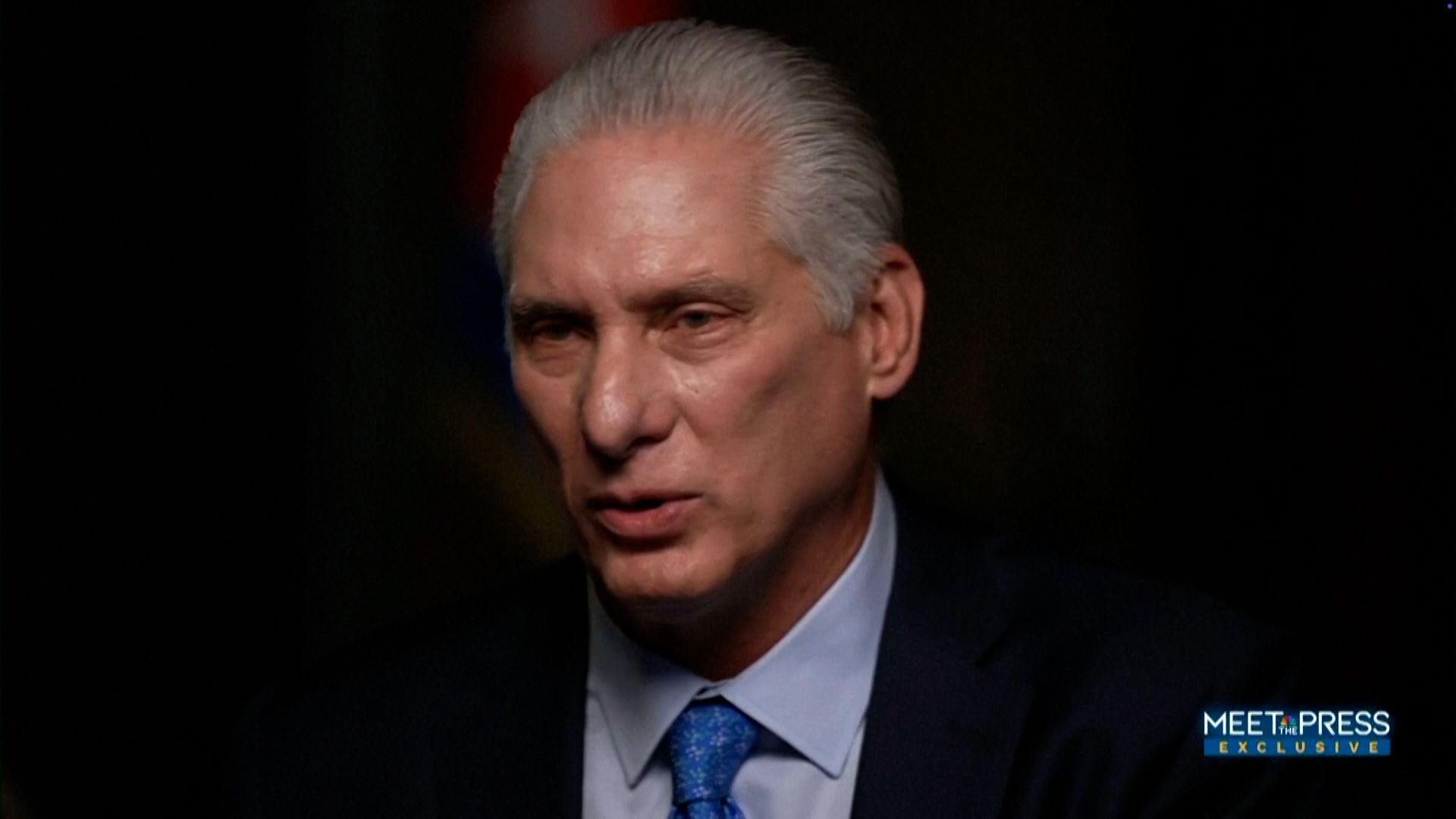
Miguel Díaz-Canel isn't packing his bags. Despite a tightening U.S. oil blockade and direct pressure from the Trump administration to step down, Cuba's leader is doubling down on his position. In a high-stakes interview with NBC’s Meet the Press this week, he made it clear that he views the demand for his resignation as an insult to Cuban sovereignty.
"Is that a question from you, or is that coming from the State Department?" he shot back when asked if he'd quit to "save" the island. It's a blunt reminder that the old-school Cold War rhetoric hasn't just returned—it's evolved into a full-blown game of chicken with millions of lives caught in the middle. You might also find this connected coverage useful: The Islamabad Backchannel and the High Stakes of Iranian Peace.
The standoff between Havana and Washington
The current tension isn't just about mean tweets or diplomatic snubs. It's about an aggressive "energy blockade" that has paralyzed the island. President Trump recently signed an executive order authorizing tariffs on any country that dares to sell or provide oil to Cuba. He’s essentially trying to starve the Cuban government of the fuel it needs to keep the lights on.
Trump’s stance is predictably aggressive. He’s called the Cuban leadership "corrupt" and "finished," suggesting that even a boatload of oil won't save a regime he’s determined to see collapse. This follows the January military raid that removed Nicolás Maduro in Venezuela, Cuba's long-time benefactor. With Venezuela’s oil spigot effectively capped by U.S. intervention, Cuba is more vulnerable than it's been in decades. As reported in recent coverage by BBC News, the effects are notable.
Díaz-Canel, however, is leaning into the role of the "impregnable resistance." He argues that he doesn't answer to Washington. He claims his mandate comes from the Cuban people, and unless they’re the ones telling him to go, he’s staying put. It’s a classic nationalist defense, but it rings hollow for many Cubans currently sitting in the dark.
Life under a total energy blockade
When we talk about "sanctions," it sounds like a boring policy term. But on the ground in Havana, it looks like a collapse of basic civilization. Cuba produces only 40% of the fuel it consumes. Without imports, the entire system breaks.
- Blackouts are the new normal: Many provinces see more hours without power than with it.
- Public transport has vanished: With no diesel, the buses aren't running, making it nearly impossible for people to get to work.
- The health system is reeling: Hospitals struggle to run generators for critical surgeries.
- Food distribution is failing: Without fuel for trucks, food rots before it reaches the markets.
A Russian tanker carrying 730,000 barrels of oil finally arrived in late March—the first shipment in three months. While Trump allowed that specific ship to pass, he made it clear it was a one-off that won't change the ultimate outcome. Russia has promised more, but whether they can bypass the new U.S. tariff threats on global shipping remains a massive gamble.
The regime change playbook
The Trump administration isn't hiding the ball here. Secretary of State Marco Rubio has been vocal about wanting a "dramatic change" to Cuba’s socialist model. The U.S. strategy is simple: apply so much economic pain that the government either implodes or the people rise up in a way that makes the 2021 protests look like a rehearsal.
But there’s a massive disconnect. Díaz-Canel says he’s open to dialogue, but only "without conditions." He basically wants the Obama-era relationship back—trade and travel without the U.S. demanding a change in how Cuba runs its internal politics. Washington, under the current administration, sees that as a non-starter. They aren't looking for a "normal relationship"; they're looking for a new government.
What most people get wrong about the Cuban resistance
It’s easy to think that if the U.S. just pushes a little harder, the whole thing will topple. But the Cuban government has spent sixty years learning how to survive being an outcast. They’ve built a massive internal security apparatus—managed largely by the military-controlled conglomerate GAESA—that is deeply embedded in every lucrative sector of the economy, from tourism to supermarkets.
Simply removing Díaz-Canel wouldn't dismantle that system. Even if he were to step down tomorrow, the military elite still holds the keys to the warehouse. This is why the U.S. pressure is so focused on oil; it’s the one thing the military can’t manufacture out of thin air.
The human cost of the stalemate
While the politicians in D.C. and Havana trade barbs, the Cuban people are fleeing in record numbers. Estimates suggest the island has lost over 10% of its population in just the last few years. It's a "brain drain" that might be more damaging to Cuba’s future than any blockade.
Human rights groups like Cubalex and Human Rights Watch have documented a sharp increase in repression. When people protest the blackouts by banging pans (cacerolazos) in the street, the response is often swift and harsh. There are currently hundreds of political prisoners behind bars, many from the July 2021 protests.
Reality check on the ground
If you're watching this from the outside, don't expect a quick resolution. Díaz-Canel is playing to a domestic audience that values "sovereignty" above almost everything else, even as they suffer. Trump is playing to a domestic audience in Florida that wants a hard line against communism. Neither side has an incentive to blink first.
The reality is that Cuba is currently a "soft underbelly" for U.S. adversaries. As the U.S. pushes away, Russia and China find more reasons to lean in, offering oil or credit in exchange for a strategic foothold 90 miles from Florida.
If you want to understand where this is heading, watch the shipping lanes. The next three months will be critical. If more Russian or Mexican tankers are blocked by the threat of U.S. tariffs, the internal pressure in Cuba will reach a boiling point that even Díaz-Canel's rhetoric can't cool down.
For those looking to help or get involved, keep an eye on humanitarian aid channels. Groups are still managing to get medical equipment and solar panels onto the island, bypassing the state grid entirely. This "micro-independence" might be the only way ordinary Cubans survive the next phase of this diplomatic war. Check with organizations like the Cuban Institute of Friendship with the Peoples for updates on aid convoys, as these small-scale efforts are currently the only thing keeping some local hospitals functional. Reach out to your local representatives if you believe the current energy blockade crosses a humanitarian line, as the debate over these sanctions is likely to hit the floor of Congress sooner rather than later.